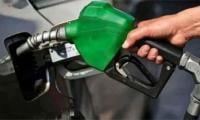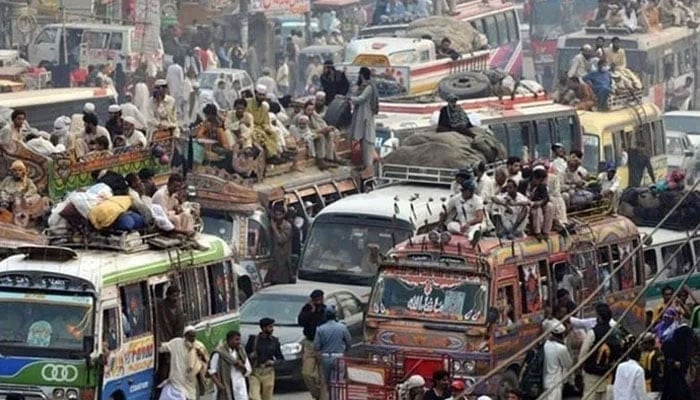
ISLAMABAD: The National Price Monitoring Committee (NPMC) was informed on Saturday that in the aftermath of a hike in fuel prices, transport fares have gone up by 25-30 per cent on an average, but some route fares had been increased by 50 per cent.
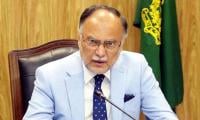
Expressing his serious concerns, Federal Minister for Planning, Development and Special Initiatives Ahsan Iqbal instructed the provincial authorities to ensure that transport departments issue revised fare notifications within 24 hours and strictly enforce them. He stressed that the benefit of government subsidies must not be negated by arbitrary increases, imposed by transporters.
The minister chaired an online meeting of the National Price Monitoring Committee (NPMC), directing the provincial governments to take immediate measures to curb inflationary pressures following a recent increase in fuel prices. The meeting reviewed the impact of rising petroleum prices on transportation fares and essential commodities. Officials informed the committee that diesel prices had increased significantly, while transport fares across major urban centres had risen by 25-30 per cent on an average, with some routes reporting increases of up to 50 per cent.
Expressing concern, the minister instructed provincial authorities to ensure that transport departments issue revised fare notifications within 24 hours and strictly enforce them. Minister Ahsan Iqbal directed chief secretaries to assign clear responsibility to provincial transport secretaries for fare regulation and compliance. He also called for enhanced field enforcement, including random inspections and verification mechanisms to check overcharging.
Highlighting the likelihood of a “second-round effect” on food prices due to higher logistics costs, the minister ordered weekly monitoring of essential commodities. The NPMC will now convene every week, particularly over the next month, to closely track price movements. The Pakistan Bureau of Statistics was tasked with sharing district-wise price rankings every week to identify abnormal trends, enabling timely corrective action by provincial administrations.
The minister further directed market committees and district administrations to regulate wholesale and retail prices and monitor profit margins to prevent hoarding and profiteering. Special emphasis was placed on ensuring an uninterrupted supply of perishable and staple items, including tomatoes, onions, potatoes, wheat, rice and pulses.
Referring to government subsidies, the minister stressed that their intended impact must be reflected in market prices. “If subsidies are fully passed on as price increases, their purpose becomes useless,” he observed. The meeting also raised concerns over the price differential of urea fertiliser between domestic and international markets, warning of potential smuggling risks. The minister directed the interior ministry and provincial authorities to take immediate steps to prevent smuggling and ensure adequate availability for farmers.