For decades, the Middle East was defined by a precarious ‘no peace, no war’ balance, but that landscape has fundamentally shifted.
Today, the region stands at a harrowing historical crossroads. Rigorous diplomatic efforts to broker an immediate ceasefire between the US-Israel alliance and a beleaguered Iran continue to miss the mark, leaving the collective security of the hemisphere in peril.
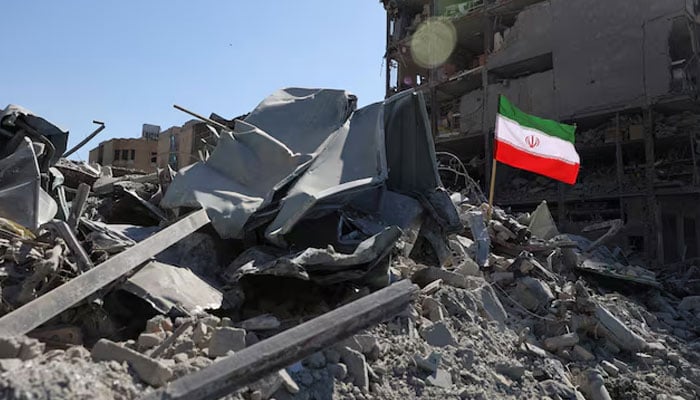
The stakes reached a fever pitch recently when US President Donald Trump set an April 6 deadline, warning Tehran that it would face dire consequences if it did not strike a deal under his terms. The subsequent 87th retaliatory wave by Iran marks more than a tactical exchange. It signals the birth of a new era in modern warfare.
This military campaign is no longer restricted to limited skirmishes. The unrelenting aggression of the US-Israel alliance and Iran’s recalcitrant defiance have pushed the region towards a wide-ranging, unpredictable war. Iran’s extraordinary determination, evidenced by the precision of its missiles and drones, demonstrates that it is no longer merely in a defensive posture; it is fully capable of an offensive response that can overwhelm sophisticated defence systems. This shift has forced Washington to reevaluate its regional strategy.
Tehran’s ability to strike with near-perfect precision has transformed the balance of power. While the remote possibility of a ceasefire remains, it hinges on sincere diplomatic efforts. Yet, ultimately, Donald Trump continues to call the shots. Despite the military superiority of the US and Israel, the conflict is devolving into a complex quagmire. President Trump’s recent policy signals indicate a desire to prevent a full-scale conflagration while simultaneously preserving Washington’s reputation and the security of its allies. This inherent contradiction has rendered American policy inconsistent.
Fortunately, although carried out by both sides, the attacks and counterattacks have not yet morphed into a full-scale conventional war. However, Trump’s constant threats to send boots on the ground with heavy military presence and logistical support in the region may turn the conflict into an uncontrolled confrontation. Interestingly, the most dangerous aspect of this war is its asymmetric, unconventional nature, with no clear front or battle line. Consequently, it is a ‘shadow war’ in which cyberattacks, covert operations, and proxy wars play pivotal roles.
In Washington, the policy landscape is increasingly fractured. Trump’s rhetoric, in particular, highlights a glaring American contradiction: the need to project strength and protect allies versus the domestic exhaustion with Middle Eastern entanglements.
Trump is also facing an acute resentment of the American people who are taking to the streets across the US in protest against his Middle East-driven policies these days. This internal friction has rendered American policy reactionary and, at times, incoherent. While the US maintains a formidable logistical and military presence, its direct involvement remains measured.
Washington is caught in a ‘strategic stalemate’. It cannot retreat without shattering its global reputation, yet it cannot escalate without risking a global economic meltdown. This vacuum of clear leadership has turned the region into a complex quagmire where neither side can claim victory, and neither side can afford to surrender.
While the drums of war beat louder, a frantic diplomatic effort is unfolding behind the scenes. European powers, terrified of a total disruption of energy markets, are scrambling to find a backdoor for de-escalation. Regional heavyweights – Pakistan, Turkiye, Egypt and Saudi Arabia – have become unexpectedly active, recognising that a full-scale Iran-US war would devastate their own developmental visions.
However, direct negotiations between the two warring powers have not yet been possible. The real decision lies with Washington and Tehran. Sespite the US president’s clear threat of deploying troops in Iran if his demands are not met, Tehran does not seem intimidated.
This 87th wave did not merely target infrastructure; it targeted the psychological equilibrium rather smartly. The sheer volume and strategic synchronisation of the strike overwhelmed existing defence frameworks, forcing the US to reconsider its posture. Iran has moved beyond a purely defensive crouch. It has been proven that it possesses the ‘offensive depth’ necessary to strike back with enough force to make the cost of aggression prohibitively high for its enemies.
Tehran currently sees itself in a strong position and is not willing to make any weak agreement. On the other hand, the US is also not ready to retreat immediately. This situation points to a ‘strategic stalemate’, where neither side wants to escalate the war but is also unwilling to retreat. In such a situation, effective third-party mediation becomes indispensable for a ceasefire.
For Pakistan, this crisis is a heatwave at the doorstep. Islamabad’s diplomacy throughout this 87th wave has been a masterclass in caution. Islamabad has opted for a balanced mediation policy. It cannot afford to alienate the US, its primary export market and a key financial gatekeeper, nor can it turn its back on Iran, a neighbour with whom it shares a complex border and vital energy potential.
In sharp contrast, New Delhi views the Middle Eastern volatility through a lens of strategic opportunism. India is using the crisis to deepen its defence ties with the US and Israel. There is also a darker tactical move at play: New Delhi hopes that as the world’s eyes are glued to the ruins of the Middle East, the international pressure regarding its policies in Kashmir will dissipate.
The writer is a freelance contributor.