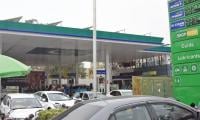
ISLAMABAD: The Economic Coordination Committee (ECC) of Cabinet has approved Rs100 billion for Prime Minister’s Austerity Fund to provide targeted subsidies in response to rising fuel prices.
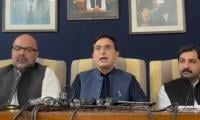
The ECC met on Thursday under the chairmanship of Federal Minister for Finance and Revenue Muhammad Aurangzeb. The committee reviewed and approved a summary submitted by Finance Division requesting Technical Supplementary Grant (TSG), which will be transferred to Prime Minister’s Austerity Fund 2026. Officials informed the ECC due to ongoing developments in the Gulf region and their potential impact on global petroleum prices, the prime minister had directed the use of Public Sector Development Programme (PSDP) resources to cover price differentials on petroleum products and protect consumers from price fluctuations.
The ECC noted funding would be arranged through reallocation and surrender of PSDP funds by various ministries and divisions, coordinated by Planning, Development and Special Initiatives Division in consultation with Principal Accounting Officers. The aim is to minimise disruption to priority and high-performing projects while creating fiscal space. Initial fund surrenders have already been received and remaining adjustments are being finalised.
The ECC also reviewed a summary from Ministry of National Food Security and Research regarding procurement of wheat for federal strategic reserves under Interim National Wheat Policy (INWP) 2025-26, with participation from private sector. After detailed deliberations, the ECC approved procurement of up to 1 million metric tons of wheat through a transparent and competitive process to be carried out by private sector. However, it directed key aspects, such as financial implications, pricing benchmarks and operational procedures be further refined in consultation with the Finance Division before final approval.