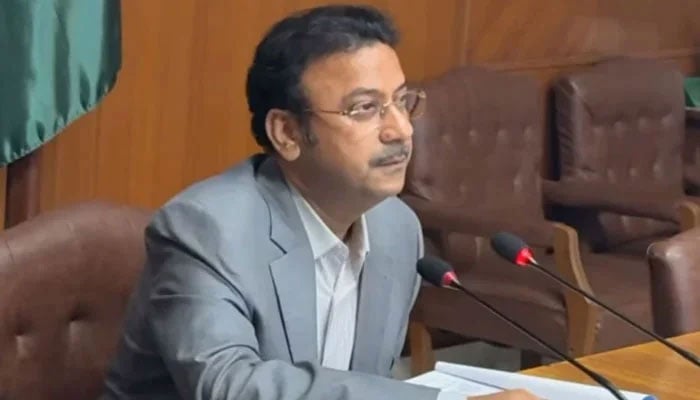
Sindh Home Minister Ziaul Hasan Lanjar on Thursday described educational reforms as a fundamental tool to counter extremism, emphasizing the necessity of comprehensive reforms from primary education to higher institutions to prepare the younger generation for global competitiveness.
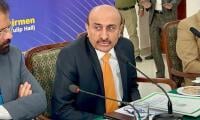
He said this in his address to the closing session of a two-day strategic planning workshop, which was organised by the Sindh Center for Excellence on Countering Violent Extremism, in collaboration with the UNODC at a hotel in Karachi.
Lanjar, who attended the event as the chief guest, said such workshops provide highly effective platforms to address current challenges, enabling the identification of practical and sustainable solutions. He emphasized that given the prevailing national circumstances, it is a shared responsibility of all stakeholders to play a positive role and collectively work towards societal improvement.
Highlighting the role of media, he noted that a free, responsible, and constructive media is essential for good governance. He warned that if the media fails to play its role positively, it may contribute to the spread of negative trends in society.
Home Minister Lanjar further stressed the importance of engaging representatives from relevant regions in discussions on national issues to ensure accurate identification of problems and effective solutions.
He also underscored the need for serious reflection on evolving regional geopolitics and matters related to neighboring countries. He directed that a concrete implementation plan be developed to expand such workshops, including collaboration with universities in Karachi, Sukkur, and Balochistan, along with defined timelines, budgets, and responsibilities.
Additionally, he issued directives for drafting a positive media policy, improving curriculum and teacher training, and developing effective mechanisms for the inclusion of local representatives.
Education Minister Sardar Shah, in his remarks, said the history of the subcontinent is rooted in tolerance, peace, and the teachings of Sufi saints, which promoted harmony in society. He emphasized that innovation in the education system, promotion of critical thinking, and advancement of skill-based education are essential to counter extremism. He added that the Sindh government is undertaking measures to enhance teachers’ professional capacity and educational standards, including the introduction of teaching licences as a significant step forward.
Additional IG Karachi Azad Khan said that kinetic action alone is insufficient to eliminate extremism; rather, coordinated efforts at social, educational, and intellectual levels are equally important. He added that while law enforcement agencies are fulfilling their responsibilities, addressing this challenge requires a unified national effort.
The closing session was attended by Secretary Home Iqbal Memon, SSP CTD Operations Irfan Ali Bahadur, the Anti-Violent Crime Cell SSP, along with other senior officials of law enforcement agencies, education experts, international partners, and representatives of various religious communities.
The primary objective of the workshop was to develop a comprehensive strategy for promoting a positive narrative, fostering religious harmony, and countering extremism, incorporating input from experts belonging to diverse fields.