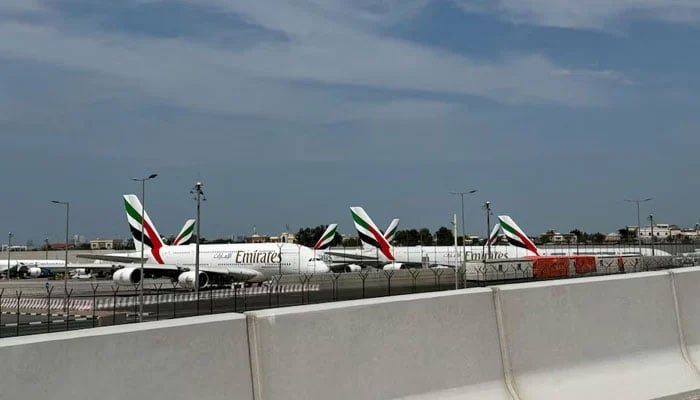
KARACHI: Amid fears of a prolonged war involving Iran, United States and Israel, 40 of world’s major airlines have extended cancellation of hundreds of flights to the Middle East for several weeks.
In the early days of the conflict, around 4,500 flights per day were cancelled. But later, due to special and emergency operations, this number decreased to about 3,000 daily cancellations. Despite ongoing emergency and special flight operations, 3,000 flights continue to be cancelled everyday.
In the first 16 days of the war, a total of 88,000 flights have already been cancelled. According to airline sources, flights carrying passengers from conflict-affected cities are returning with very low passenger loads. Even after 26 days, global air travel remains significantly disrupted and thousands of passengers are unable to travel despite having plans.
Due to Iran-related conflict, major Middle Eastern hubs such as Dubai, Doha, Bahrain, Kuwait, and Abu Dhabi have been severely affected. Flights to and from Iran, Kuwait, Bahrain, Baghdad, and Lebanon have been completely suspended, while limited operations continue from Bahrain, Kuwait and Saudi cities like Dammam and Qaisumah.
Air France has cancelled flights to Tel Aviv and Beirut until April 4, and flights to Dubai and Riyadh until March 31. Flydubai, Air Arabia, Saudi Airlines, Gulf Air, Jazeera Airways, Kuwait Airways, Iraqi Airways and several Iranian airlines have already suspended operations or are operating limited flights.
KLM has suspended flights to Riyadh, Dammam and Dubai until May 17, and to Tel Aviv until April 11. Cathay Pacific has canceled flights to Dubai and Riyadh until May 31. Delta Air Lines has extended the suspension of flights from New York and Atlanta to Tel Aviv until September 5 and postponed the launch of its Boston-Tel Aviv route until further notice.
Emirates is operating a reduced schedule, while Etihad is running selected flights from Abu Dhabi. Finnair has cancelled flights to Dubai until March 29 and to Doha until July 2 to avoid airspace over Iraq, Iran, Syria and Israel.
Saudi budget airline Flynas has extended flight suspensions to Dubai, Abu Dhabi, Sharjah, Doha, Bahrain, Kuwait, Iraq, and Syria until March 31. British Airways has extended cancellations for flights to Amman, Bahrain, Dubai and Tel Aviv until May 31, and to Doha until April 30, while adding flights to Bangkok and Singapore. Flights to Abu Dhabi will remain suspended until the end of the year.
Several Indian airlines have suspended flights to Doha, Kuwait, Bahrain, Dammam, Fujairah, Ras Al Khaimah, and Sharjah until March 28. Japan Airlines has suspended Tokyo-Doha flights until March 31 and Doha-Tokyo flights until April 1.
Lufthansa Cargo has implemented similar suspensions, except for Tel Aviv flights, which are suspended until April 30. Low-cost carrier Eurowings plans to suspend flights to Tel Aviv, Beirut, and Erbil until April 30, and to Dubai, Abu Dhabi and Amman until October 24.
Singapore Airlines and its subsidiary Scoot have extended suspension of Singapore-Dubai flights until April 30, while adding services on Singapore-London Gatwick and Singapore-Melbourne routes through October to meet demand.
Turkish Airlines has canceled most Middle East flights until the end of March. SunExpress, a joint venture with Lufthansa, has canceled flights to Dubai until April 6 and to Bahrain until April 30. Low-cost airline Wizz Air has suspended flights to Israel and routes from mainland Europe to Dubai, Abu Dhabi, Amman, and Jeddah until mid-September. Air Canada has cancelled all flights to Tel Aviv until May 2 and to Dubai until March 28.