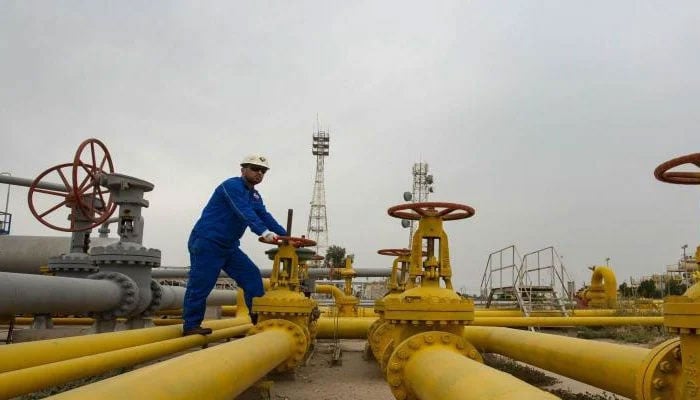
ISLAMABAD: Country’s top decision-makers have initiated a critical review of long-term LNG terminal contracts that continue to cost the national exchequer millions of dollars despite a complete halt in gas supplies. Officials describe these agreements as having a “structural flaw” in the country’s energy framework.
The review follows a force majeure declared by QatarEnergy earlier this month, which disrupted LNG supplies to several buyer countries, including Pakistan. Although local entities also invoked similar clauses, Pakistan remains bound to fixed payments to private terminal operators under strict contractual terms.
Authorities are currently examining agreements signed with Engro Elengy Terminal Pakistan Limited (EETPL) and Pakistan GasPort Limited (PGPCL) to determine whether capacity charges can be reduced or suspended during supply disruption.
Despite unavailability of LNG for regasification — starting March 27 at PGPL terminal and April 2 at EETPL terminal — state-run entities such as Pakistan LNG Limited (PLL) and Sui Southern Gas Company (SSGC) must continue paying approximately $538,535 per day, or nearly $15 million per month, in capacity and utilisation charges.
Federal Minister for Petroleum Ali Pervaiz Malik earlier described agreements as “faulty” and “not in favour of country”, questioning why payments continue even when no gas is being processed.
None of the terminal operators could be contacted for their side of the story. Sources close to them told The News the contracts do not allow suspension of payments under force majeure, and any unilateral move could trigger arbitration at the London Court of International Arbitration (LCIA), exposing Pakistan to further financial and legal risks.
The financial burden comes at a time of increasing economic pressure. Pakistan has already imported LNG worth $35 billion and paid nearly $3 billion in capacity charges alone, raising concerns amid growing import bills and declining foreign exchange reserves.
With regasification of final LNG cargoes expected to end by March 27, Pakistan will soon have no LNG to process but will still be obligated to make dollar-denominated payments to terminal operators.
Analysts and officials argue these “take-or-pay” agreements, designed to attract private investment, unfairly transfer risk to public sector. While they ensure operational continuity of floating storage and regasification units (FSRUs), critics say government bears full financial burden during supply disruptions.
Under the current agreements, SSGC pays over $228,000 per day to EETPL, while PLL pays more than $245,000 per day to PGPCL, even when no gas is supplied. With long-term contracts in place and legal risks looming, Pakistan has limited options and may have to absorb financial impact of paying for infrastructure that is not currently delivering energy.