When missiles strike oil refineries, the damage does not end with the explosion. It travels through the atmosphere, settles on glaciers and eventually reaches dinner tables hundreds of miles away.
In a warming world, the pollution of war can no longer remain invisible. Yet, the interconnectedness between war and environmental destruction represents a growing blind spot in global foreign policy. Bombed refineries, burning oil tankers and contaminated seas are not mere collateral damage; they are environmental shocks that drive global warming, contaminate the ecosystems and put human life at risk long beyond the battlefield.
These days, people track wildfire maps, glacier retreat and daily air-quality alerts on their phones, while scientists warn that the world remains dangerously far from the pathway required to limit warming to 1.5 degree Celsius. At the same time, modern warfare continues to target energy infrastructure whose destruction releases huge quantities of pollutants into the atmosphere.
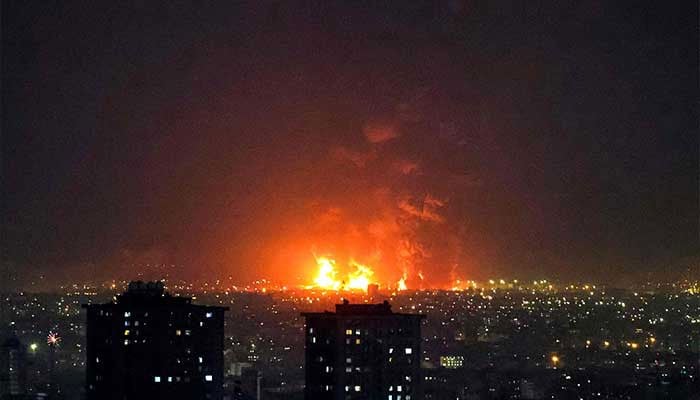
When oil refineries are bombarded or fuel depots explode, the resulting fires transform the sky into a vast chemical reactor where gases and pollutants interact with sunlight and atmospheric moisture. What initially appears to be a localised military strike can therefore evolve into a regional environmental disturbance with consequences that extend even after the ceasefire is achieved. These impacts are then experienced by countries that did not initiate the war or participate but are left to absorb part of its ecological burden.
The Iran-US war illustrates how quickly such ecological disruptions can occur, as reports from Tehran indicated episodes of darkened rainfall after several oil refineries were struck during aerial bombardments, releasing thick clouds of smoke into the atmosphere. Burning petroleum infrastructure releases sulphur dioxide, nitrogen oxides, volatile organic compounds, black carbon and hazardous hydrocarbons such as benzene, each of which follows a different pathway through the environment. Some contribute to acid rainfall, some intensify photochemical smog, some worsen respiratory exposure and some warm the atmosphere directly. Black carbon is especially alarming because it absorbs solar radiation efficiently, heats surrounding air masses and, once deposited on snow or ice, reduces surface reflectivity, thereby accelerating the melting of glaciers.
This is not something new in the Gulf region. During the Gulf War of 1991, almost 600 oil wells were burnt, producing one of the most dramatic wartime pollution events in modern history. The cases of acid rain were recorded throughout the Gulf region. The extent of the environmental harm triggered by this led the United Nations Environment Programme (UNEP) to later observe that there is a need for greater legal protection of the environment in the context of armed conflict. But decades later, the world is yet to have a governance system that can address such destruction with an accountability framework.
Let’s look at one of the recent incidents, the Russia-Ukraine war; as per the Ukraine Carbon Calculator analysis, the climate impact of the first two years of the war in Ukraine indicated emissions on a scale roughly comparable to the annual emissions of France, a comparison that should have jolted climate diplomacy into action but did not.
It is apparent that history keeps repeating itself, however, in a vicious manner. Even then, the world has turned a blind eye despite the fact that climate disruption is now one of the key threats that the entire world faces. But with disproportionate impacts, the Global South bears the brunt of the climate crisis, which they did not create, as well as the ecological impacts of many wars and conflicts, which they did not initiate. This is the climate injustice that global climate leaders and those who champion the cause of climate have not been advocating for.
For instance, in Pakistan, a country among the most vulnerable to climate change, the US-Iran war should not merely be a theoretical or geopolitical concern; pollution arising from conflict next door needs to matter. As warned by the Pakistan Meteorological Department, western disturbances move across Iran, Afghanistan and into Pakistan and when major smoke clouds rise high enough, they can be carried eastward with regional wind circulation. The immediate result is deterioration in air quality, increased particulate loading and worsening smog conditions in an atmosphere already burdened by dust, vehicular emissions and industrial pollution. In a country where winter air pollution is already a public health crisis, even an incremental increase of transboundary pollutants can intensify exposure for millions.
Another dimension of this war is the need to address pollution. Pakistan has repeatedly issued warnings related to glacial lake outburst flood risks in its northern mountain regions and these warnings should be read in conjunction with the broader science on black carbon. This can be carried by western disturbances into the Hindu Kush–Karakoram–Himalaya system; it darkens the surface, lowers albedo and accelerates melt. In other words, pollution generated by war in one part of the region can compound cryospheric stress in another. For a country whose river systems, agriculture and hydrological future are tied to these mountains, that is not an incidental side effect; rather, it is an emerging security concern.
But the threat does not end here. The Strait of Hormuz is one of the most strategically sensitive and heavily trafficked energy chokepoints in the world and any attack on oil tankers or related maritime infrastructure raises the risk of spills that can spread through interconnected Gulf and Arabian Sea waters. The chemicals and associated heavy metals can settle into marine sediments, enter coastal ecosystems and begin moving through the food web. So, fish and other marine organisms bioaccumulate toxic substances over time and migratory pathways mean contamination does not necessarily remain confined to the immediate spill zone.
The species moving into the Arabian Sea can carry part of that toxic burden into wider regional fisheries, creating not only ecological degradation but also potential food safety and public health concerns for coastal populations, including consumers far from the original site of conflict.
Here, the economic afterlife of war becomes an issue that cannot be ignored. Destruction of oil infrastructure increases shipping risks, destroys fisheries, harms marine life, strains coastal livelihoods and imposes public health expenditures whose effects take years to manifest, not days. Deposition into the atmosphere also affects soil conditions and hampers agricultural productivity. Also, the air pollution increases the pressure on health systems. Tourism, trade and maritime confidence are undermined by polluted coasts and unpredictable sea routes. These are not short-term disruptions; they are long-term ecological and economic disasters.
Yet the global climate governance remains shockingly ill-equipped to address this emergency. Even the Paris Agreement, celebrated as the cornerstone of global climate diplomacy, remains silent on pollution produced by armed conflict and warfare. The national climate inventories also focus overwhelmingly on peacetime sectors such as power, transport, waste, industry and agriculture, while conflict-related emissions remain undercounted, inconsistently reported or omitted altogether. If the climate regime ignores the pollution burden of modern war, then global accounting itself becomes questionable. Pollution does not recognise national borders, and even as part of reparations, no compensation is offered to countries that bear the impact of war-related ecological disasters.
For Pakistan, these challenges highlight the need to expand its role within regional climate diplomacy. The country has increasingly played a diplomatic role, encouraging restraint and dialogue amid regional tensions between Iran and the US. Therefore, this diplomatic engagement provides an opportunity to broaden the conversation by raising the environmental consequences of warfare within international forums and posing the uncomfortable yet important question to the world: who will account for the environmental damage of war that lasts long after the missiles fall silent?
The writer is an environmental scientist and leads the ecological sustainability and circular economy programme at the Sustainable Development Policy Institute (SDPI), Islamabad. She is also a member of the Punjab Climate Change Committee.