close

Sindh 'considers smart lockdown' to cope with fuel crisis amid Mideast war

Provincial minister stresses necessary steps to conserve fuel as difficulties will increase "if [Iran] war drags on"

March 24, 2026
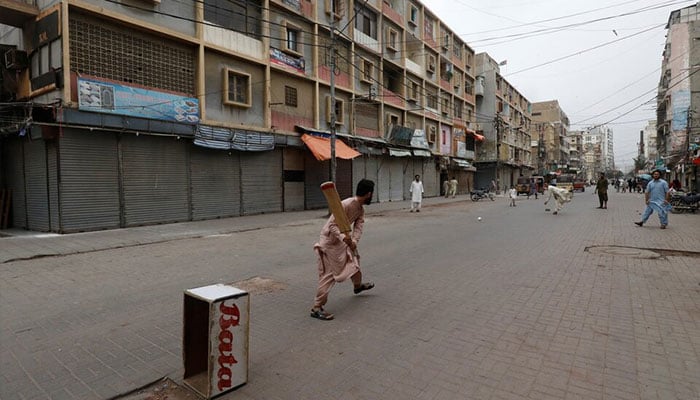
Shopkeepers play cricket along closed market during a partial lockdown after Sindh provincial government decided to shut markets, restaurants, public beaches and discouraged large gatherings to curb the outbreak of the coronavirus disease (COVID-19), in Karachi, July 30, 2021. — Reuters

SUKKUR: Sindh Local Government Minister Nasir Hussain Shah revealed on Tuesday that the imposition of a smart lockdown was under consideration by the provincial authorities to cope with the emerging fuel crisis amid the ongoing war in Middle East.

Shah, speaking to reporters in Sukkur, emphasised on adopting unusual steps, saying: "The present circumstances are not normal. If the war drags on, everyone will face difficulties."

Highlighting the province's steps to conserve fuel and ease pressure on resources, the minister noted that 60% of petrol for government vehicles had already been reduced.

He went on to say that daily meetings are being held to assess the situation, underlining the Sindh government's proactive approach during uncertain times.

Smart lockdowns, first introduced in Pakistan during the Covid-19 pandemic, are targeted restrictions aimed at controlling movement and limiting gatherings in specific areas.

Under this system, authorities can impose restrictions on individual neighbourhoods, streets, or communities, rather than enforcing a city-wide shutdown.

In areas under a smart lockdown, no more than four people are allowed to gather at a time, and only one person per household may leave their home after explaining their reason to law enforcement.

Public events, social gatherings, and celebrations are prohibited, while neighbourhoods, and targeted zones may be sealed.

Austerity measures

The Sindh government had announced a series of austerity measures earlier this month, aiming at reducing fuel consumption and curbing government expenditure amid soaring oil prices linked to the ongoing US-Israel-Iran war.
  • Schools to remain closed from March 16 to March 31; exams to continue as scheduled
  • Government offices to observe work-from-home on Fridays without declaring a holiday
  • 50% cut in fuel consumption of government vehicles for the next two months
  • 60% official vehicles to remain grounded across provincial departments for two months
  • Provincial ministers to forgo salaries and allowances for April, May and June
  • All official travel by government officials to be undertaken in economy class
  • Ban imposed on purchase of new vehicles and furniture by government departments
  • Chief minister’s official aircraft to remain grounded during austerity period
  • No government ceremonies to be held in hotels; events restricted to official buildings
  • Ban imposed on official iftar dinners and other government-hosted gatherings