For much of the modern era, the world’s attention has been captured by the visible theatres of conflict wars fought in deserts, cities and contested borderlands.
The headlines cycle through familiar crises: geopolitical tensions in the Middle East, the grinding conflict in Eastern Europe, electoral drama in major capitals and the tremors of global financial markets. Yet while public attention remains anchored to these immediate dramas, a far more consequential transformation in the international order is unfolding almost silently at the northernmost edge of the planet.
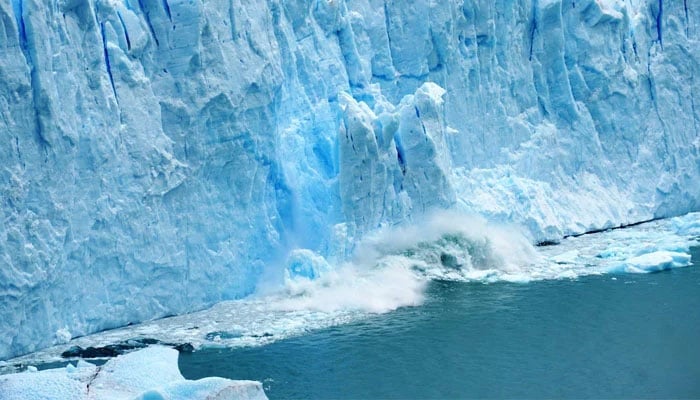
At the top of the world, where glaciers once appeared eternal and human ambition seemed constrained by nature’s brutality, the ice is melting. And with every mile of receding ice, an enormous economic and strategic prize is emerging. What is taking shape in the Arctic is not merely an environmental shift; it is the opening chapter of a geopolitical contest that could define the next century.
For most of modern history, the Arctic remained largely untouched by the industrial appetites that reshaped the rest of the world. Today, however, that reality is changing rapidly. Climate change, ironically driven by the industrial economies that once ignored the region, has begun to unlock the Arctic’s enormous resource wealth. As permafrost thaws and sea ice retreats, the Arctic is revealing what can only be described as one of the largest untapped resource reserves in human history.
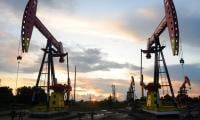
Geological surveys suggest that beneath the Arctic seabed lies approximately 13 per cent of the world’s undiscovered oil and nearly 30 per cent of its untapped natural gas reserves. Hydrocarbons are only part of the story. Even more significant for the future of global industry are the critical minerals buried beneath the Arctic’s frozen crust. Lithium, cobalt, nickel and rare-earth elements, essential for batteries, semiconductors, wind turbines and advanced weapon systems, are believed to exist in substantial quantities across the polar region. These materials form the backbone of the digital economy, the green energy transition and the emerging architecture of artificial intelligence. In effect, the Arctic contains the raw materials required to power both the technological revolution and the military competition of the twenty-first century.
The strategic implications of this discovery have not gone unnoticed by the world’s major powers. While much of the international community remains focused on conflicts elsewhere, the geopolitical chessboard has quietly shifted northward. Russia, which possesses the longest Arctic coastline, has been particularly active in consolidating its presence across the region.
Over the past decade, Moscow has undertaken the most extensive Arctic military build-up since the cold war. Dozens of abandoned Soviet-era bases have been reopened, new airfields constructed, and advanced missile defence systems deployed along Russia’s northern frontier. These installations are not merely symbolic gestures of territorial defence. They represent a deliberate effort to establish strategic dominance over emerging shipping routes and potential extraction zones as the ice continues to recede.
At the same time, China – despite having no territorial claim in the Arctic – has carefully positioned itself as an emerging stakeholder in the region. Beijing has introduced the concept of a ‘near-Arctic state’, signaling its intent to participate in the governance and economic development of the polar frontier. Through investments in Arctic infrastructure, research partnerships with Nordic countries, and participation in polar scientific initiatives, China has gradually entered the Arctic conversation. Its long-term objective is clear: to ensure that future Arctic shipping lanes, particularly the Northern Sea Route, become integrated into its broader global logistics network. For a country whose economy depends heavily on maritime trade, the prospect of significantly shorter shipping routes between Asia and Europe carries enormous economic value.
The US and its allies have also begun responding to this evolving strategic environment. Nato members with Arctic territory, such as Canada, Norway, and Denmark through Greenland, have increased military cooperation and surveillance activities across the region. Submarine patrols, advanced sonar networks and satellite monitoring systems are being expanded to maintain situational awareness in the rapidly changing polar landscape.
Central to this competition is not merely the presence of natural resources, but the transformation of global logistics routes that Arctic melting could enable. Historically, global shipping has relied heavily on established maritime corridors such as the Suez and Panama Canals. These routes have defined the structure of international trade for over a century.
However, as Arctic sea ice diminishes, new passages are becoming increasingly navigable. The Northern Sea Route along Russia’s coast and the Northwest Passage through the Canadian Arctic Archipelago offer the potential to dramatically shorten travel distances between Asia, Europe and North America; these routes could reduce shipping distances by as much as 40 per cent.
Yet perhaps the most revealing dimension of the Arctic race lies not in military deployments or diplomatic statements, but in the flow of global capital. Major investment firms and financial institutions have already begun positioning themselves for the economic transformation of the polar region. Asset managers are quietly acquiring stakes in mining ventures, energy exploration companies, and infrastructure projects linked to Arctic development.
Rare-earth mining operations in Greenland, for instance, have attracted interest from investors tied to both technology firms and green energy initiatives. The paradox is striking: the very industries promoting the transition to clean energy are increasingly dependent on minerals extracted from one of the planet’s most fragile ecosystems.
This dynamic highlights a deeper contradiction within the global narrative surrounding climate change. The push towards renewable energy technologies, electric vehicles, wind turbines and advanced batteries requires vast quantities of specialised minerals. These resources must be sourced somewhere, and the Arctic appears increasingly attractive as a potential supply hub. As a result, the green transition itself may accelerate industrial activity in one of the last relatively untouched regions on Earth. In effect, the effort to address environmental challenges could inadvertently trigger a new wave of resource extraction in the polar frontier.
Compounding these tensions is the fragile legal framework governing the Arctic. International agreements and treaties have historically helped maintain a degree of stability in the region. However, many of these arrangements are now facing increasing pressure as economic interests intensify. Questions surrounding maritime boundaries, continental shelf claims and resource rights remain unresolved. As climate change opens new areas for exploration and navigation, jurisdictional disputes are likely to become more complex.
If these legal mechanisms weaken or fail to adapt, the Arctic could enter a period of strategic uncertainty. In such an environment, scientific research stations might gradually evolve into permanent military installations and commercial infrastructure projects could acquire dual-use capabilities. History suggests that when valuable resources converge with legal ambiguity, geopolitical rivalry tends to follow. The Arctic may be approaching precisely such a moment.
Equally important is the narrative that will accompany this transformation. Throughout history, major geopolitical shifts have rarely been presented to the public in purely strategic terms. Instead, they are often framed through compelling moral or humanitarian narratives that make complex power struggles appear necessary or inevitable. In the case of the Arctic, climate change provides an especially powerful storyline. The melting of polar ice caps is widely recognised as one of the most visible symbols of global warming. Calls for scientific monitoring, environmental protection, and sustainable development in the region carry undeniable legitimacy.
In this sense, the emerging Arctic competition reflects a familiar pattern in human history. Empires have long been driven by the pursuit of strategic resources and advantageous geography. What distinguishes the Arctic from previous frontiers is not the nature of the competition, but the scale of the opportunity.
Ultimately, the unfolding situation in the Arctic is not merely about climate change or technological progress. It is about the enduring dynamics of power, resources and geography that have shaped international politics for centuries. The frozen frontier at the top of the world is rapidly becoming the next arena of global rivalry. Whether that rivalry evolves into cooperation or confrontation will depend on the choices made in the coming years.
The writer is a trade facilitation expert, working with the federal government of Pakistan.