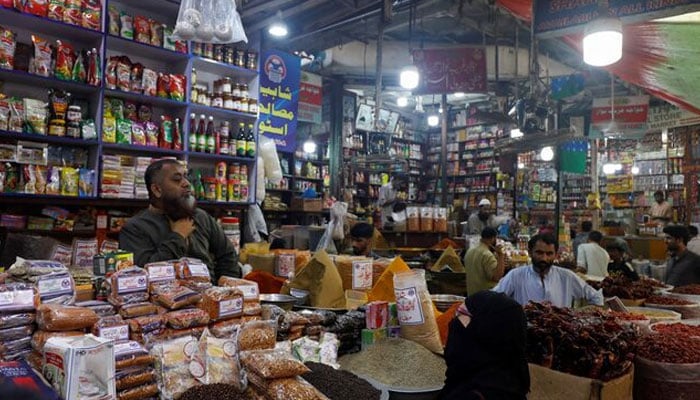
For foreign investors accustomed to demand-constrained environments, Pakistan presents a rare anomaly: a large economy where consumption is organic, culturally and religiously embedded and demographically locked in for decades.
This reality is often buried beneath macroeconomic headlines. Yet beneath the noise sits one of the most underappreciated consumption stories in the global emerging markets universe. Pakistan saves roughly 6-7 per cent of GDP. Across the border, they save nearly four times that share. For policymakers, that imbalance may be troubling. For consumer-facing investors, it is instructive. Low savings mean high velocity of money. Income moves. It circulates quickly through food, apparel, home upgrades, social obligations, mobility and personal technology. New products do not endure prolonged adoption cycles. If the price-value equation works, scale follows.
Pakistan is not a ‘wait and see’ market. It is a ‘buy now, upgrade later’ economy, where aspiration consistently outpaces formal income metrics. Importantly, this is not speculative, credit-fuelled consumption. It is continuously replenished by one of the world’s largest remittance inflows, approximately $38-40 billion annually. These flows behave less like episodic transfers and more like recurring stimuli, particularly across Tier-2, Tier-3 and Tier-4 cities. They finance food, construction, weddings, education, transport, daily life, far more than long-term savings instruments.
In many households, overseas income is structurally embedded in the monthly cash flow. From a demand-forecasting perspective, that creates an unusually resilient base for consumer businesses, even during macro volatility.
Pakistan is also under-taxed. With a tax-to-GDP ratio near 10-11 per cent and a relatively small proportion of citizens paying income tax, a significant portion of economic activity remains lightly burdened by direct taxation. The commercial implication is straightforward: effective disposable liquidity is materially higher than reported income statistics suggest. Informal markets dominate volume but lack scale, hygiene, consistency and brand trust.
The arbitrage between informal fragmentation and organised scale remains substantial. On a purchasing-power-parity basis, Pakistan is already a $1.5 trillion economy on a PPP basis, ranked in the mid-20s globally by the World Bank, and is projected to move significantly higher within this decade. What is frequently overlooked is the internal concentration of spending power. Within the above context, approximately 30 million Pakistanis, around 12 per cent of the population, control close to $1 trillion in cumulative spending capacity.
This cohort alone exceeds the population of most Middle Eastern countries with higher per capita income on a PPP basis. They are globally exposed, digitally connected, brand-aware, and increasingly discerning. They anchor premium and international brands while creating aspirational pull for broader mass markets. In food, beverage, and organised retail, both international and leading local players are reporting record revenues, strong same-store sales growth and expanding margins despite macro volatility. This is clear evidence that Pakistan’s consumption story is already being monetised by operators who understand pricing, localisation, and scale.
Demographics reinforce the trajectory. Nearly 60 per cent of the population is under 30. Every year, millions of new consumers enter the marketplace. They are talented, entrepreneurial, resilient, digitally native, socially influenced, and comparison-driven. They spend on food, appearance, experiences, education-related goods and social life regardless of economic cycles. For long-term investors, that offers visibility measured in decades, not quarters.
Consumption in Pakistan is cultural infrastructure. Hospitality is embedded in the social fabric. Weddings are economic ecosystems. Food is identity. Grooming and presentation cut across income classes. Social generosity is an expectation, not an exception. Religious belief also shapes economic psychology. A widespread, sometimes aspirational, belief that providence will prevail reduces precautionary saving and sustains present-oriented spending. While this may present productivity challenges at the macro level, it reinforces consumption resilience at the micro level. Overlay this with a diaspora of more than 10 million people, controlling an estimated $350 billion in net worth. This capital is emotionally connected, commercially experienced and increasingly seeking structured, credible investment vehicles rather than informal remittances or one-off projects. What it lacks is a scalable institutional structure.
Recent multinational exits have created genuine market vacuums. While it is essential to acknowledge and immediately address the structural and operational concerns that drove some of these decisions, given the vital role multinationals play in building organised retail infrastructure and customer-centric culture, the demand has not disappeared. Supply has thinned. Simultaneously, foreign-exchange constraints, import-substitution policies and cost dynamics have shifted the advantage towards local sourcing and homegrown brands. What was once framed as patriotic positioning has become a commercial necessity. For investors prepared to partner with capable local operators, this moment offers category-defining potential.
Pakistan, in many respects, is a marketer’s dream. You do not need to persuade consumers when to buy. You need to influence what they buy. Decades of exposure to multinational FMCG and QSR brands have normalised branded consumption across income segments. The success formula remains consistent: affordability, perceived value and aspirational positioning. Entrepreneurs who understand this dynamic are already scaling. And we are witnessing the arrival of sophisticated, home-grown, locally sourced brands that are not merely substituting imports but building durable consumer franchises.
Pakistan is a demand-solved economy operating below its institutional potential. Low savings. High remittances. Light direct taxation. Youthful demographics. Culturally embedded spending. A globally connected affluent core. An emotionally invested diaspora.
For food, retail, and consumer platforms, the question is no longer whether Pakistan will consume, but rather how. It is whether global investors will continue to observe from the sidelines, or recognise one of the world’s most undervalued consumption economies and act while the window remains open. Pakistan beckons. Invest in the hidden gem and earn returns that will be the envy of the rest of the world.
The writer is a former global corporate executive (Unilever, PepsiCo, Yum! Brands), a mental health advocate and a founding board member of Taskeen, a pioneering organisation focused on emotional well-being in Pakistan.