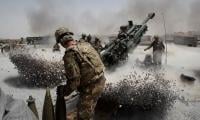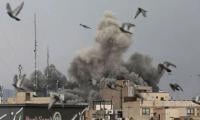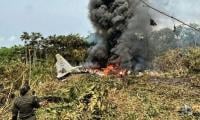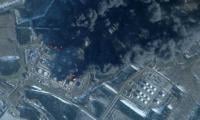
In classical warfare, the battlefield was visible, defined by borders, armies and physical confrontation.
Today, conflict has moved into far more complex and less visible domains. Wars are increasingly fought through information, perception and psychological influence, giving rise to what is widely described as the Fifth Generation Warfare (5GW). In this evolving landscape, societies themselves become the battlefield and, within them, youth emerge as the most strategically targeted demographic.
Fifth Generation Warfare does not seek victory through territorial conquest. Instead, it aims to erode internal cohesion, weaken trust in institutions and fragment societies from within. It relies on disinformation, narrative manipulation, digital influence operations and psychological conditioning. The objective is not to defeat a country externally, but to destabilise it internally.
Recent developments across Pakistan’s regional environment illustrate how this model of conflict is unfolding in real time.
The escalation between Pakistan and Afghanistan during February-March 2026, now increasingly referred to as the Pakistan-Afghanistan Border War (2026), marked a significant turning point. What began as cross-border tensions quickly evolved into sustained military exchanges, including airstrikes, drone operations and artillery engagements. Alongside the physical conflict, a parallel battle of narratives emerged, shaping public perception and mobilising sentiment across both sides of the border.
Similarly, the confrontation with India in May 2025 demonstrated that even conventional warfare is now deeply intertwined with information warfare. Competing narratives, misinformation and digital amplification played a decisive role in shaping how citizens interpreted events, often intensifying emotional responses beyond the battlefield.
At the same time, the Iran-US-Israel confrontation has had a direct spillover effect on Pakistan’s domestic environment. The killing of Iran’s Supreme Leader triggered protests across multiple cities. In Karachi, demonstrations against the US and Israel turned volatile, and protesters lost their lives during clashes, highlighting how external geopolitical events can ignite internal unrest, particularly among emotionally mobilised youth.
However, perhaps the most critical and persistent dimension of internal destabilisation lies within Pakistan itself: the escalating insurgency in Balochistan led by the Balochistan Liberation Army (BLA).
Over the past year, BLA activities have intensified both in scale and urbanity. In early 2026, the group launched coordinated attacks across multiple districts, targeting schools, hospitals, markets, police stations and security installations . These were not isolated incidents but part of a broader campaign designed to create widespread disruption and fear.
Between January 30 and February 1, 2026, one of the most significant waves of violence unfolded when BLA militants carried out simultaneous attacks across Balochistan, killing dozens of civilians and security personnel. The scale of these operations, spanning multiple cities including Quetta, Gwadar and Mastung, demonstrated a high degree of coordination and intent to destabilise the province.
Security forces responded with large-scale operations, reportedly killing over 100 terrorists within a short span, marking one of the most intense counterinsurgency campaigns in recent years. Yet the persistence of such attacks underscores a deeper challenge: the conflict is not only physical but also narrative-driven.
The BLA and similar groups have increasingly leveraged digital platforms to project their activities, disseminate propaganda and shape perceptions. This is where Fifth Generation Warfare intersects directly with insurgency. Violence on the ground is amplified through narratives online, creating a psychological impact far beyond the immediate zone of conflict.
In this environment, the youth become central actors. Young people are the most digitally connected and socially active segment of society. They consume information rapidly, engage in online discourse and participate in public mobilisation. Social media platforms, now the primary arena for political expression, are structured to amplify emotionally charged content. Narratives that evoke anger, injustice or identity-based grievances spread faster and wider than balanced analysis.
This creates fertile ground for manipulation.
In a context where Pakistan is simultaneously dealing with external conflicts (India, Afghanistan, Middle East spillovers) and internal insurgency (Balochistan), youth are exposed to a continuous stream of emotionally charged narratives. These may relate to national security, religious identity, regional grievances or global geopolitics. Over time, repeated exposure to such narratives can shape perceptions, increasing polarisation and reducing trust in institutions.
Economic conditions further intensify this vulnerability. With a large youth population facing unemployment and limited opportunities, frustration can easily intersect with narrative-driven mobilisation. Fifth Generation Warfare exploits precisely this intersection, transforming grievance into agitation and agitation into instability.
The mechanisms are subtle but powerful. There are no direct instructions or visible command structures. Instead, influence operates through digital ecosystems, bot networks, coordinated messaging, selective amplification and algorithmic bias. Over time, this creates echo chambers where individuals are exposed primarily to views that reinforce their beliefs, gradually normalising more extreme positions.
The result is a society that becomes internally fragmented, often without fully understanding how or why.
Yet it is essential to avoid a fundamental misunderstanding: youth are not the source of instability. They are the most valuable strategic asset of any nation. Their energy, creativity and willingness to engage are critical for progress. The challenge lies in ensuring that this energy is not hijacked by divisive narratives. For Pakistan, this requires a multi-layered response.
First, digital literacy must become a national priority. Young citizens need the skills to critically evaluate information, identify misinformation and understand how narratives are constructed and amplified. Second, inclusive governance is essential. Youth must have credible platforms for participation in decision-making processes. When individuals feel excluded, they are more susceptible to alternative narratives that promise empowerment through confrontation.
Third, economic opportunity must be expanded. A society that provides pathways for employment and upward mobility is far less vulnerable to narrative-driven destabilisation. Finally, Pakistan must invest in cohesive national narratives. In an era where multiple actors compete to shape perception, the absence of a strong internal narrative creates a vacuum, one that will inevitably be filled by others.
The convergence of recent developments, the Pakistan-Afghanistan Border War, tensions with India, the Iran-US-Israel conflict and the intensifying insurgency in Balochistan, demonstrates that Pakistan is operating within a complex hybrid warfare environment.
In such an environment, the state’s strength is no longer measured solely by military capability. It is measured by the resilience of its society. At the centre of that resilience lies the youth. They can be mobilised as instruments of division or empowered as agents of cohesion. The outcome depends not on their nature, but on how they are informed, engaged and included.
In the age of Fifth Generation Warfare, investing in youth is no longer just a social or developmental priority. It is a strategic imperative for national stability and security.
The writer is a public policy expert and leads the Country Partner Institute of the World Economic Forum in Pakistan. He tweets/posts @amirjahangir and can be reached at: [email protected]