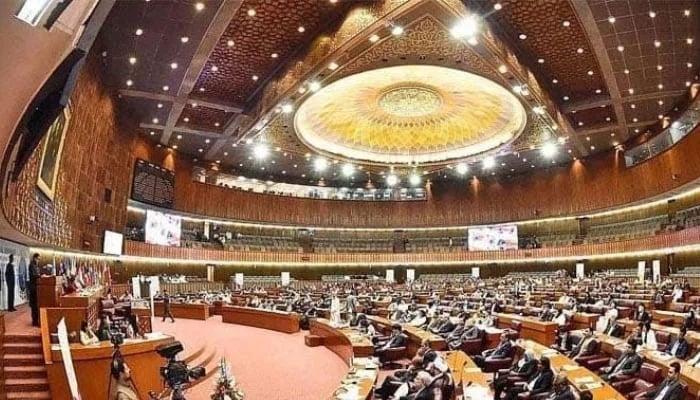
ISLAMABAD: The National Assembly of Pakistan witnessed at least 16 separate incidents of protests, walkouts, and disruptions during its second parliamentary year, according to a report released by the Free and Fair Election Network (Fafen).
A significant majority of these incidents—13 in total—were staged by independent lawmakers backed by the Pakistan Tehreek-e-Insaf (PTI), who are currently operating under the banner of the Sunni Ittehad Council (SIC), reflecting ongoing political realignments within the House.
The disruptions were not merely symbolic; they frequently brought parliamentary proceedings to a halt, undermining the smooth functioning of legislative business. Members engaged in protest tactics such as tearing official documents, gathering around the Speaker’s dais, and chanting slogans during crucial sessions.
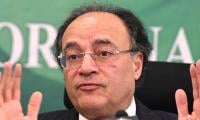
One of the most notable disruptions occurred during the presentation of the federal budget for 2025–26 by the finance minister, where both the initial speech and the subsequent winding-up address were interrupted by opposition protests, highlighting the charged political atmosphere.
According to Fafen’s findings, the reasons behind the walkouts and protests varied widely, underlining the deep political tensions that characterised the parliamentary year.
The finance minister’s budget speech, along with his concluding remarks, faced repeated interruptions, indicating strong opposition resistance to the government’s fiscal agenda. Protests also erupted over the proposed and subsequently passed 27th Constitutional Amendment, with opposition members voicing concerns over both the content and the process of the legislation.
Members of the Jamiat Ulema-e-Islam (F) (JUI-F) staged a walkout to protest the absence of ministers in the House during the question hour, arguing that this undermined parliamentary accountability. Meanwhile, the Pakistan Peoples Party Parliamentarians (PPPP) carried out two separate walkouts—one over unresolved issues from a previous sitting, and another in protest against the government’s use of an ordinance, which they criticised as bypassing parliamentary scrutiny.
In a rare display of collective action, journalists covering parliamentary proceedings also staged three walkouts. These protests were reportedly triggered by an alleged incident of misbehaviour involving journalists outside Adiala Jail, as well as concerns over the termination of media personnel by certain organisations without due process.
The protests led by SIC-backed lawmakers remained the most persistent throughout the year. In one sitting, members not only chanted slogans and thumped desks but also pointed out the lack of quorum—a procedural tactic that can effectively suspend proceedings until the required number of lawmakers is present.
In another tense moment, lawmakers delivered speeches unrelated to the scheduled agenda, prompting the Deputy Speaker to issue a warning that proceedings would be conducted strictly in accordance with the Constitution and established rules of procedure.
Overall, Fafen’s data paints a picture of a deeply polarised House, where legislative work was repeatedly disrupted by political confrontation, procedural manoeuvres, and competing narratives, ultimately affecting the efficiency and decorum of parliamentary proceedings.