Nations are not built merely through infrastructure, military strength, or short-term economic growth. They are built through ideas, institutions, and citizens capable of critical thinking, innovation, and productive contribution. At the heart of this process lies education. For Pakistan, navigating economic uncertainty, demographic pressures, and governance challenges, education is not just a social sector; it is the most strategic investment for long-term stability and prosperity.
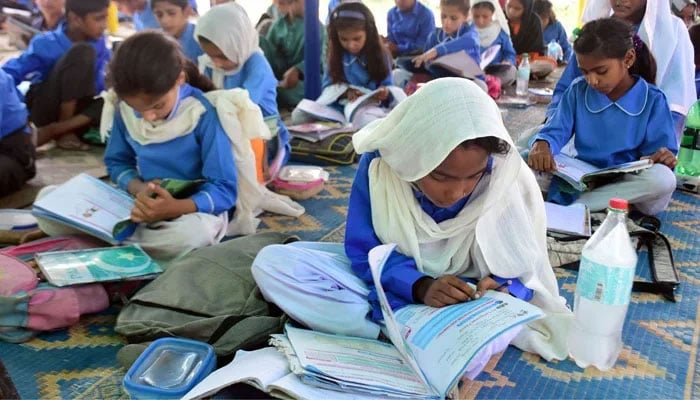
The urgency is evident in Pakistan’s education indicators. The country still has one of the largest populations of out-of-school children in the world, estimated between 22 to 26 million.
Since its inception, Pakistan’s founding vision emphasised justice, equality, and opportunity. Yet the promise of inclusive development has remained incomplete, largely because the education system has not evolved into a coherent, equitable, and forward-looking institution.
Pakistan stands at a demographic crossroads. With a large youth population, it possesses what economists describe as a potential “demographic dividend.” This dividend, however, is not automatic. Without quality education, youth face unemployment, frustration, and social instability; with the right policies, they can become the country’s greatest economic and intellectual asset.
Education contributes to nation-building in three key ways. First, it strengthens national identity and social cohesion. Second, education underpins economic productivity. In the modern global economy, growth depends less on natural resources and more on knowledge, skills, and innovation.
Pakistan’s literacy indicators reflect this challenge. The national literacy rate remains around 62–63 percent, with stark gender disparities—approximately 73 percent for men and nearly 51 percent for women, with even lower rates in rural areas. These figures highlight that education is not only an economic issue but also one of inequality and social mobility.
Yet structural constraints continue to limit progress. Inequality in access and quality remains a core challenge. Urban-rural divides, gender gaps, and disparities between public and private institutions have created parallel systems that reinforce social stratification rather than mobility.
A critical issue is the disconnect between education and the labour market. Universities produce graduates, yet industries report persistent skill shortages.
Investment priorities further compound the problem. Pakistan spends roughly 1.7 to 2 percent of GDP on education—well below the recommended 4 to 6 percent for developing economies.
The quality of learning is equally concerning. Many students in upper primary grades struggle to read basic texts or perform simple arithmetic. This “learning crisis” means that even school attendance does not guarantee functional skills.
Technical and vocational education remains underutilised. Economies that institutionalise skilled labour—engineers, technicians, and digital specialists—build strong industrial bases. In Pakistan, social preferences still favour traditional academic degrees, despite rising demand in sectors such as manufacturing, renewable energy, information technology, and construction.
Education also plays a vital role in national security in its broader sense. Human security—encompassing economic stability, environmental awareness, and social inclusion—depends heavily on educational outcomes.
Governance remains a critical dimension. Effective reform requires transparency, accountability, and policy continuity. Frequent shifts, overlapping authorities, and weak implementation have historically undermined progress. Sustainable improvement demands stronger coordination between federal and provincial stakeholders, particularly after the 18th Amendment.
Universities must evolve from degree-granting institutions into engines of development. Strong university-industry linkages, collaborative research, and innovation ecosystems can translate academic knowledge into economic value and strengthen technological capacity.
Digital transformation presents both opportunity and risk. Expanding online learning can bridge access gaps, especially in remote areas, but must be accompanied by digital literacy to avoid widening inequalities.
Gender inclusion is equally essential. Educating girls improves health outcomes, reduces poverty, and enhances economic participation.
For education to become the centrepiece of Pakistan’s development strategy, key priorities are clear: increased and better-targeted investment, integration of technical and vocational pathways, stronger research and innovation funding, and curricula aligned with contemporary challenges.
Equally important is partnership. Collaboration among government, academia, industry, and international institutions can accelerate reform. Education must become a whole-of-society agenda rather than a siloed policy domain.
The writer is a Lecturer of Political Science.