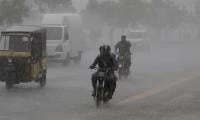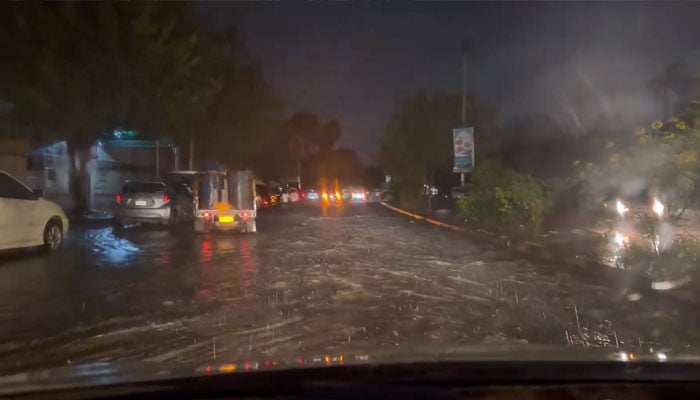
Whenever it starts pouring down in Karachi, or for that matter in most places in Pakistan, one almost feels like they are being torn in two. The heart, or the inner child in everyone, wants to celebrate and rush out into the rain, which is understandable given how hot, humid and dusty Karachi usually is. The mind, meanwhile, tells us to worry, run inside and check that all windows are closed, to get ready for the lights to go out and the UPS to come on (if one is lucky enough to own one) and to get on the phone to make sure any relatives unlucky enough to be at work make it home safely. For all the happiness the rain can bring, in urban Pakistan, it remains a deadly force that can bring life to a standstill – and no city seems to suffer more than the biggest one. Wednesday night’s downpour in Karachi saw winds 90km per hour sweep the city. While intense, the worst of the thunderstorm was done in about 20-30 minutes. But that was all it took for at least 19 people to lose their lives.
Authorities said several people were killed when walls and roofs collapsed during heavy rain, an all too familiar cause of death during this type of weather. At least one person was reportedly struck by lightning. While the manner of many other deaths is still unclear, one can imagine what they were. How many electrical wires came loose with those gale-force winds blowing? What kind of loose debris was sent crashing down? How many potholes and open manholes were submerged under the water, turning into death traps for unsuspecting pedestrians and bikers? Rain always seems to turn Karachi into a minefield. And, even if one is safe inside, there are power outages to contend with. The residents of Buffer Zone, a large neighbourhood in the north of the city, reportedly remained without power throughout the night and well into the morning. Why, after so many years of this contradiction, have the city’s authorities not managed to separate the tragedy from the rain? And if the rain itself is a problem, the days that follow can still be an ordeal. Roads are flooded and left in disrepair. There are suddenly breeding grounds for mosquitoes everywhere, priming the city for a round of disease.
As of writing, the city is expecting even more rain and it is also being reported that the ongoing weather system will carry the showers across Sindh. One can only hope that the damage is somehow contained. Yet again, the weather serves as a reminder of what those in charge have not done but need to get done. The infrastructure of Karachi and cities throughout this country cannot be left in a state of disrepair, waiting for bad weather to cause a catastrophe. With global warming only intensifying, the rains will only become harsher and more unpredictable and urban resilience will be key to keeping people safe.