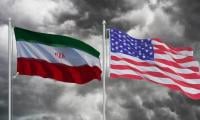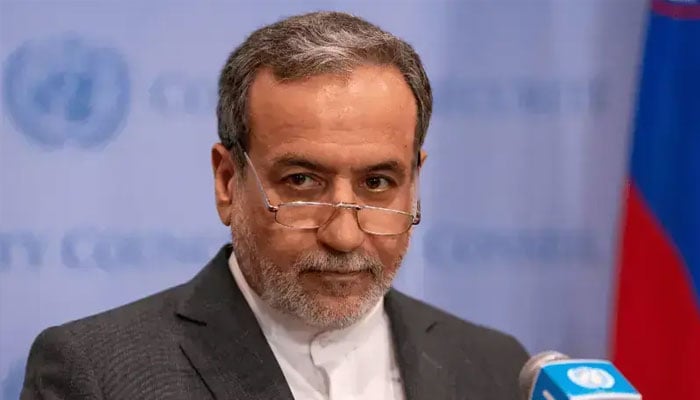
ISLAMABAD: Iran on Monday publicly thanked Pakistan for its support and solidarity following an act of aggression by the United States and Israel.
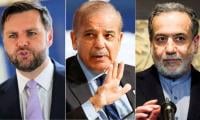
In a post in Urdu on ‘X’, Iranian Foreign Minister Abbas Araghchi praised Pakistan for the position it had taken to support and express solidarity with Iran after it was attacked by the United States and Israel.
“On this blessed, divine, and spiritual day and hour, I extend my heartfelt gratitude to the government and people of Pakistan for their strong expression of solidarity and support with the people and government of the Islamic Republic of Iran in the face of the aggression by America and the Zionist regime,” he said.
Araghchi added that Iran stood with “steadfastness and perseverance in defence of its sovereignty and territorial integrity, with complete reliance on Allah Almighty”.
Ever since the attacks on Iran started Prime Minister Shahbaz Sharif and Foreign Minister Ishaq Dar have had several rounds of mediation at the leadership level while making attempts to de-escalate the continuing tensions in the Middle East.
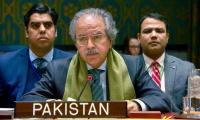
Meanwhile, DPM/FM Dar spoke with Saudi Foreign Minister Prince Faisal bin Farhan. They exchanged views on the latest developments in the ongoing regional situation and its broader implications. Dar emphasised the importance of diplomatic engagement, dialogue and sustained efforts to promote peace, stability and security in the region.
Meanwhile at the Foreign Office here, the Acting US Charge d’Affaires, Zachary Harkenrider called on Foreign Minister Dar. “Discussions focused on Pakistan-US bilateral relations and ongoing regional developments. The foreign minister emphasised the importance of diplomatic engagement and underscored the urgent need to promote peace and stability in the region,” said the FO statement.
Meanwhile, China on Monday, reiterated its offer to continue to play the role of a mediator between Pakistan and Afghanistan as conflict between the two neighbours continues with no signs of a ceasefire, with Beijing suggesting talks as a way out.
During the daily media briefing in Beijing, Chinese Foreign Ministry Spokesperson Lin Jian at said, “China is willing to continue to make efforts to achieve reconciliation and ease relations between Afghanistan and Pakistan,” adding that Beijing has been mediating between both sides in recent days.
“The most urgent task is to avoid the expansion of the war and return the two countries to the negotiation table as soon as possible,” he added. Recently Beijing’s efforts to bring Islamabad and Kabul to the negotiating table saw Chinese Foreign Minister Wang Yi hold telephone conversations with both the Pakistani and Afghan Foreign Ministers, Mohammad Ishaq Dar and Amir Khan Muttaqi respectively.
The Chinese special envoy on Afghan affairs has been shuttling between Afghanistan and Pakistan and Beijing says its embassies have been in close communication with both sides as well.
As strikes from across the western borders continue to find targets inside Pakistan, the Chinese side have been conveyed that Pakistan seeks the dismantling of terrorist sanctuaries of the Tehreek-i- Taliban (TTP) and an end of protection to this terrorist group by the Afghan Taliban regime.
Tahir Andrabi, Spokesperson at the Pakistan Foreign Office hinted that there has been lot of ‘fabrication of facts’ recently as far as the mediatory role of China was related. He told ‘The News’ without naming anyone, or any news story that any unnecessary speculation or fabrication of facts in the ongoing efforts by China to act as a mediator “is unwarranted.”
In this regard he said, “Pakistan and China remain trusted partners and close friends. We maintain regular and close communication on all issues of mutual concern and shared interest. Therefore, any unnecessary speculation or fabrication of facts in this regard is unwarranted.”
Giving the background of recent efforts by China he said, “During the recent telephone conversation between the deputy prime minister/ foreign minister and Foreign Minister Wang Yi, a wide range of issues were discussed, including developments related to Afghanistan. I had also confirmed this aspect of the call during my press briefing last Thursday.”
Similarly, he added that during the visit of Chinese Special Representative for Afghanistan, Ambassador Yue Xiaoyong, (March 12-13) consultations were held on matters relating to regional peace and stability, including Afghanistan.
Pakistan, meanwhile, extended its deepest condolences to the government and people of Ethiopia over the devastating floods and landslides that stuck the country.
“Our thoughts and prayers are with the affected communities, and we commend the efforts of the Ethiopian authorities who are working tirelessly to assist those in need. Pakistan reaffirms its support for the people of Ethiopia and expresses its readiness to extend assistance in any way possible”, said the Foreign Office
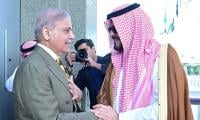
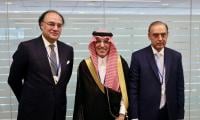
Meanwhile, Riyadh and Islamabad are close to finalising a wide-ranging economic cooperation framework, Pakistan’s ambassador to Saudi Arabia Ahmad Farooq said, with the plan expected to be signed during a visit by Crown Prince Mohammed bin Salman (MBS), the ‘Arab News’ reported.
The framework was first agreed upon in October 2025 during Prime Minister Shehbaz Sharif’s visit to Riyadh with the goal of strengthening trade and investment ties. Saudi Ambassador to Pakistan Nawaf bin Said Al-Malki previously told ‘Arab News’ Riyadh was preparing to sign a strategic economic pact with Pakistan “soon.”
Speaking to ‘Arab News’ in an online interview, Farooq said working groups from both countries were given 90 to 100 days to prepare the plan and contact had continued since.
“The plan is almost finalised and we are hoping that when the visit of his royal highness the crown prince takes place to Pakistan, it would be signed during that visit,” Farooq said.
He did not specify when MBS would travel to Pakistan. A Pakistani foreign office spokesperson earlier said the visit is expected later this year. Riyadh has not yet confirmed the visit.
The economic framework aims to tackle Pakistan’s persistent trade deficit and boost its export capacity. A joint statement issued after Sharif’s October 2025 meeting with the crown prince outlined several strategic projects, including energy, industry, mining, information technology, tourism, agriculture and food security.
“The focus of the economic cooperation framework is to make Pakistan a trade surplus nation,” Farooq said, noting the trade deficit is a central economic challenge. “So, the focus of this plan is to help Pakistan become a trade surplus nation over the next 14 years.”
Farooq emphasised that the framework is not limited to Pakistan-Saudi trade. “This is not just focused on trade between Pakistan and Saudi Arabia, but it is aimed at Pakistan’s global trade with the rest of the world,” he said. “So, the Kingdom is supporting us to increase our overall exports so that we are able to become economically resilient.”
Pakistan and Saudi Arabia have enjoyed cordial relations for decades but have recently sought closer economic and defence cooperation. In September, both the nations signed a strategic defence pact under which an attack on one would be treated as aggression against both.
In 2024, they signed 34 memoranda of understanding worth $2.8 billion across multiple sectors to strengthen trade and business relations. Farooq concluded: “The plan is designed to strengthen our economic partnership and make Pakistan more resilient in the years to come.”