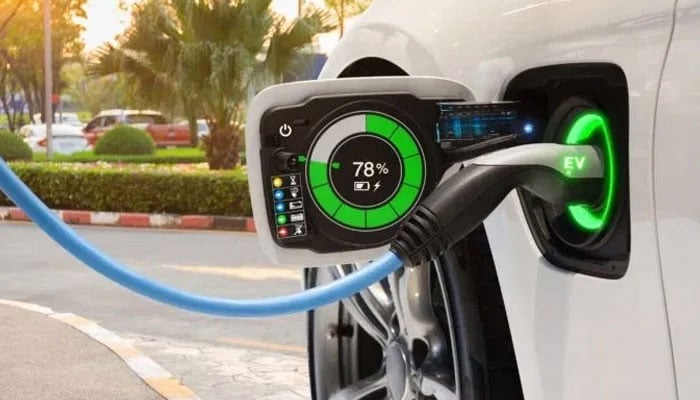
Given the recent developments in the country, it seems policymakers here are not fans of coordination. The recent concerns raised by the Oil Companies Advisory Council (OCAC) regarding the mandatory installation of electric vehicle (EV) chargers at petrol stations raise the question: do lawmakers consult industry insiders when drafting policy? In a classic policy-versus-reality disconnect, the council argues that while the government’s New Energy Vehicles (NEV) policy is environmentally noble, its current implementation strategy risks stalling the very industry it needs as a partner. The government aims for a strong EV network by 2030, but the reality is a lot different. With only about 3,000 EVs on the road, compared with the projected 125,000, there is no significant demand for such charging stations.
For an oil marketing company (OMC), installing a Level-3 fast charger is a massive capital expenditure. The council said one charging station requires an estimated capital investment of Rs15 million to Rs20 million, excluding transformer and cabling costs, largely due to the need for high-capacity grid connectivity and backup power arrangements. Now, this investment has become a prerequisite for K-Forms (operating licences) or new layout approvals, which feel less like a punitive tax on traditional fuel retailers. Successive governments here follow the same pattern: they announce the policy, then offer concessions when the industry speaks up. Instead of complicating the matter, a viable approach is to hold consultations before drafting the legislation. It is an important reminder that EVs are not fuelled like petrol cars. A quick stop for a petrol refill takes five minutes, while a fast charge takes significantly longer. Globally, the most successful EV charging happens where cars sit idle, homes, malls and offices. Turning petrol stations into mandatory charging hubs before the technology or the vehicle population is ready ignores the operational design of these outlets, which are built for high-speed turnover, not long-duration parking.
What should the way forward be for Pakistan, then? This does not imply that the country must abandon its goal of building a greener Pakistan. There is no doubt that for Pakistan, transitioning away from fossil fuels is an existential necessity. However, forcing an infrastructure in a demand-starved market is a recipe for disaster. We should ideally aim for a phased transition in which all stakeholders are on the same page. Instead of forcing retailers to install EV chargers to obtain licences, the government must develop a plan that allows the transition to be gradual without hurting anyone’s pocketbook. The government must consult with OMCs to create a demand-driven roadmap. The council also complained about the lack of clarity regarding customs duties and other related matters. The government should offer duty-free imports of charging equipment and tax credits for early adopters.