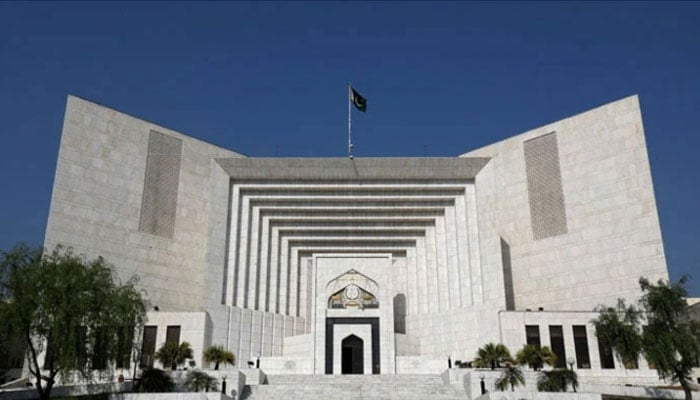
ISLAMABAD: The Supreme Court has struck down the appointments of candidates as primary schoolteachers in Khyber Pakhtunkhwa, ruling they have no legal right to challenge the recruitment policy after failing to qualify in the National Testing Service (NTS).
A two-member bench of the apex court, comprising Justice Ayesha A Malik and Justice Shakeel Ahmed, issued the judgment on Saturday on an appeal filed by the Government of Khyber Pakhtunkhwa through the secretary of Elementary and Secondary Education Department. The appeal challenged the judgment of the Peshawar High Court (PHC), Bannu Bench. The four-page written judgment was authored by Justice Shakeel Ahmed.
The PHC had declared those candidates eligible for appointment to the posts of primary schoolteacher who had not qualified through the NTS.
The Supreme Court, after accepting the appeal of KP government, set aside the PHC order dated September 23, 2024. The court held that candidates who fail the test under the recruitment policy have no legal right to challenge the results in any court.
The court observed that the Education Department’s 2017 policy is lawful and that courts generally do not interfere in matters of government policymaking.
It further held that once a candidate participates in the recruitment process, they cannot later raise objections to the predetermined eligibility criteria.
“Furthermore, after failing the test, legal proceedings under the right of claim cannot be maintained and mandatory eligibility conditions cannot be compromised,” the judgement stated.
The court held that the principle of estoppel applies in this case, adding that the candidates were fully aware of the recruitment criteria and participated in the process without any protest.
“According to the law, when a candidate voluntarily takes part in a selection process under known conditions, they lose the right to object to those conditions after failing,” the court ruled.
It further held that in legal terms, this is referred to as waiver and acquiescence, which prevents them from raising disputes regarding the eligibility requirements afterward.
The apex court noted that if the legality of the policy was to be challenged, it should have been done through the appropriate constitutional procedure, rather than filing a civil claim after failing in the recruitment process.