PESHAWAR: The Khyber Pakhtunkhwa government on Monday announced temporary measures for two months to reduce non-essential fuel consumption while safeguarding economic activity, Eid travel and agricultural operations.
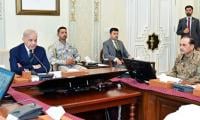
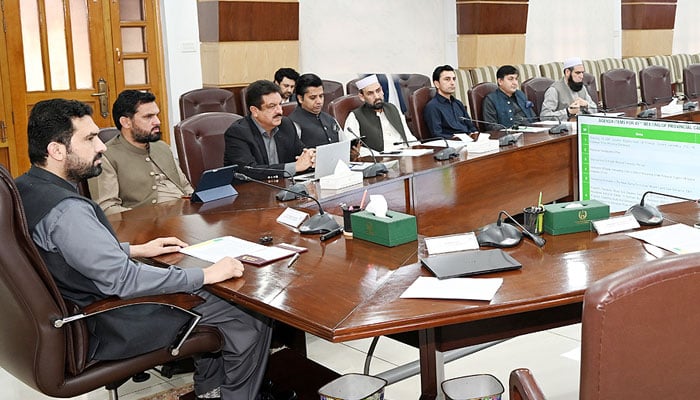
The measures were unveiled as the provincial cabinet met under the chairmanship of Chief Minister Muhammad Sohail Afridi and approved a “Fuel Conservation & Responsible Governance Initiative”.
The decisions were taken in view of the evolving international situation affecting petroleum supplies and prices, and the potential pressure in the country.Under the initiative, government departments will maximize the use of digital platforms for official work; provincial offices will introduce up to 50 percent work-from-home arrangements, and inter-district official travel will be minimized; a 25 percent reduction would be made in fuel entitlement for official vehicles; and educational institutions will remain closed on Fridays.
Briefing the media on the cabinet decisions, Special Assistant to Chief Minister on Information and Public Relations Shafiullah Jan said all provincial and district level meetings would preferably be conducted through virtual platforms such as Zoom, while the use of the e-Office system will be ensured for official file movement.
The e-Office facility would be extended to commissioners and deputy commissioners to strengthen paperless governance.Routine coordination and review meetings will be shifted online to reduce fuel consumption associated with travel.
The cabinet decided that a 25 percent reduction in fuel entitlement for official vehicles would also be subjected to administrative vehicles and officers holding administrative positions.However, exemptions will apply to police and law enforcement operations, rescue and emergency services, and operational field enforcement units.
In addition, VIP protocol convoys will be reduced, and the use of official helicopters will be restricted to critical emergency duties only.As part of austerity measures, procurement of non-essential furniture and equipment will be restricted. Seminars, workshops and conferences will be minimized or shifted to virtual formats, while official dinners and receptions will remain banned.
The government facilities will be used for official meetings and events to avoid unnecessary expenditure.Shafiullah Jan explained that educational institutions would remain closed on Fridays to reduce energy and fuel consumption without disrupting economic activity.
The courts and universities will be encouraged to adopt virtual hearings and hybrid learning models where feasible. Staggered office timings will also be encouraged to reduce traffic congestion.
Urban energy conservation measures will include restrictions on excessive decorative lighting in wedding halls, plazas and markets, as well as limitations on late-night wedding hall operations. Commercial establishments will be encouraged to reduce unnecessary lighting.
Traffic management measures will be implemented to reduce congestion-related fuel wastage. Citizens will be encouraged to utilize public transport, particularly during the Eid travel period, and to limit non-essential travel.
The special assistant insisted that the fuel conservation measures would not negatively impact vulnerable groups or key economic sectors.Relief for registered motorbike owners will be provided as previously announced, while the government would consider targeted support for the public transport sector if fare pressures emerge.
No increase in tolls or public transport travel costs will be allowed. Special focus will also be placed on protecting the agriculture sector.Stable diesel availability will be ensured for wheat harvesting operations, and diesel supply will be closely monitored in agricultural districts. Strict action will be taken against hoarding or illegal stockpiling of fuel.
District administrations will monitor petrol pump stocks on a daily basis and regularly report fuel availability to provincial authorities.The cabinet approved various schemes for the Local Government, Communications and Works, and Irrigation Departments under the Peshawar Revitalization Plan. These schemes relate to road improvements, construction of underpasses, development of traffic management infrastructure, installation of monuments, and installation of traffic lights.
Shafiullah Jan stated that the cabinet approved a non-ADP scheme for the solarization of 120,000 poor households in the merged districts.In the social welfare sector, the cabinet approved Rs 41.73 million for the provision of winter clothing for students with disabilities in different special education institutes. It also approved Rs 168.72 million as a grant-in-aid for the Ramazan Dastarkhwan and for enhancing the number of beneficiaries of the Ramazan Relief Package to 1,057,673 families.
The cabinet approved the release of Rs 400.00 million as a supplementary grant for the payment of 50 per cent of outstanding liabilities during the current financial year (CFY) 2025–26, with the allocation of the remaining reconciled amount, along with additional reconciled dues, in the next fiscal year’s budget (FY 2026–27).
It approved a non-ADP scheme for the clearance of pending liabilities in respect of the closed scheme titled “Establishment of Social Media Participatory Platforms for Public Awareness and Feedback Regarding Reform Initiatives and Encouraging Civic Responsibility,” amounting to Rs. 41.018 million.
The cabinet okayed amendments to the Debt Management Fund Rules and the appointment of the Chief Executive Officer of the Khyber Pakhtunkhwa Economic Zones Development and Management Company.
Earlier, addressing the cabinet members, the chief minister emphasized that in the context of the ongoing global energy and economic pressures, governments must prioritize the protection of citizens and adopt practical measures to mitigate the impact of economic shocks on the public.
He stressed that during periods of economic strain, fiscal adjustment measures should begin with the rationalization of government expenditures and privileges within state institutions rather than transferring the burden to citizens.