ISLAMABAD: Raising the Indus Waters Treaty (IWT) issue, Pakistan on Friday strongly rejected water “weaponisation” and “water terrorism” by India, during the UN Security Council briefing on “Energy, Critical Minerals and Security”.
Pakistan stands ready to work with all members of the Council and beyond to ensure that critical minerals become catalysts for sustainable development, progress and stability, said Permanent Representative of Pakistan at the UN Ambassador Asim Iftikhar Ahmad in his statement.
He emphasised that the scramble for natural resources and its linkage to conflict and instability was not new and it would be good to change the course.
“Pakistan believes that natural resources must serve as instruments of economic development and shared prosperity, and not coercion or conflict.
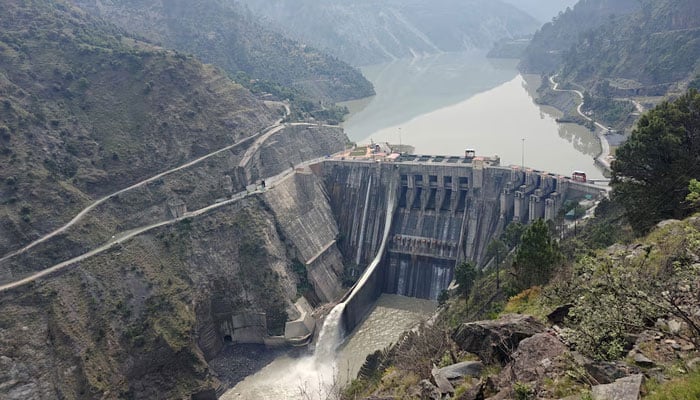
This applies equally to water, the most critical of natural resources. In particular shared water resources are indispensable for sustaining life, and for sustainable development and prosperity. We reject the weaponisation of water to choke this lifeline for lower riparians, also threatening regional peace, security and stability,” he said.
Pakistan itself, he underlined, was confronted with water terrorism by India that had resorted to unilateral and unlawful action of putting in abeyance of the Indus Waters Treaty in violations of international law and the provision of that Treaty.
“The international community must impress upon India to return to full compliance with the Indus Waters Treaty, which remains valid and in-force as per the August 2025 award of the Court of Arbitration,” he added.
Turning to energy, critical minerals and security, the ambassador said as far as Pakistan was concerned, its objective was to ensure that its resource potential translated into industrial growth and social development.
Pakistan is committed to the responsible development of its energy and mineral resources, he said. In this regard, he told the Security Council that the Government of Pakistan had launched targeted initiatives to accelerate exploration and development of critical minerals.
“We are strengthening our regulatory frameworks, modernizing geological mapping, improving licensing transparency and promoting environmentally responsible mining practices. Our objective is to ensure that our resource potential translates into industrial growth and social development,” he said.
The member states, he reaffirmed, must ensure the right of peoples to permanent sovereignty over their natural resources, which remain a foundational principle of international law, also enshrined in GA resolution 1803.
All partnerships in the critical minerals sector must be cooperative and not exploitative, respect national ownership, ensure transparent contractual arrangements and align with host countries’ development strategies.
“Also in order to prevent the exploitation of mineral-producing countries and regions, particularly in fragile and conflict-affected settings, support their capacity-building for strengthening domestic regulatory institutions, combating illicit financial flows, ensuring environmental safeguards, and promoting equitable benefit-sharing with local communities,” he added.
There must be equitable participation in the global value chains, and developing countries must be enabled to move beyond extraction towards processing, refining and downstream manufacturing. Technology transfer, skills development and responsible investment are essential to avoid perpetuating structural imbalances.
“We must also preserve an open, predictable, non-discriminatory international trading system. Supply chain diversification should enhance resilience, not entrench divisions. Multilateral cooperation, rather than unilateral measures, remains the most credible path to energy security.