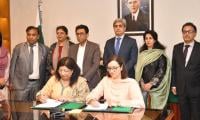
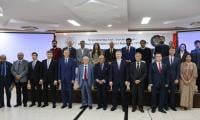
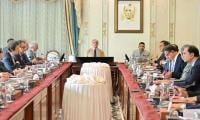
Rawalpindi:A stakeholders’ consultation on Landfill to Zero Waste Assessment and Stakeholders consultation on Final Waste Streams Rawalpindi was jointly convened by the Dr. Akhtar Hameed Khan Memorial Trust (AHKMT) and Pir Mehar Ali Shah Arid Agriculture University Rawalpindi (PMAS-AAUR), says a press release.
The event brought together representatives from academia, municipal authorities, environmental regulators and waste management professionals to deliberate sustainable solutions for Rawalpindi’s mounting solid waste challenge.
Students from the Faculty of Social Sciences presented findings of a detailed landfill waste composition study, revealing a high proportion of biodegradable organic waste alongside significant volumes of recyclable plastics and paper.
The research underscored the urgent need for segregation at source, composting, and establishment of Integrated Resource Recovery Centres to reduce landfill dependency and environmental risk.
Environmental regulators stressed the necessity of compliance, leachate management and stronger enforcement mech-anisms.Shahid Iftikhar Bukhari, Director Agriculture Extension, Rawalpindi Division, emphasised converting organic waste into compost to enhance soil fertility and reduce landfill volumes.
Dr. Hamid of the Rawalpindi Waste Management Company reported that around 1,000 tonnes of waste reach Losar daily, with 600 kanals already consumed, urging university collaboration for material recovery and compost production.
Dr. Sadia of the Environmental Protection Agency called for stricter compliance, monitoring and leachate management. Sumaira Gul, CEO of the Dr. Akhtar Hameed Khan Memorial Trust, promoted the IRRC model and behavioural change initiatives. Dr. Arshad Nawaz advocated integrating compost into modern agricultural systems.The event reaffirmed the critical role of academic-community partnerships in shaping practical, evidence-based environmental policy for a cleaner and more sustainable Rawalpindi.