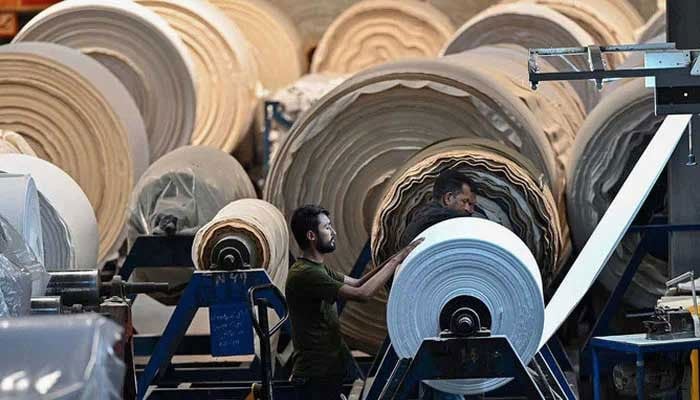
ISLAMABAD: Pakistan’s textile sector, the country’s largest export industry, has sounded the alarm over delays by power distribution companies (discos) in granting multiple industrial connections — a move that industry officials warn could stall expansion and push companies into expensive 132 kV infrastructure.
In a letter dispatched to Federal Minister for Power Sardar Awais Ahmad Khan Leghari on March 3, the All Pakistan Textile Mills Association (Aptma) has urged immediate government intervention to enforce Clause 2.8.1 of the National Electric Power Regulatory Authority (Nepra) Consumer Service Manual, which explicitly allows multiple industrial connections at the same premises where industries are of “different nature,” under the same tariff category, and subject to technical safeguards.
Aptma says the dispute centres on the interpretation of “industries of different nature.” The textile and apparel value chain — spanning ginning, spinning, weaving, dyeing & processing, garmenting, and home textiles — comprises technically distinct processes, each with unique machinery, load profiles, environmental controls, and safety requirements.
“Discos’ restrictive approach is effectively denying industries their lawful right to multiple connections,” said Aptma Chairman Kamran Arshad. “Industrialists are being forced to invest in costly 132 kV infrastructure even where adequate 11 kV distribution capacity exists.”
Clause 2.8.1 already allows independent feeders, transformer augmentation, and cost-recovery measures to protect grid stability. Despite this, multiple B-3 connections in integrated textile complexes are reportedly being delayed or denied.Aptma noted that all proposed connections fall under the B-3 industrial tariff and remain within the technical limits of existing distribution grids.