ISLAMABAD: Vaping devices could potentially be misused for drug intoxication and other harmful substances, Senate Standing Committee on National Health Services was informed on Tuesday.
The warning came as lawmakers debated a proposed law to regulate electronic nicotine delivery systems amid growing concern over their rising use among young people.
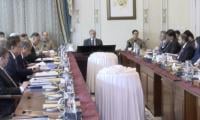
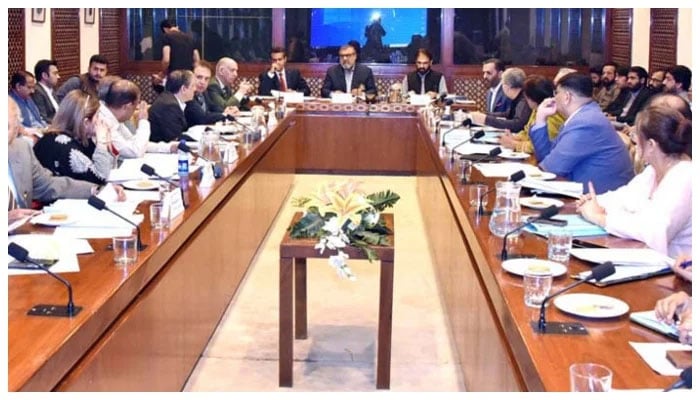
The matter was discussed during a meeting of Senate Standing Committee on National Health Services, Regulations and Coordination at Parliament House, chaired by Senator Amir Waliuddin Chishti. Members reviewed a Private Member’s Bill titled “The Electronic Nicotine Delivery Systems (Regulation) Bill, 2025”.
Officials from Ministry of National Health Services told the committee various stakeholders had expressed concerns that vaping devices, if left unregulated, could be used for drug intoxication. The committee was also informed many countries have already introduced restrictions or regulatory frameworks for such products.
Federal Health Minister Mustafa Kamal said vaping has become increasingly common among teenagers and young people. “Vaping has become a fashion”, he remarked, noting adolescents often use these devices openly. He also pointed out Pakistan does not manufacture these products locally and spends foreign exchange on their import. The discussion became tense when Senator Sarmad Ali criticised the ministry’s response to proposed law. He stated primary objective of the bill was to prevent individuals under 18 from using vaping devices and to curb their spread among children.
“Eighteen years of age was central point of legislation”, Senator Sarmad Ali told the committee, adding he had worked with officials, including Director General Health, to address technical issues in the draft bill.
In response, health minister assured the committee government was open to considering all viewpoints and would provide detailed responses to concerns. He noted many countries have adopted different regulatory approaches to control vaping products, and Pakistan would also need to establish a suitable framework after thorough consultation.
After deliberations, the committee decided further consultations were necessary and directed the ministry to incorporate proposed amendments and present a detailed briefing at the next meeting.
In addition to vaping regulation, the committee reviewed centralised admission policy for private medical colleges and expressed concern over current weightage assigned to Medical and Dental College Admission Test (MDCAT).
Members said existing formula, which gives 50 percent weightage to MDCAT, appears disproportionate and should be reconsidered. They urged Pakistan Medical and Dental Council (PMDC) to review rationale behind the current structure and align admission system with international standards.
Chairman Senator Amir Waliuddin Chishti also highlighted complaints some private medical colleges were charging admission fees above officially capped limit. He directed PMDC to take strict action against institutions violating rules and to ensure students and parents are not exploited during admission process.
Lawmakers further stressed the need to increase number of medical seats in the country to accommodate growing number of aspiring medical students.
During the discussion, several senators proposed revising admission formula by reducing weightage of MDCAT and placing greater emphasis on academic performance in Matric and FSc examinations. The committee directed PMDC to review admission criteria and present an evidence-based briefing at the next meeting.
The committee also discussed licensing issues for foreign-qualified doctors and directed PMDC to facilitate those who have successfully cleared National Registration Examination so they can obtain medical licenses without unnecessary delays.
Separately, the committee examined complaints regarding alleged arbitrary selection of students from Balochistan by University of Health Sciences under Prime Minister’s Special Scholarship Programme. Members said concerns had been raised that students selected through prescribed process by Higher Education Commission and PMDC were being overlooked.
The chairman directed PMDC to thoroughly investigate the matter and ensure transparency in resolving it.