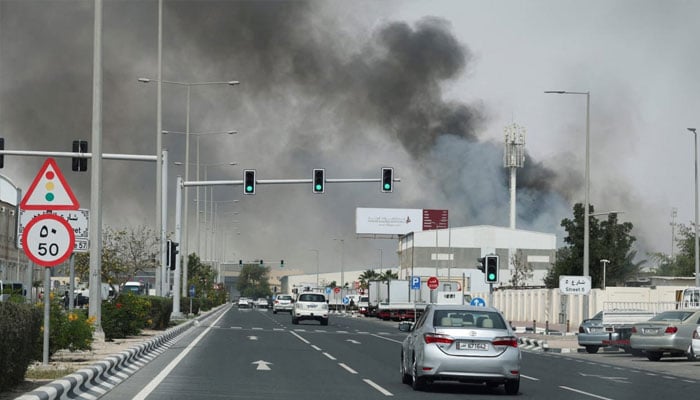
Mohammad Hussain, a Pakistani construction worker in Dubai, watched drones strike the city where he earns AED3,000 a month and sends Rs150,000 to support his family back home. Faisal Khan, a mid-level banker in Lahore, now pays Rs55,000 for electricity — nearly a quarter of his salary. Noor Khan, a truck driver, can no longer take his vehicle across the Afghan border.
Three men. Three fires. One country. Last year, Pakistani expatriates remitted $38 billion — more than the country’s entire merchandise export earnings and far exceeding foreign direct investment of $2.5 billion. Of that, roughly $8 billion came from the UAE and about $9 billion from Saudi Arabia.
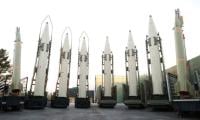
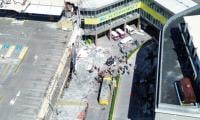
For Pakistan, remittances are not a side story — they are Pakistan’s balance sheet. Iran fired 165 ballistic missiles, 2 cruise missiles, and 541 drones at the UAE. Iran launched 65 missiles and 12 drones at Qatar. Kuwait International Airport was hit. Iran targeted the Crowne Plaza Hotel in Manama. The Port of Duqm was struck by two drones, injuring one expatriate worker.
In all probability, the Gulf economies will contract. Construction will slow and hospitality will shrink. Pakistani workers — concentrated in precisely the sectors most exposed to that contraction — will be among the first to feel it. Even a 10 per cent reduction in the Pakistani worker population across the Gulf — 600,000 to 700,000 people returning home – would remove roughly $3-4 billion annually from Pakistan’s remittance income. That is not a rounding error. For a country whose foreign exchange reserves have rarely exceeded $15 billion, it is an emergency.
Faisal Khan’s electricity bill did not arrive from a war zone — it arrived from Pakistan’s fuel import dependency. Nearly 90 per cent of the country’s oil needs are imported. Crude moved towards the $80-a-barrel mark after the first missiles struck Tehran. For every $20 increase in oil prices, Pakistan must pay an additional $3 billion a year. That higher import bill does not stay at the port. It travels into the price of flour, transport and every good that moves by road. When global crude is on fire, Pakistanis must pay the bill.
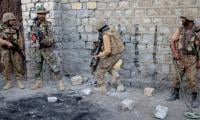
Noor Khan has not driven his truck across the Torkham or Chaman border crossings in weeks. He is not alone. Pakistan must now burn through an estimated $15-25 million every single day in active military operations — airstrikes, artillery, drone sorties, logistics, and the relentless consumption of ammunition that state-on-state warfare demands.
In about a month of conflict, the cost of the war — military expenditure, equipment losses and stock market destruction — is conservatively estimated at $1-$2 billion. This is not a war Pakistan chose. It is a war that was brought to Pakistan’s doorstep — by a regime in Kabul that has sheltered, armed, and directed the TTP across the border for years. Noor Khan’s truck sits idle. The meter, however, keeps running.
In about a month of conflict, the cost of the war — military expenditure, equipment losses and stock market destruction — is conservatively estimated at $2-3 billion. That is money Pakistan does not have, spent on a war Pakistan did not choose. This conflict was brought to Pakistan’s doorstep by a regime in Kabul that sheltered and directed the TTP for years, until restraint became indistinguishable from weakness. Pakistan had no choice but to fight. But having no choice does not make the bill disappear.
Noor Khan’s truck sits idle. Mohammad Hussain watches the sky. Faisal Khan opens another electricity bill. One country. Three fires. No sign yet of rain.
The writer is an Islamabad-based columnist.