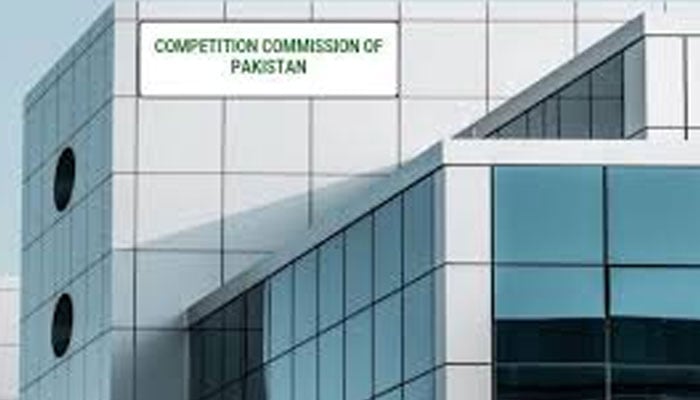
ISLAMABAD: With 94 per cent of households in Pakistan not owning a single car, the Competition Commission of Pakistan (CCP) has highlighted structural and regulatory distortions in the automobile sector and called for wide-ranging reforms to improve competition, efficiency and affordability.
In a report titled ‘The Road to Fair Competition — A Study of Pakistan’s Automobile Industry’, released on Monday, the CCP recommended a long-term policy roadmap, improved vehicle financing frameworks and the removal of regulatory distortions to create a more competitive market environment.
A review of market shares shows that Pak Suzuki Motor Company leads with 45 per cent, followed by Indus Motor Company (Toyota) at 22 per cent and Honda Atlas Cars Pakistan at 12 per cent. Newer entrants — including Kia Motors, Sazgar Engineering Works and Hyundai Nishat Motors — collectively account for around 18 per cent of the market, while smaller assemblers such as Ghandhara Automobiles hold the remaining share.
Despite successive policy interventions, the industry has struggled to achieve export competitiveness. The CCP attributed this not to a lack of private-sector capability but to policy inconsistency, structural cost disadvantages and limited institutional support, which have prevented integration into global value chains.
The report challenges the perception that lowering import duties alone would enhance competitiveness, arguing that tariff reductions without parallel development of testing facilities, financing mechanisms and export incentives risk encouraging imports at the expense of local production.
Local vendors face structural cost pressures due to the absence of domestic production of key raw materials such as automotive-grade steel, plastics and aluminium. Most inputs are imported, with port and logistics costs adding an estimated 10-15 per cent compared with regional peers. High energy tariffs and unreliable gas supplies further raise production costs. By contrast, countries such as India and Thailand provide energy subsidies and raw material support to their automotive sectors.
Pakistan’s limited domestic market has also constrained economies of scale. Annual vehicle production often remains below 200,000 units, compared with more than two million units in India and around 1.5 million in Thailand. Continued used-car imports and volatile auto financing policies have further dampened demand, creating uncertainty for local vendors.
While localisation levels by parts count range between 50 per cent and 70 per cent for high-volume models such as the Toyota Corolla, Honda City and Suzuki Alto, value-based localisation averages 40-60 per cent, as high-value components — including engines, transmissions and advanced electronics — are still imported. Newer entrants have relied heavily on completely knocked down (CKD) kits under time-bound duty concessions, delaying deeper localisation.
According to the Pakistan Social and Living Standards Measurement Survey 2019-20, around 94 per cent of households do not own a car. Even in urban areas, ownership remains below 10 per cent, and in rural areas under 4.0 per cent. Out of roughly 32 million households nationwide, fewer than two million own a car.
Pakistan’s motorisation rate remains below 20 vehicles per 1,000 people, compared with 33 in India, 46 in Vietnam and 147 in Thailand — underscoring limited domestic demand and constrained industrial growth.
The automobile industry contributes around 2.8 per cent to GDP and employs more than 215,000 people directly. As a key segment of large-scale manufacturing, it plays a significant role in industrial output, technology transfer and domestic value addition. The CCP concluded that without stable, demand-oriented policies and structural reforms, the sector will struggle to achieve scale, competitiveness and broader affordability.