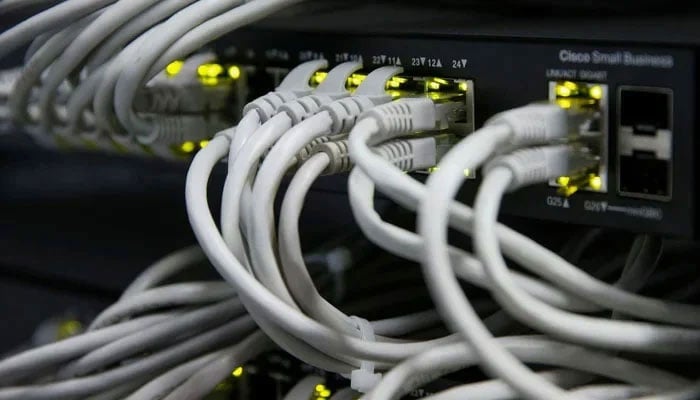
It seems the government has adopted the ‘if you can’t convince them, confuse them’ mantra to deal with all things related to the IT sector. Days after reports went viral that authorities had decided to shut down the infamous ‘firewall’ ahead of 5G spectrum auction (expected next month), the National Assembly Standing Committee on Information Technology has been informed that those reports were incorrect and that the system is very much in place. The authorities call it a ‘web management system’ (WMS) and say that the word ‘firewall’ is a colloquial term for WMS. One is hardly sure what to make of all this but one thing can be said with utmost certainty: the internet in Pakistan is a mess. There is little clarity on what is behind the sluggish internet – the much-complicated WMS or the low amount of assigned spectrum? Currently, Pakistan has among the lowest amounts of assigned spectrum for mobile in the Asia Pacific region at around 270 MHz, compared to the APAC average of more than 700 MHz in low and mid-bands.
The auction that the country is conducting next month was supposed to be held in early 2025. But factors such as pricing models led to long delays. In recent years, there have been quite a few instances in which the internet suddenly stopped working, leading to losses for app-based businesses. From cable providers to tech experts, everyone is in utter confusion, unable to identify the root cause. Sometimes, it’s the mischievous sharks, who, going against their carnivorous nature, love chewing on undersea cables. Other times, there are rumours of ‘test trials’ by the government to check if they could restrict content. This lack of clarity and sudden outages have already cost a lot of money.
In terms of spectrum allocated per million people, Pakistan has the lowest spectrum per capita when compared to its regional peers. Sri Lanka has 15.2 MHz, Vietnam 7.4 MHz, India 3.9 MHz, Bangladesh 3.6 MHz, Indonesia 2.1 MHz, and Pakistan just 1.1 MHz. Without a stable, strong internet connection, our dream of becoming a tech destination can never become a reality. In fact, a reliable internet infrastructure is essential for advancing our crypto adoption goals. The nature of cryptocurrency transactions and operations demands stable connectivity and high computational capacity. Without a strong internet backbone, it becomes challenging to facilitate the operations of digital currency platforms. There is no denying that in the age of information warfare, any misinformation could spark large-scale riots. But Pakistan is not the only one dealing with it. We saw in the UK some time back how a fake post ignited racist attacks. What we need is a clear policy that allows the country to develop infrastructure to ensure uninterrupted internet across Pakistan. And this is how we can build a digital Pakistan.