Islamabad:National Commission on the Status of Women (NCSW) noted the recent proceedings before the Supreme Court concerning the legal parameters governing the grant of a decree of ‘Khula’, says a press release.
The Commission acknowledges and respects the Court’s authority to seek assistance from the Council of Islamic Ideology and learned counsel in clarifying questions of Islamic jurisprudence and family law.
The Commission believes to emphasise that the matter presently under consideration relates to the interpretation and application of already established legal principles, and no adverse ruling has yet been made. It is therefore imperative that settled jurisprudence governing khula be reaffirmed in a manner consistent with constitutional guarantees and Islamic legal tradition.
At the same time, NCSW underscores that the right of a Muslim woman to seek dissolution of marriage through khula is not a novel or unsettled question in Pakistani law. The principle was authoritatively settled by the Supreme Court in Khurshid Bibi v. Baboo Muhammad Amin (PLD 1967 SC 97), which held that where a court is satisfied that spouses cannot live within the limits prescribed by Allah, dissolution may be granted.
This interpretation recognised khula as an independent mechanism of justice, not confined strictly to proof of physical cruelty.Subsequent judicial practice has consistently treated khula as a no-fault remedy, distinct from judicial divorce on specific fault grounds. It is therefore critical that khula not be conflated with cruelty-based dissolution in a manner that reintroduces restrictive evidentiary burdens inconsistent with settled law.
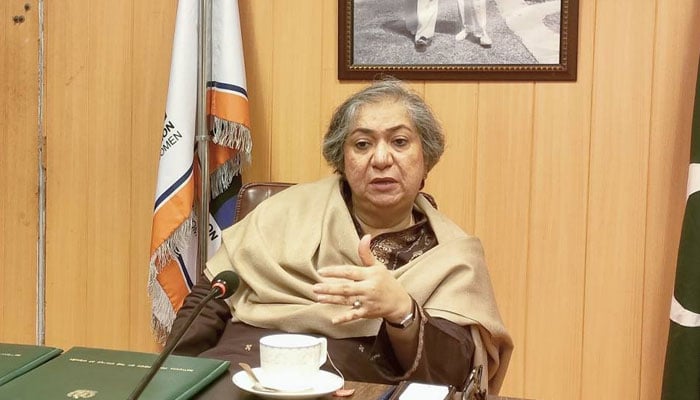
Chairperson Ume Laila Azhar stated: “Marriage in Islamic law is a civil contract founded on mutual consent, dignity, and the willingness of both parties to continue the relationship. When these essential elements no longer exist, the law must provide a dignified and accessible exit. Khula is not dependent solely upon establishing visible acts of violence; it exists to prevent prolonged harm, incompatibility, and irretrievable breakdown.”
The Commission notes that domestic harm often occurs within private spaces, without independent witnesses. Courts have long recognised that cruelty is not limited to physical assault but may include emotional abuse, sustained neglect, economic deprivation, humiliation, or conduct that makes continued cohabitation untenable.
Family courts are experienced in assessing credibility and weighing evidence in such matters, and procedural safeguards exist to ensure fairness to both parties.Family courts are equipped to evaluate testimony, assess consistency, and determine credibility without imposing unrealistic evidentiary expectations.
NCSW further emphasises that evidentiary standards must reflect the lived realities of matrimonial disputes. Requiring external witnesses to acts of domestic violence would render relief illusory in many cases. The protection of dignity applies equally to both spouses; however, preserving dignity cannot mean compelling a woman to remain in a marital bond that has irretrievably broken down.
The Commission also stresses that where a woman seeks dissolution and her unwillingness to continue the marriage is clear and consistent, courts must ensure that procedural formalities do not defeat substantive justice.