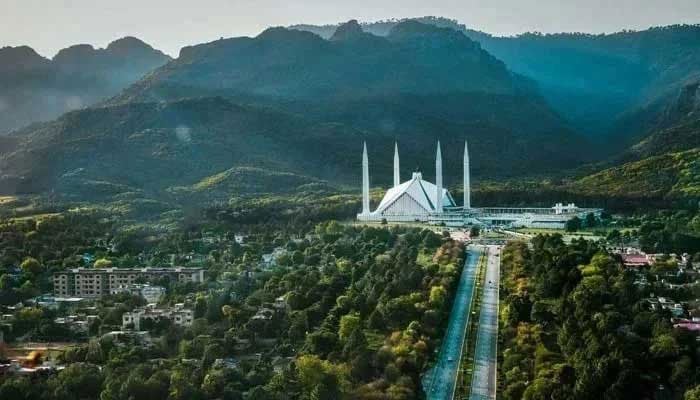
People across the country often argue that Islamabad has it better than their cities, citing its wide roads, green hills, impressive buildings and pockets of relative cleanliness. Yet the real decay in the capital’s governance does not lie in what is visible above ground, but in what runs beneath it.
The question to pose here is: Does water governance, public health, the environment, life under water, ecology and biodiversity matter more than driving your car on an eight-lane signal-free highway, with one hand on the steering wheel and the other taking a snap?
The issue of water pollution in Rawal Dam was raised by Senator Sherry Rehman during a meeting of the Senate’s Standing Committee on Climate Change late last year, and the findings should have rung alarm bells right then, but things have largely moved on as business as usual, perhaps even slower.
It was revealed that nine million gallons of sewage were being discharged into the dam daily. Shocking, right? The primary water source for millions of people living in Rawalpindi and Islamabad is polluted to the core, filled with chemicals, bacteria, human waste, and waste from about 170 poultry farms with 360 sheds, posing risks of waterborne diseases such as diarrhoea, typhoid, hepatitis, dysentery and other intestinal infections, including polio.
Rawal Dam’s pollution is not anecdotal; it has been repeatedly documented in scientific studies, including a research titled ‘Water Quality Monitoring Report of Rawal Lake’, submitted to the Supreme Court of Pakistan (2018). Water entering the lake from key inlets, particularly near the Twin Towers/1-Constitution area, was found to be severely contaminated with waste and disease-causing bacteria. The report documented oxygen levels in parts of the lake dropping to dangerously low levels, conditions described as lethal for fish and harmful to the lake’s ecosystem. It concluded that pollution from incoming streams was significantly degrading the lake and warned that continued discharge of untreated waste posed a serious environmental threat.
Another research titled ‘Estimation of Water Quality Parameters of Rawal Lake and Its Associated Tributaries’ (2022) says that Rawal Lake and its feeder streams show significant water quality deterioration due to untreated sewage discharge, poultry waste and high population pressure in the catchment area. The study found elevated pH, high total suspended solids, and bacterial contamination, including E coli, beyond WHO permissible limits, concluding that the lake water is not suitable for drinking without proper treatment.
A 2022 research study, ‘Comprehensive analysis of spatial distribution of microplastics in Rawal Lake, Pakistan using trawl net and sieve sampling methods’, found that tiny plastic particles, known as microplastics are present across all tested areas of Rawal Lake.
So, what this really comes down to is a failure of water governance. We are not only suffocating aquatic life beneath the surface; we are knowingly exposing millions of people to contaminated water. That is not merely administrative neglect; it is a conscious choice about priorities. And it is a remarkable way to run a city, particularly one that’s a federal capital.
The presence of microplastics in Rawal Lake means fish are constantly ingesting tiny plastic particles along with their food. These particles can block digestive systems, reduce feeding ability, impair growth and weaken immunity. Microplastics also act like sponges, absorbing toxic chemicals from the surrounding water and releasing them inside the fish’s body.
Over time, this can affect reproduction and survival rates, quietly damaging the entire aquatic ecosystem. For humans, the concern is indirect but serious: when fish consume microplastics, those particles and the toxins they carry can move up the food chain. In addition, microplastics can enter drinking water supplies. While research on long term human health impacts is still evolving, global evidence increasingly links microplastic exposure to inflammation, hormonal disruption, and potential organ stress. In short, it is not just plastic in the water; we’re basically consuming plastic.
Let’s do some math here: if we get a water waste treatment plant at Rawal Dam, it fixes the problem, right? Unfortunately, no.
Another study, ‘An Assessment of the Drinking Water Supply System in Islamabad, Pakistan’, reports that water from Khanpur is transported to the Sangjani Water Treatment Plant, where it goes through proper treatment processes including coagulation, filtration and chlorination to remove dirt and harmful bacteria.
The study shows that the treatment plant is functioning efficiently and significantly improves water quality. However, the problem starts after treatment. Due to poor and ageing water infrastructure, including cracked pipelines and their proximity to sewage lines, clean water becomes contaminated again as it travels through the distribution network. By the time it reaches consumers, bacterial contamination reappears, indicating that contamination is occurring in the pipelines.
So, how much money will it take to get started and build a waste treatment plant for Rawal Dam, and why isn’t it being financed?
While briefing the same Senate committee cited earlier, the Capital Development Authority (CDA) chairman stated that a project worth Rs6 billion is required to resolve the contamination issue, yet only Rs60 million has been allocated by the federal government. He further stressed that an additional Rs3 billion is urgently needed to establish sewage treatment plants, adding that the Punjab government has been approached for funding.
This raises a very serious question of priorities. Rs6 billion is not an impossible figure for the CDA; the authority has previously financed quite a few flyovers and underpasses within months, in the recent past using its own generated revenue from the sale of prime real estate in Islamabad. If such infrastructure projects can be funded internally, why can’t the same financial capacity be directed towards upgrading water pipelines and building sewage treatment plants that would directly protect public health and save the environment?
The issue does not appear to be capacity, but choice. It reflects a pattern of preference for visible, politically attractive road expansion projects over less visible but critical investments in water infrastructure.
The writer is an advocate for youth empowerment, climate action and strengthening local governance.