Economic transformation drives decent and sustained growth through labour reallocation, skill development, sectoral efficiency gains, and leads to modernisation, technological advancement and better living standards. Inevitably, it transforms production processes and the economy’s structure so that the shares of the manufacturing and professional services sectors in national income eventually surpass those of the agricultural sector.
More generally, structural transformation leads to a notable change in the industrial composition of any economy. The key aspects of structural transformation include sectoral shifts, productivity growth, demographic transition, urbanisation and raised economic wellbeing.
Simon Kuznets, a Nobel laureate in economics, has noted that modern economic growth is not just about more production but about fundamental shifts in an economy’s structure. In this process, resources move from agriculture to industry and services. It leads to the growth of large corporations, urbanisation and economic advancement, largely driven by tech and changing demands, ultimately making rapid and deep structural transformation a hallmark of development.
In this regard, production processes shift from land and/or labour-intensive techniques to capital and technology-intensive methods. Accordingly, the adoption of new technologies and managerial expertise boosts efficiency and thrives on economic development. Holistically, the structural changes and economic transformation encompass virtually all economic functions, including changes in the composition of production, the factors of production, consumption and international trade, as well as the reallocation of resources and changes in demographic dynamics and the socioeconomic fabric.
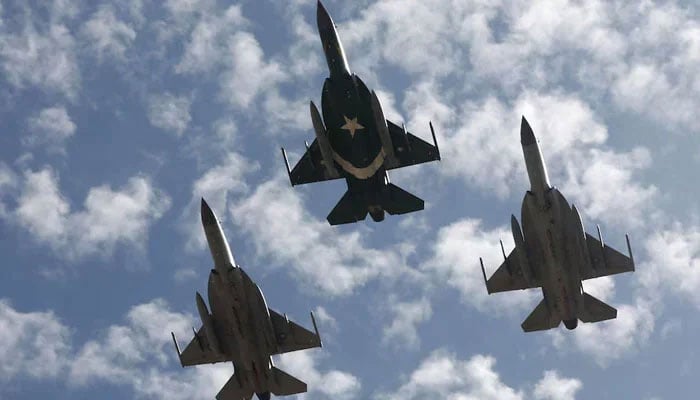
The needed structural transformation towards a more diversified and sustainably developed economy enhances sophisticated production processes and increases the share of high-value-added products in the consumer and export baskets through the reorientation of industries. Against this backdrop, the evolving geostrategic and political-economic landscape offers ample economic dividends, driven by emerging demand for innovative, sophisticated products from modern, advanced manufacturing, including the Aerospace and Defence Industry (A&DI). In recent years, A&DI has made remarkable progress worldwide.
The A&DI’s core value lies in delivering advanced capabilities and maintaining national security, as well as promoting commercial aviation and space. The value proposition of A&DI is translated into tangible economic benefits across both national and international economies. It provides substantial value through its multidimensional domains and operations, including technological innovation, national security and global connectivity. It yields significant economic dividends by creating high-value jobs, driving research and development (R&D) spillover, supporting extensive supply chains, producing value-added products and generating robust trade gains. A&DI turns out to be a key source of sustained economic development in the modern era.
Undeniably, economic strength and military power reinforce each other. In the contemporary world, countries are heavily investing in A&DI. According to the Stockholm International Peace Research Institute (SIPRI), Global Defence outlay surged by 9.4 per cent to around $2.7 trillion in 2024. The data reveal a 37 per cent increase in world military expenditures in the last decade (2015-2024). The US, China, Russia, Germany and India are leading countries in the list. The future outlook and projections point to an upward trajectory, indicating a potential rise in military spending to $2.8 trillion in 2025 and to about $3 trillion by 2028.
Pakistan is not the exception in this regard. The country stands at a strategic crossroads. However, the economy has been facing tough conditions and is fragile. The question arises whether it can convert its strategic capability into sustained economic development through coherent, integrated policy, broader industrial reforms, the recognition and exploitation of latent comparative advantage and export growth. Accordingly, aerospace and defence can turn out to be a pillar of economic transformation and well-being rather than a fiscal burden and resource diversion.
Aerospace defence spending is going to emerge as a long-term global necessity, reshaping worldwide industrial priorities and investment opportunities driven by technology. In a recent report, KPMG International highlighted the emerging trends in aerospace and defence and described them as “navigating a new era of innovation and resilience”. Fortunately, Pakistan has taken some needful steps in this regard. The key and notable feature is the strategic and economic initiative of the National Aerospace Science and Technology Park (NASTP) under the visionary leadership of Air Chief Marshal Zaheer Ahmed Baber Sidhu. This pioneering organisation in Pakistan is conducting cutting-edge research and development and providing innovative services. The direction is right, and the sky is the limit.
The writer is a director at the Centre for Aerospace & Security Studies (CASS), Lahore, Pakistan. He can be reached at: [email protected]