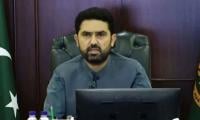
ISLAMABAD: State Minister for Interior Talal Chaudhry Sunday said that nearly 70 terrorists were neutralised after Pakistan struck terrorist targets along the Pak-Afghan border.
“Afghanistan has long been exporting terrorism. Pakistan is taking all actions to secure the life and property of its citizens,” the state minister said while speaking on Geo News’ programme on Sunday.
Explaining further, the state minister said the forces were conducting operations inside Pakistan, with as many as 70,000 intelligence-based operations (IBOs) taking place so far. “Several people have also been arrested in these operations,” he added.
In light of these operations, Pakistan struck seven different targets, and at least 70 terrorists have been killed. “There is ample evidence suggesting that most of the slain terrorists were Pakistanis,” the minister added.
Chaudhry recalled that during the 2020 Doha accords, the Afghan Taliban had promised to the world that they would not allow their soil to be used for terrorism. “However, Afghanistan and its interim government have failed to live up to their promise and have not stopped terrorism.”
He stressed that Pakistan — which has provided a home to thousands of Afghan refugees and also helped Afghanistan economically — remained a responsible state and wished for better relations with its neighbours. He said Pakistan made extensive diplomatic efforts in the past, alongside significant military-to-military talks.
He added that Pakistan was not alone in having concerns about Afghanistan, noting that several other countries have also pointed to Kabul’s links to militant outfits. “UN has also confirmed that more than two dozen outfits are operating in Afghanistan.”
Chaudhry urged all political parties to stand united to protect the country and its citizens, highlighting the importance of collaboration in the fight against terrorism.
“The KP [Khyber Pakhtunkhwa] assured a united front in the [apex committee] meeting in the war against terrorism,” he said. “Every political party and every Pakistani is behind our security forces with a clear narrative to make Pakistan safe,” he added.
The Ministry of Information and Broadcasting early on Sunday confirmed the cross-border strikes, describing them as “precise and accurate” and a retaliatory response to recent suicide bombings in Islamabad, Bajaur and Bannu.
The ministry said the attacks were orchestrated by Afghanistan-based handlers and claimed by elements of the Tehreek-e-Taliban Pakistan (TTP) with links to Fitna al-Khawarij and Daesh.
The government said that intelligence-based strikes were carried out, targeting seven terrorist camps and hideouts belonging to Fitna al-Khawarij, its affiliates and the Daesh-Khorasan along the Pakistan-Afghanistan border in response to recent suicide attacks in Pakistan.
A Pakistani security source told AFP on Sunday that airstrikes on neighbouring Afghanistan killed “more than 80” militants. The source told AFP that the death toll was expected to rise following the overnight strikes, which Islamabad said were targeting Afghanistan-based militant groups in response to suicide bombings in Pakistan.
Sources said the strikes targeted militant hideouts in the Barmal area of Afghanistan’s Paktika province, Khogyani district of Nangarhar province, Ghani Khel, Behsud and Argoon areas.
Later, Kabul summoned Pakistan’s ambassador after the airstrikes in eastern Afghanistan reportedly killed “dozens of civilians” and heightened cross-border tensions.
The Taliban’s Foreign Ministry said it called in Pakistan’s ambassador in Kabul following what it described as Pakistani military airstrikes on the eastern provinces of Nangarhar and Paktika. In a statement released on Sunday, the ministry said the attacks resulted in “dozens of civilian casualties”.
According to the statement, the Taliban termed attacks violations of Afghanistan airspace, describing the strikes as a “clear violation of Afghanistan’s territorial integrity” and a provocative act by Pakistan. The ministry said that continued incursions would carry consequences.
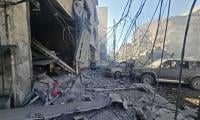
Local sources reported that airstrikes also targeted areas in Khost province, with at least 23 people reportedly trapped under rubble in the Behsud district of Nangarhar.
President Asif Ali Zardari said that Pakistan’s recent actions are rooted in its inherent right to defend its people against terrorism emanating from across its borders and follow repeated warnings that went unheeded, says a press release.
Referring to his statement of Feb 8, 2026, the president recalled that Pakistan had cautioned the international community that “when terrorist groups are allowed space, facilitation or impunity beyond national borders, the consequences are borne by innocent civilians all over the world.” He had also stated that Pakistan takes a strong exception to the situation in Afghanistan where the Taliban regime has created conditions similar to or worse than pre-9/11.
President Zardari said it is a matter of deep concern that the de facto authorities in Kabul, a regime not recognised by the United Nations, have continued to permit terrorist elements to operate from the Afghan soil in violation of their commitments under the Doha Accord, wherein they pledged that Afghan territory would not be used against any country.
He noted that the most recent report of the United Nations Security Council Analytical Support and Sanctions Monitoring Team has reinforced Pakistan’s long-standing position. The report states: “A wide range of member states consistently report that ISIL-K, Tehrik-i-Taliban Pakistan (TTP), al-Qaeda, the Eastern Turkistan Islamic Movement, also known as the Turkistan Islamic Party (ETIM/TIP), Jamaat Ansarullah, Ittihad-ul-Mujahideen Pakistan, and others are present in Afghanistan. Some groups have used or are continuing to use Afghanistan to plan and prepare external attacks.”
The president observed that this assessment by the United Nations makes clear that the presence and activities of these organisations pose serious threats to neighbouring countries, including Pakistan. He said it is regrettable that despite clear warnings and repeated engagement, the Afghan authorities failed to take credible and verifiable action against these elements.
He said Pakistan exercised restraint for a considerable period and confined its response to terrorist hideouts located near the border areas. However, he warned that Pakistan is fully aware of where the planners, facilitators and patrons of violence are based. If bloodshed continues inside Pakistan, those responsible will not remain beyond reach.
President Zardari reaffirmed that Pakistan seeks peace, stability and cooperative relations with all its neighbours. He said that peace cannot rest on denial, duplicity or inaction against terrorism. The protection of Pakistani lives remains paramount and non-negotiable, he added.
Meanwhile, Lt-Col Shehzada Gul Faraz was laid to rest with full military honours in Mansehra. Lt-Col Faraz, who embraced martyrdom in the line of duty, was laid to rest after his funeral prayer was offered at Thakra Stadium in Mansehra on Sunday. A large number of people from all walks of life attended the funeral to pay their last respects to the fallen officer.
Earlier, a smartly turned-out contingent of the Pakistan Army presented a guard of honour to the martyr, reflecting the nation’s deep respect and gratitude for his supreme sacrifice. Senior military officials, civil administration officers, relatives and local residents were present on the occasion.
After the funeral prayer, the martyr was laid to rest in his ancestral graveyard with full military honours.
Lieutenant Colonel Shehzada Gul Faraz, 43, a resident of Mansehra, embraced martyrdom during an operation against militants in the Sarah Dargah area of Bannu. He left behind his wife, two sons and two daughters.
The martyred officer was serving in the 34 Lancers Company and was leading his troops in an operation against anti-peace elements when militants launched an attack, resulting in his martyrdom along with a soldier.
Lt-Col Gul Faraz was a graduate of Cadet College Battrasi and was widely respected among his colleagues for his professional competence, bravery and effective leadership in the field.
During his service, he participated in several successful military operations against militants.