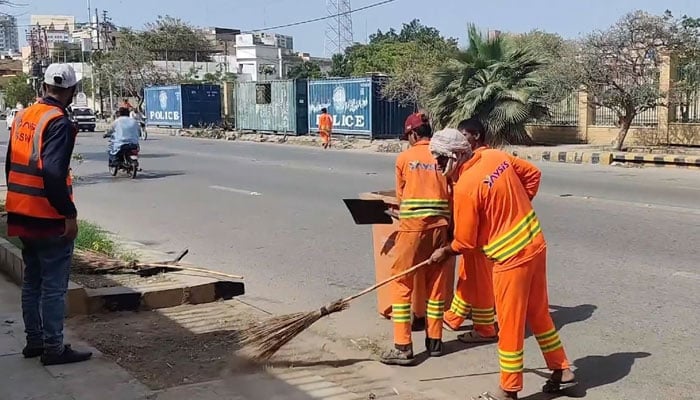
The Sindh Solid Waste Management Board (SSWMB) has received the assignment of primary garbage collection in three of the seven industrial zones in Karachi. The Pakistan Railways has also handed over waste collection responsibility at the Cantonment Station to the SSWMB with the Karachi Fish Harbour Authority entrusting a similar responsibility to it.
This reflects growing confidence among key stakeholders in the waste management board’s capacity to manage municipal waste efficiently, scientifically and sustainably.
This was stated by SSWMB Managing Director Tariq Ali Nizamani as he spoke at the 18th Annual CSR Summit. He said the increasing number of organisations assigning waste collection responsibilities to the board demonstrated their trust in its professional and modern approach to handling municipal refuse.
He added that the board’s performance had also drawn high-level appreciation, with Prime Minister Shehbaz Sharif commending its work during his last visit to Karachi where he reviewed sanitation arrangements at the Cantt Station.
He said the SSWMB had earned national recognition by winning the prestigious 18th Annual CSR Award in the waste management category, marking a significant milestone in its mission to build a cleaner, greener and more sustainable Sindh.
Addressing the audience, Nizamani shared the board’s journey of gradually introducing modern and efficient waste collection and disposal systems in Karachi and other urban centres across the province.
He said the SSWMB primarily performed primary waste collection services in up to 70 per cent of the area of Karachi under the direct administrative control of the Sindh government.
He highlighted that contemporary waste management practices were being systematically promoted to transform how municipal waste was handled.
He noted that citizens in Karachi and other cities were increasingly being encouraged to adopt responsible and sustainable waste handling habits so that less food, organic and recyclable waste ended up at landfill sites.
The SSWMB chief disclosed that with the deployment of modern machinery and improved operational planning, more than 50 per cent of the nearly 30,000 tonnes of municipal waste generated daily across Sindh was now being collected and disposed of in a scientific manner. He added that this capacity was steadily expanding to ensure broader coverage and greater efficiency.