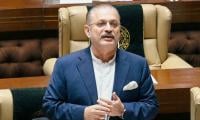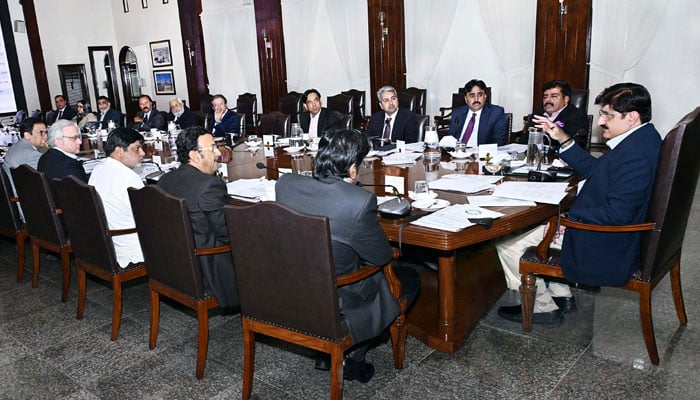
Sindh Chief Minister Syed Murad Ali Shah on Wednesday presided over the 50th meeting of the Public-Private Partnership (PPP) Policy Board, approving a series of initiatives in education, transport, ecotourism and industrial development.
In a major step to improve road safety, professional driving standards and overseas employability, the board approved a project to establish heavy transport vehicle (HTV) and light transport vehicle (LTV) driver training schools across Sindh under a PPP framework.
The Motor Vehicles (Amendment) Act, 2025, makes pre-licensing training mandatory for HTV and LTV applicants, and licensing authorities can process applications only after the completion of certified pre-licence training from recognised institutions.
The project responds to rising global demand for drivers, particularly in Europe, Australia, China, Turkey and the GCC. Pakistan’s transport sector contributes 10 to 13 per cent to the GDP and employs over 4.1 million people. Last year the country formally exported 163,000 drivers, with another estimated 30,000 going abroad informally, while the province’s share remains just two per cent.
Training centres will initially be set up at four Sindh Technical Education & Vocational Training Authority institutions: Government College of Technology (SITE), Karachi; Government Polytechnic College, Dadu; Government Vocational Training Institute, Sukkur; and Government Institute of Business & Commercial Education, Naushahro Feroze.
Larger facilities are planned in Karachi to cater to higher demand. Each centre will offer an end-to-end training-to-licensing model with multimedia classrooms, computer-based theory labs, dedicated HTV and LTV simulators, practice yards, on-road training, on-site licensing desks, supporting workshops and safety facilities.
The programme aims to train and license 100,000 drivers over five years (62,500 LTV and 37,500 HTV), with nearly half from Karachi. A transaction advisory consortium will be engaged to ensure legal and regulatory compliance in coordination with the home department, the traffic police and the licensing authorities. The board approved the project concept and endorsed the hiring of transaction advisers, who will conduct detailed feasibility studies.
The board also approved the adoption of the Education Management Organisation (EMO) model for the $385 million Sindh Secondary Education Improvement Project, supported by the Asian Development Bank.
Under the project, 40 newly constructed secondary schools will be operated by private sector partners to improve quality and governance. The board also authorised the initiation of private partner solicitation for these 40 schools, noting that previous EMO projects increased girls’ enrolment by 38 per cent.
The board approved another project to provide solar power and improved WASH facilities to off-grid girls’ schools. The education department had already engaged Unicef as transaction advisers for the project, for which the board endorsed initiating a feasibility study for the project.
The board also approved feasibility studies to establish early childhood education centres in 300 model schools across Sindh, expected to cater to about 24,000 students annually. To promote climate-resilient, nature-based tourism, the board approved initiating a feasibility study for the ecotourism project in selected forest areas across Sindh under a PPP modality.
Proposed by the forest & wildlife department, the project would cover around 6,010 acres of irrigated plantation forests in multiple districts and mangrove forests near Karachi. These forests are critical for biodiversity conservation and climate adaptation. Under the plan, regulated ecotourism will be introduced in encroachment-free forest areas, in line with international best practices. Similar models operate in South Africa and Indonesia.
Proposed sites include the Miani Forest and the Railo Forest in Hyderabad;the Khanani Forest, Thatta; the Booharki Forest, Badin; the Pai Forest, Shaheed Benazirabad; and the Bahman Forest, Larkana.
Most areas are already densely forested, have highway access and can be connected to utilities. Planned eco-friendly facilities include walking and cycling tracks, boating, wildlife attractions and safaris, bird-watching towers, picnic and BBQ areas, parking, waste management, prayer areas, children’s play zones, and small food and handicraft outlets.
According to the forest department, benefits are expected to include dedicated funding for forest protection, biodiversity management and reduced illegal exploitation; reduced reliance on budgetary allocations through user fees and private investment; jobs and income opportunities for local communities, especially youth and women; and growth in domestic tourism and allied sectors. The board approved the project concept and engaged consultants to conduct detailed feasibility studies to determine viability under the PPP modality.
The board also approved certain matters to fast-track Marble City Karachi, a 300-acre industrial estate dedicated to the marble and granite sector. Aimed at value addition, attracting foreign investment, creating jobs and boosting exports, the project is in the construction phase since April 2025 under the PPP modality and is scheduled for completion within two years.
The meeting concluded with the CM reiterating the government’s commitment to leveraging private sector efficiency to provide high-quality public services and infrastructure to the people of Sindh.