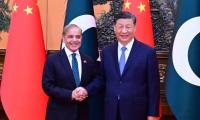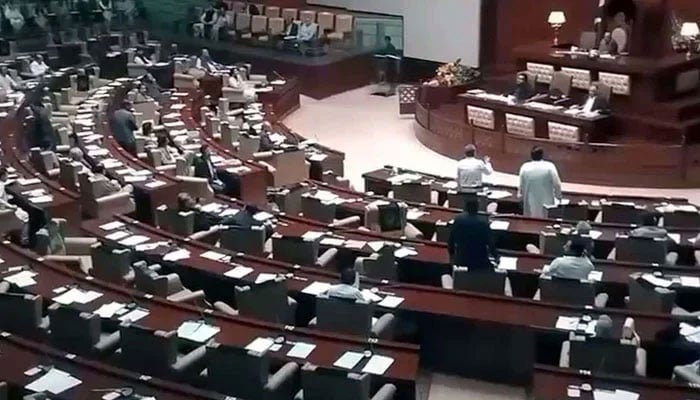
The Sindh Assembly on Friday unanimously passed a resolution reaffirming the enduring friendship between Pakistan and China, while also approving several important bills during its sitting.
The session also witnessed lively discussions on religious affairs, welfare measures and urban issues.
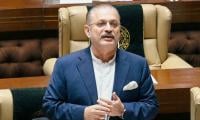
The assembly session, chaired by Deputy Speaker Anthony Naveed, began with Sindh Law and Parliamentary Affairs Minister Ziaul Hassan Lanjar presenting a resolution on Pakistan-China friendship. Leader of the Opposition Ali Khurshidi had also sought to table a resolution on the same subject, leading both sides to merge their proposals into a unanimous joint resolution.
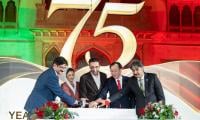
Speaking on the occasion, the law minister said diplomatic relations between Pakistan and China had completed 75 years and described the bilateral relationship as historic in nature. He stated that the China–Pakistan Economic Corridor (CPEC) had played a pivotal role in strengthening ties between the two countries.
The resolution was unanimously passed by the House.
During the session, the assembly also approved multiple legislative bills presented by Lanjar. The bills approved by the assembly pertained to the Sindh Workers Welfare Fund Bill, Jinnah Postgraduate Medical Centre, National Institute of Child Health (NICH), blood transfusion, private security companies, and medical and dental education in the province.
Under the Jinnah hospital and NICH regulation bill, complete administrative control of both hospitals would rest with the Sindh government.
The House also held a question hour related to the provincial Zakat and religious affairs department, during which Sindh Religious Affairs Minister Riaz Shah Shirazi answered written and supplementary questions from lawmakers.
Muttahida Qaumi Movement-Pakistan (MQM-P) MPA Quratul Ain asked whether the Sindh government intended to formulate a policy enabling poor citizens to perform Haj free of charge. The provincial minister responded that he had discussed the matter with the federal religious affairs ministry and expressed the hope that provincial funding would be secured in this regard in the future.
Another MQM-P lawmaker, Fauzia Hameed, proposed establishing complaint centres or helplines for pilgrims travelling from Sindh and suggested that similar to the National Assembly, members of the Sindh Assembly should also be sent for Haj. The Sindh religious affairs minister said he would raise the matter with the federal government, acknowledging that pilgrims often faced difficulties during Haj.
Fauzia also asked whether the provincial religious affairs ministry had organised any national or international conferences involving Sunni, Shia, and non-Muslim communities. In response, Shirazi said a ‘Paigham-e-Aman Committee’ had been formed and interfaith meetings were regularly convened during Muharram under the supervision of the chief minister.
He remarked that Sindh was a land of Sufi traditions where extremism had no roots.
MQM-P MPA Muhammad Waseem suggested that the Benazir Income Support Programme (BISP) be devolved to the provinces and questioned the status of corruption allegations linked to the programme.
The religious affairs minister replied that the BISP was a federal institution and only the federal government could answer questions regarding its affairs.
Meanwhile, MQM-P lawmaker Ijazul Haq proposed creating a mechanism through which Zakat funds could directly reach deserving households. The minister responded that local town-level committees were already functioning for the distribution of Zakat funds and warned that corruption in such funds would invite accountability both in this world and hereafter.
Fauzia also suggested introducing biometric eye-scanning systems to improve transparency in identifying beneficiaries receiving Zakat assistance. The minister described the proposal as constructive and said it would be considered.
During the sitting, Pakistan Tehreek-e-Insaf lawmaker Shabbir Qureshi raised a call-attention notice regarding alleged construction activity on a green belt in Karachi’s SITE industrial area. He claimed factory owners had erected sheds and blocked access routes, worsening traffic congestion.
Sindh Industries Minister Jam Ikramullah Dharejo denied that encroachments existed, stating that permissions granted for generator and guard rooms had already been revoked. He added that while parking remained an issue due to thousands of workers employed in the area, action would be taken if any legitimate complaints emerged.