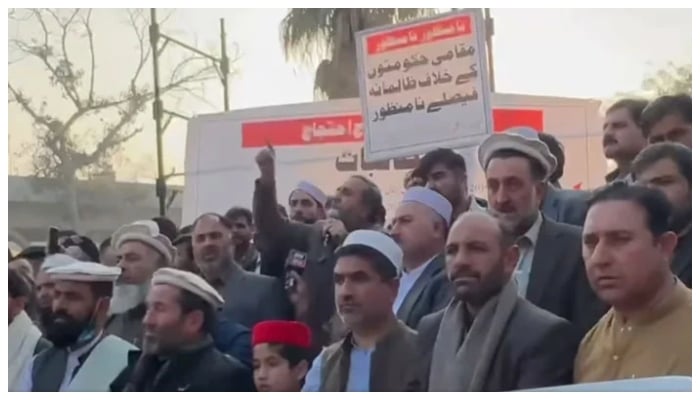
The intervention by the Peshawar High Court should never have been needed. After four days of road closures across Khyber Pakhtunkhwa, the court has ordered the immediate reopening of highways and major arteries blocked by PTI protests. In its two-page written order, the court has noted the severe hardship caused to the public, recording submissions that patients had died while being transported to hospitals because of the blockades. That single observation is indictment enough of the politics of disruption that has become all too familiar. For days, traffic remained paralysed on key intercity routes, cutting off entry and exit points of the province. These closures were justified by the PTI as protest against what it calls government negligence in the treatment of Imran Khan. Yet the costs were borne not by the government but by ordinary citizens: patients unable to reach hospitals, workers stranded for hours, businesses disrupted and supply chains choked. A separate petition filed before the Federal Constitutional Court has challenged these blockades, warning that continued closures during Ramzdan could lead to shortages of essential goods and urging authorities to ensure freedom of movement across the province.
Peaceful protest is unquestionably a right enshrined in the constitution. But protest does not mean the suspension of everyday life. Blocking roads is a direct assault on people’s basic rights to movement, health, education and livelihood. When goods cannot be transported, shops run empty. When people cannot reach their workplaces, daily wages are lost. And when ambulances are forced to wait at barricades, the consequences are irreversible. There is also an unavoidable political contradiction at the heart of the current agitation. Many are asking why the PTI is protesting against ‘the government’ in a province that is governed by the PTI itself. If there are grievances, the party has administrative authority in KP to address public order, to facilitate lawful protest and to protect citizens from harm. Instead, the province has been turned into a pressure point at the expense of those who voted the PTI into power.
Pakistan has seen this before. Street blockades and paralysing sit-ins have become a recurring tactic across the political spectrum. It was precisely this pattern that prompted the Faizabad dharna verdict to lay down clear guidelines, emphasising that the right of assembly, association and speech cannot be exercised by infringing the fundamental rights of others. Those principles were meant to restrain all political actors, not just a select few. Beyond the legal and moral arguments lies a harsher political reality for the PTI. Its protests no longer exert the pressure they once did. Since November 2024, the party has struggled to demonstrate strength in numbers. Even sit-ins by outside Adiala Jail attract only a handful of supporters. The government appears largely unmoved. In fact, the protests in KP arguably work in the government’s favour by alienating the PTI’s own support base and reinforcing the perception of misgovernance. If the party continues down this path, it risks being remembered not for resistance but for disruption without results. Courts should not have to intervene repeatedly to restore normal life. It is time the PTI realises that road blockades and province-wide shutdowns are hurting the party far more than they hurt the government.