Pakistan announces incentives. Pakistan holds roadshows. Pakistan signs agreements. Capital arrives. Plants are built. Jobs are created.
Lo and behold, comes the U-turn. Tariffs are altered. Formula changed. Contract reinterpreted. Our government thinks investors forget. Red alert: Investors do not forget — capital has memory.
Vietnam did not grow exports from $2 billion to over $400 billion because it offered one-year incentives. It offered predictable policy. The UAE did not become a capital hub because it promised. It delivered. Pakistan announces. Then reconsiders. Why can’t our government understand investors price governmental behaviour?
Pakistan’s U-turn in energy affects mining. Pakistan’s U-turn in mining affects tech. Pakistan’s U-turn anywhere affects everything. Capital does not compartmentalise. Why can’t our government understand that sunk capital is not flexible? Once a power plant is built, it cannot relocate. Once a mine is dug, it cannot migrate. Once a factory is installed, it cannot evaporate. Why does our government think that it can exploit sunk costs?
Investors respond by never coming back. Every U-turn creates three costs: Immediate loss of investor trust; increase in country risk premium and higher future borrowing costs. Look at 10-year dollar bond yields: Pakistan 14 per cent; Egypt 10 per cent; Indonesia 5.0 per cent; Vietnam 4.0 per cent. The spread between Pakistan and Vietnam is often 800-1,000 basis points — that’s a $13 billion annual loss for Pakistan.
Markets remember behaviour. Vietnam signals continuity. Indonesia signals contract stability in mining and infrastructure. Pakistan signals renegotiated tariffs, retrospective taxation, net-metering reversals, and prolonged contract disputes. Remember, capital does not read promises — it reads precedent.
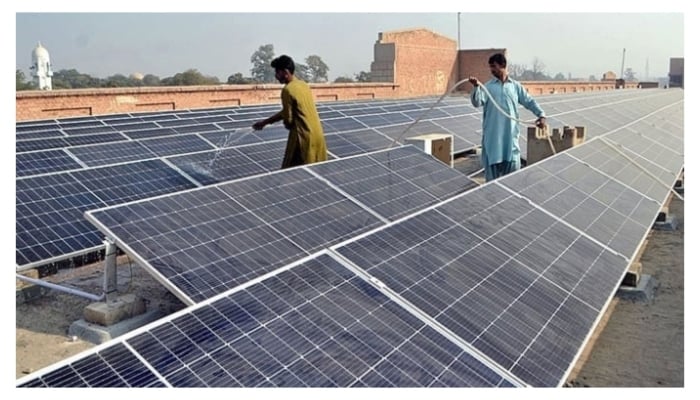
A 2 GW rooftop solar discouragement means $400-500 million additional annual fuel imports. It means higher circular debt pressure. It means higher peak load stress. It means a higher import bill. It means FX pressure. It means tariff inflation.
The solar U-turn will make investors assume that any incentive can be withdrawn, any tariff can be revisited and any contract can be renegotiated. As a consequence of the solar U-turn investors will demand higher returns, sovereign guarantees and advance payment clauses.
The solar U-turn will make domestic capital retreat. When policies reverse, business groups invest abroad, dollarisation rises and capital flight accelerates. For the record, policy U-turns are not anti-FDI only — they are anti-investment.
Here’s the real cost of the solar U-turn: higher spreads-$3 billion a year. Higher fuel imports — $500 million a year. Lower FDI pipeline. Domestic capital flight.Solar was not just an energy policy. It was a credibility test. And we failed it.
The writer is an Islamabad-based columnist.