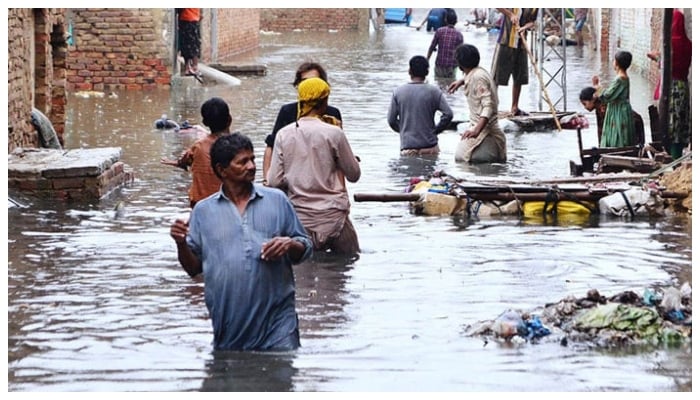
Pakistan has endured catastrophic floods in 2010, 2022 and 2025, each exposing vulnerabilities while testing national resilience, with immense human, economic and infrastructural losses.
The 2010 floods, triggered by extreme monsoon rains, deforestation and poor watershed management, affected over 18 million people and caused nearly 2,000 deaths. In 2022, exceptional rainfall combined with saturated soils and glacial melt inundated large parts of the country, affecting almost 33 million people.
Early assessments of the 2025 floods indicate similarly severe impacts, worsened by flash floods, landslides and widespread urban inundation. Human losses were reported across multiple provinces, with Punjab and Khyber Pakhtunkhwa most affected, alongside major livelihood and infrastructure damage, including the loss of over 16,000 livestock and damage to more than 217,000 houses. As the NDMA works to integrate anticipatory action into disaster management, Pakistan’s existing social protection systems provide a strong foundation that can be adapted to build crisis-ready resilience before, during and after climate-related shocks.
Embedding anticipatory action within social protection systems can greatly enhance their impact. Agreed forecast-based triggers, predefined operational plans and pre-arranged financing, including scalable cash transfers, can enable timely assistance before climate and disaster impacts materialise.
At the federal level, the Benazir Income Support Programme (BISP) provides a strong platform. Its digitised systems can be linked to Pakistan Meteorological Department forecasts and NDMA triggers, enabling automatic top-ups when risk thresholds are crossed. At the provincial level, this approach can be adapted to local hazard profiles, with BISP aligned to PDMAs, planning bodies and climate-resilience initiatives. Strengthening localised registries, community-based early warning systems and targeted anticipatory cash transfers would significantly enhance protection for remote and vulnerable populations that often face delayed responses and fragile infrastructure.
Despite the potential opportunities and benefits, significant challenges remain. These include limited coordination among federal, provincial, and district stakeholders, a lack of reliable, readily available data, communication disruptions during disasters, and insufficiently arranged financing. To overcome these challenges, the NDMA must enhance coordination at all levels of government and within the community, as effective coordination is a key pillar of anticipatory actions.
There is also a need for centralised data that should be institutionalised. The National Emergency Operations Centre (NEOC) and Provincial Emergency Operations Centres (PEOCs) should be interconnected with social protection frameworks, and established data-sharing protocols should exist between social protection and disaster risk reduction (DRR) systems. At the same time, securing dedicated, flexible, pre-arranged financing and piloting innovative interventions will enable timely, evidence-based and scalable responses, ensuring that vulnerable populations are protected before, during and after climate and disaster shocks.
Government and stakeholder priorities should centre on localised triggers, strengthened provincial and local capacities, and embedding anticipatory action in social protection systems. Leveraging platforms such as BISP, improving federal–provincial coordination, and establishing data-driven triggers and financing can transform disaster response and better protect Pakistan’s most vulnerable communities.
The writer is a research associate at the Sustainability and Resilience Program, Sustainable Development Policy Institute (SDPI), Islamabad. The article reflects the writer’s personal views.