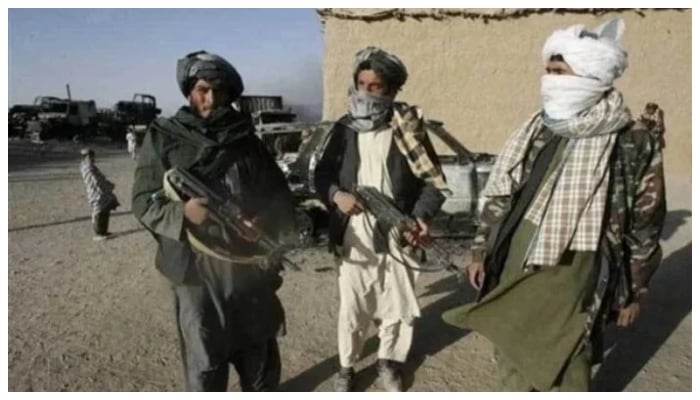
The Afghan Taliban present themselves as a centralised authority governing Afghanistan; however, recent reports have revealed leadership fractures along ideological, tribal and strategic lines.
Disagreements over governance, women’s education, engagement with the international community and social freedom highlight the tensions between the hardline clerics in Kandahar and more pragmatic figures based in Kabul.
Contrary to the perception of a monolithic entity, the Afghan Taliban have been historically a coalition of factions bound primarily by opposition to foreign forces and the internationally backed foreign government. The insurgency of the 2000s brought together disparate groups under the banner of religious legitimacy and nationalist resistance, but these alliances were often tenuous.
Since the Taliban’s return to power in 2021, these pre-existing fractures have become increasingly visible, particularly between the Kandahar and Kabul factions.
The Kandahar group, led by Supreme Leader Mullah Hibatullah Akhundzada, embodies a rigid approach to governance. It emphasises the primacy of Shariah in all aspects of statecraft, particularly with respect to women’s rights and education. Mullah Akhunzada is surrounded by some powerful Taliban figures who control the main government offices, such as Muhammad Hakim Haqqani, Muhammad Hassan Akhund and Neda Muhammad Nadeem.
In contrast, the Kabul Group comprises figures affiliated with the Haqqani Network, including Sirajuddin Haqqani, as well as those based in Doha. Other prominent figures include Mullah Yaqoub, Mullah Ghani Bradar and Sher Muhammad Abbas Stanekzai. Overall, this group is viewed as more pragmatic. It has demonstrated readiness for international engagement and comparatively progressive positions on women’s education, signalling an awareness that Afghanistan’s governance challenges are intertwined with its global image and relations.
The schism between the Kandahar and Kabul factions has significant ramifications for Pakistan, particularly regarding the presence of the TTP along the Afghan-Pakistan border. Both factions view TTP differently. The Kandahar group perceives the TTP as a destabilising force that threatens Kabul-Pakistan relations but lacks the operational leverage to rein in the network due to the Haqqani Network’s influence. Conversely, the Kabul faction maintains a closer relationship with the TTP.
Several factors underpin the Kabul faction’s alignment with TTP. First, the tribal connection between the Haqqanis and TTP is very strong. The tribes of the smaller Karlanri confederation live in Afghanistan’s eastern and southeastern provinces, providing the strongest kinship bridges into Pakistan’s tribal areas. Sirajuddin Haqqani himself belongs to the Zadran tribe within Karlanris, which shares kinship ties with elements of the TTP.
Second, the Haqqanis want to use Pakistan’s tribal areas to consolidate power in eastern Afghanistan and leverage cross-border networks for political and military advantage. When the TTP demanded the reversal of the merger of erstwhile Fata with Khyber Pakhtunkhwa, the Kabul faction supported the demand.
The Kabul faction’s patronage of the TTP also serves as a contingency in intra-Taliban power dynamics. Should the Kandahar faction challenge the Haqqanis’ dominance in Kabul or eastern provinces, the TTP could function as a proxy force. Historical patterns of cooperation further solidify this alignment. Unlike the Kandahar faction, which largely remained concentrated in Kandahar or within the Quetta Shura in Pakistan, the Haqqanis have historically operated from Pakistan’s tribal areas, where the TTP is based.
Beyond Pakistan, Afghanistan’s internal fissures undermine the Afghan Taliban’s credibility as a governing authority, limiting their capacity to engage constructively with the international community and attract foreign investment, aid or recognition. In the absence of a unified Taliban command structure, assurances provided by Kabul regarding the protection of foreign investments and nationals remain tenuous.
Fragmented authority limits the Afghan Taliban’s ability to control transnational militant groups operating within Afghan territory, thereby heightening security concerns for neighbouring and regional states. Governance paralysis resulting from internal Taliban divisions further delays much-needed institutional reforms, including the establishment of inclusive political mechanisms, financial transparency and functional bureaucratic systems. This stagnation reinforces international reluctance to recognise the Taliban government.
Such dynamics risk entrenching warlordism and informal power structures, eroding whatever centralised authority the Taliban claim to possess. In such a situation, Afghanistan is likely to remain a source of strategic uncertainty for its neighbours, with ripple effects extending across South and Central Asia.
The prospect of a so-called Kabul Spring, marked by liberalisation and social reforms, remains remote given the Afghan Taliban’s structural and ideological constraints. Nonetheless, Pakistan’s policy calculus is increasingly clear: the priority is stability in Afghanistan, regardless of which faction wields effective control. Achieving this objective necessitates a carefully calibrated policy that combines sustained diplomatic engagement with firm pressure to curb cross-border militancy, while avoiding entanglement in intra-Taliban rivalries.
The writer is an associate professor at the Area Study Centre for Africa, North and South America, Quaid-i-Azam University, Islamabad.