Every few years, the idea of a ‘Muslim Nato’ resurfaces in public debate. It tends to appear at moments when defence cooperation among Muslim-majority states becomes more visible. And it has re-emerged again following recent developments in Pakistan’s security ties with Saudi Arabia, alongside long-standing defence cooperation with Turkiye.
Social media has amplified the narrative, often presenting overlapping bilateral relationships as evidence of a nascent collective military bloc.
The appeal of the idea is understandable. In an international system defined by uncertainty, alliances offer a sense of clarity. But clarity is precisely what the Muslim Nato analogy obscures. It collapses distinct relationships, driven by different incentives and threat perceptions, into a single framework that does not reflect how these states actually operate.
It is worth separating what is real from what is imagined. What is real is that Pakistan and Saudi Arabia have formalised defence cooperation in recent years. This relationship builds on decades of military ties, training arrangements, and strategic consultation. It reflects Riyadh’s interest in diversifying its security partnerships at a time when confidence in external guarantees has become more conditional and Pakistan’s interest in maintaining strategic relevance in the Gulf while navigating economic constraints at home.
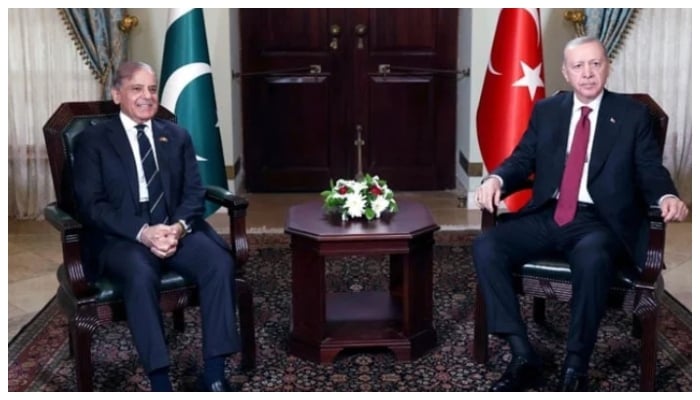
It is also real that Pakistan and Turkiye maintain deep and operational defence cooperation. This includes joint production, training and regular strategic dialogue. Ankara and Islamabad have invested in these ties over time, not as part of a broader bloc, but as a bilateral partnership shaped by shared defence industrial interests and political affinity.
What is not real is the existence of a trilateral or multilateral collective defence arrangement linking Pakistan, Saudi Arabia and Turkoye into a single security architecture. There is no unified command structure, no shared doctrine and no binding collective defence obligation among them.
The comparison most often invoked – Nato – is built on features that do not exist in this context. Nato is not merely a collection of defence partnerships. It is an institutionalised alliance with a clear collective defence clause, integrated command structures, interoperability standards and a high degree of political cohesion. Its members share a broadly aligned threat perception and have committed, at least in principle, to mutual defence obligations that extend beyond bilateral convenience.
None of these conditions applies across the Muslim-majority states often grouped into a hypothetical Muslim Nato. Threat perceptions diverge sharply. For Gulf States, security concerns centre on regional instability and regime protection. Turkiye is shaped by its geography, domestic security challenges, and relations with Europe and Russia. For Pakistan, the calculus remains rooted in South Asia, internal stability, and strategic balance with India.
Defence cooperation in this environment is therefore pragmatic rather than ideological. States engage where interests align and disengage where they do not. This is a reflection of a multipolar world in which alignment has become selective.
Understanding this helps explain why defence ties have expanded without coalescing into formal blocs. For many states, flexibility is an asset. Binding alliances constrain manoeuvre and impose obligations that may not serve immediate interests. Bilateral arrangements, by contrast, allow governments to hedge, diversify partnerships, and adjust posture as circumstances evolve.
This is particularly relevant for Pakistan. Its strategic environment demands careful calibration rather than rigid alignment. Deepening ties with Saudi Arabia strengthen economic and diplomatic channels at a critical time. Sustaining defence cooperation with Turkiye supports industrial and operational capabilities. Neither relationship requires nor benefits from being subsumed under a broader ideological alliance framework.
The persistence of the Muslim Nato narrative also reflects a tendency to interpret contemporary geopolitics through cold-war templates. In a fragmented international order, familiar concepts are reassuring. But applying alliance logic from a different era risks misunderstanding how power and cooperation now function. Today’s partnerships are often transactional, situational and deliberately limited.
This does not make them insignificant. On the contrary, these relationships can be consequential precisely because they are tailored. But exaggerating them into a unified military bloc creates expectations that none of the parties involved has signalled a willingness to meet.
For Pakistan’s public debate, clarity is more useful than aspiration. Recognising the difference between cooperation and alliance helps set realistic expectations and avoids strategic overreach. It also prevents domestic discussions from being shaped by narratives that originate more in online speculation than in policy reality.
The question, then, is not whether a Muslim Nato is emerging. It is why the idea continues to gain traction despite repeated evidence to the contrary. The answer lies in the anxieties of a changing world, where states seek security through partnership but resist the costs of formal alignment.
Seen through that lens, what is unfolding is not the birth of a new bloc, but the steady expansion of pragmatic defence relationships, each bound by national interest. Confusing the two may make for compelling headlines, but does little to illuminate the strategic choices actually being made.
The writer is a non-resident fellow at the Consortium for Asia Pacific & Eurasian Studies. He tweets/posts @umarwrites