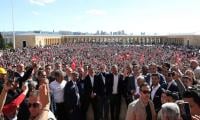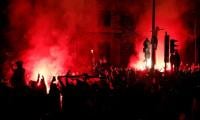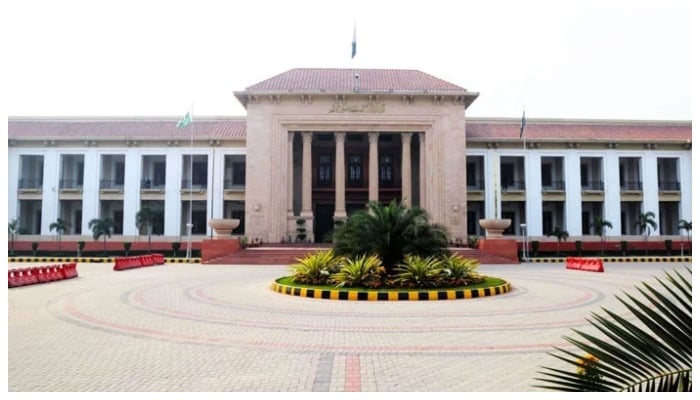
The Punjab government has taken a major step towards restricting public dissent by introducing legislation that would allow authorities to declare any area of the province a high security zone, effectively banning rallies, sit-ins and protests in those locations.
The Punjab High Security Zones (Establishment) Bill, 2026 was tabled in the Punjab Assembly on January 26 and is currently with a standing committee.
According to the bill’s preamble, it seeks to “regulate” public rallies, sit-ins, protests, gatherings, and other demonstrations across the province - a move critics warn could sharply curtail civil liberties.
Under the proposed legislation, two intelligence committees would oversee these zones. At the district level, a District Intelligence Committee would be led by the deputy commissioner (DC), while a Provincial Intelligence Committee would operate at the provincial level. The bill, however, does not clarify the full composition of either committee.
The secretary of the Punjab Home Department would have the authority to declare an area a “high security zone” based on recommendations from both committees.
Once designated, public gatherings would be strictly prohibited within the zone.
The law would also empower the police to seize materials used in violation of the Act, including vehicles, chairs, carpets, sound systems, stages, banners, and other equipment. And individuals found violating the law could face imprisonment of one to three years, while facilitators could be jailed for up to six months.
The bill states that those intending to hold public gatherings must submit a written application to the deputy commissioner (DC) at least 20 days in advance, who has the authority to approve or reject the request. Individuals aggrieved by the DC’s decision could appeal to the divisional commissioner and then file a revision petition before the secretary of the home department.
Dr Ahmed Javed Qazi, the secretary of the Punjab Home Department, and Azma Bokhari, the minister for information in Punjab, did not respond to repeated requests for comments about the bill.
While responding in writing to The News, Punjab’s law department only stated that the statement of objects and reasons accompanying the bill explains its purpose. According to the statement, the legislation is intended to address public inconvenience and disruptions to business activities caused by public gatherings.
But the broad powers the bill grants have alarmed legal experts and civil rights advocates.
Lawyer Asad Rahim Khan said the bill formalises what has been the de facto situation in the province and, largely, in the country for some time -- the near-total curtailment of protest.
“When seen against the broader canvas - yet sharper fangs for Pakistan Electronic Crime Acts (PECA), and the new, draconian Punjab Defamation Act - democracy in Pakistan’s largest province continues to backslide,” Khan told The News.
In September 2024, a similar law was passed in Islamabad titled the Peaceful Assembly and Public Order Act 2024. The law empowered the federal government to designate specific areas of the capital as red zones or high security zones, prohibiting all types of assemblies. Amnesty International described the legislation as an “attack on the right to freedom of peaceful assembly.”
Lahore-based lawyer Rafay Alam highlighted the lack of clarity regarding the committees’ composition and the criteria for determining which areas may be designated for political protests.
Commenting on the jail terms, he added: “If [the Punjab government] is trying to improve security and someone holds a protest, why detain them if nothing security-related takes place?”
While lawyer Rida Hosain said that the law entrenches executive control, with appeals against a deputy commissioner’s decision on permission for public gatherings heard by the divisional commissioner, and further revisions lying with the secretary.
“At no stage does the law provide for independent or impartial review,” Hosain said.
She further warned that the legislation gives the provincial government unchecked discretion to restrict fundamental rights.
“The law contains no criteria or threshold that must be met before an area can be declared a high security zone,” she said. “Laws that make the exercise of fundamental rights contingent on arbitrary executive permission are defining features of authoritarian rule, not democratic governance.”