SWABI: Speakers at an international conference here on Wednesday called for a coordinated strategy to prevent the far-reaching impacts of climate change on Pakistan, as the country ranks among the top 10 most climate-vulnerable nations in the world.
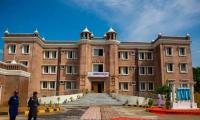
The moot, titled “International Conference on Climate Change and Emerging Trends in Civil Engineering,” was hosted at the Ghulam Ishaq Khan Institute of Engineering Sciences and Technology.
The two-day conference was organised by the GIK Institute’s Faculty of Civil Engineering in collaboration with the Ministry of Climate Change, the World Wide Fund for Nature (WWF), Tarbela Sustainability Initiative, Ages Consultant, Defence Housing Authority, and SINACO Engineers.
Experts from across the country and abroad delivered speeches on tackling climate change to protect people’s lives and property and to safeguard Pakistan’s economy.Aisha Humera Moriani, Federal Secretary, Ministry of Climate Change and Environmental Coordination, was the chief guest at the inaugural ceremony. Karakoram International University Vice-Chancellor Dr Atta Ullah Shah was the guest of honour.
The gathering was also attended by Khadija Bano from the Pak-German Climate and Energy Partnership; Dr Akif Raheem of the International Water Management Institute, Pakistan; Dr Megersa Kebede Leta from the University of Rostock, Germany; Dr Larisa Tarasova from the Helmholtz Centre for Environmental Research, Germany; Prof Dr Atta Ullah Shah from Karakoram International University; Shakil Durrani, Executive Director of the Society for the Promotion of Engineering Sciences and Technology in Pakistan; and others.
Humera Moriani said that Pakistan is on the frontline of the climate crisis and faces major challenges, including water security, catastrophic floods, water scarcity, air pollution, urban smog, ecosystem degradation, deforestation, riverine erosion, and serious threats to the Indus Delta.
She said that the Ministry of Climate Change and its research arm, the Global Climate Change Impact Studies Centre, are partnering with the GIK Institute to establish a Centre for Environmental and Water Research. The centre will serve as a national hub of excellence, translating advanced research into practical solutions and policy-relevant insights.
Dr Atta Ullah Shah said that Pakistan has already experienced devastating impacts of climate change, particularly in the northern areas, which were badly hit by floods that washed away many regions. “We cannot stop climate devastation, but we can take steps to protect life and property, such as establishing early warning systems,” he said.
Shakil Durrani proposed that the Ministry of Climate Change, Karakoram International University, WAPDA, and the GIK Institute should form a consortium to work on climate change solutions.
Prof Dr Fazal Ahmad Khalid, Rector of the GIK Institute, said they would soon sign a memorandum of understanding with the Ministry of Climate Change to coordinate efforts and achieve desired results while addressing climate challenges.
Prof Dr Muhammad Ashraf Tanoli, Dean of the Faculty of Civil Engineering, said the conference brought together researchers, academicians, industry professionals, policymakers, and practitioners from Pakistan and abroad to share findings and exchange ideas on environmental and geotechnical hazards, nature-based solutions, and governance frameworks for climate-responsive development.