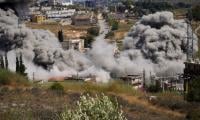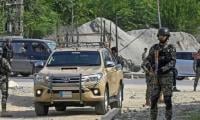
Balochistan is not burning by accident; it is being set on fire with calculation, direction and a carefully framed camera lens.
The violence that resurfaced after January 30 did not arise from spontaneous unrest or local outrage. It followed a familiar pattern that begins with targeted attacks and ends with curated visuals dominating digital platforms. These incidents were not about holding territory or confronting the state militarily but about perception, amplification and international consumption.
Over time, the Balochistan Liberation Army has transformed its operational character. It no longer functions solely as an insurgent group but as a hybrid militant media enterprise. Attacks are staged for visual impact, with civilians deliberately targeted because their suffering generates emotional traction. Once recorded, the violence is packaged by an aligned online ecosystem into simplified human-interest narratives that travel rapidly to international media, stripped of context.
Behind this lies India’s role in shaping and amplifying this narrative war, largely unacknowledged in global discourse.
This is where the real conflict unfolds. The battlefield is no longer limited to mountains and checkpoints; it extends into timelines, headlines and edited clips. Positive developments fail to gain traction, while negative imagery travels unchecked. When terrorists strike, coverage is instant and emotive. When security forces neutralise threats or protect civilians, those actions rarely trend. This asymmetry feeds a distorted global perception, one that aligns neatly with Indian strategic interests of internationalising Balochistan as a crisis zone.
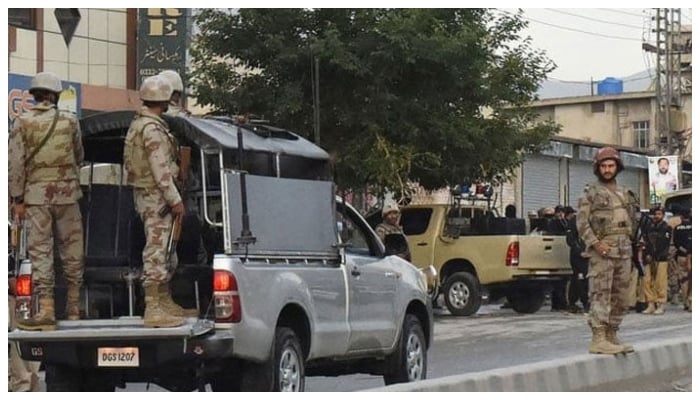
Pakistan’s on-the-ground response, however, reflects a different reality. According to official communication, Operation Radd-ul-Fitna-1 in Balochistan was successfully concluded through swift, coordinated, and intelligence-driven actions against Indian-sponsored militant elements attempting to disrupt peace and development by targeting innocent civilians, including women and children. These operations prioritised precision over spectacle, aiming to dismantle networks rather than create headlines. Yet such outcomes struggle to compete with sensationalised narratives in global media spaces.
What hostile portrayals consistently erase is the scale of transformation within Balochistan over decades. At the time of independence in 1947, the province had 114 schools. Today, that figure stands at 15,096. There were no universities then; now there are 12. Medical colleges have increased from 0 to 5, general colleges from 0 to 145, cadet colleges from 0 to 13, and technical institutes from 0 to 321. Healthcare capacity has expanded from minimal access to 13 major hospitals, 18 teaching hospitals, 756 Basic Health Units and 24 dialysis centres. Road infrastructure has increased dramatically from 375 kilometres to nearly 25,000 kilometres, connecting regions once isolated by geography.
Equally ignored is the province’s social composition. Balochistan is not a monolith, nor can it be reduced to a single ethnic or political identity. It is home to approximately 40 per cent Baloch, 34 per cent Pashtun, 17 per cent Brahui, alongside Sindhi, Hazara and settler communities. Any narrative that suggests carving out a separate political entity inevitably raises an uncomfortable question: who decides the fate of this diversity? Pluralism, not partition, remains the only viable future for the province.
The persistence of unrest also serves a broader regional design. Destabilising Balochistan directly undermines CPEC, a connectivity and development project that challenges India’s strategic calculations and regional leverage. By fueling militancy and sustaining a parallel information campaign, India advances its objectives through hybrid warfare, where perception manipulation substitutes direct confrontation. Local grievances are amplified, weaponised and exported to international audiences, often with the support of influential tribal elites who benefit more from disorder than reform.
It is time to reclaim the narrative around Balochistan. A province cannot be judged solely through episodic violence while decades of development, diversity and resilience are erased. Responsible discourse does not demand silence on suffering, but it does require balance, context and honesty.
Until India’s role as the external director of this hybrid conflict is openly acknowledged, discussions on Balochistan will remain incomplete and violence will continue to be misread as internal failure rather than the outcome of a sustained, externally driven design.
The writer is a freelance contributor and writes on issues concerning national and regional security. She can be reached at: [email protected]