ISLAMABAD: The Senate Standing Committee on National Health Services has recommended that population size should no longer be used as a criterion for determining the share of federating units under the National Finance Commission Award, arguing that the existing formula discourages serious efforts to curb population growth and weakens long-term socio-economic planning.
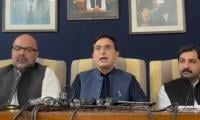
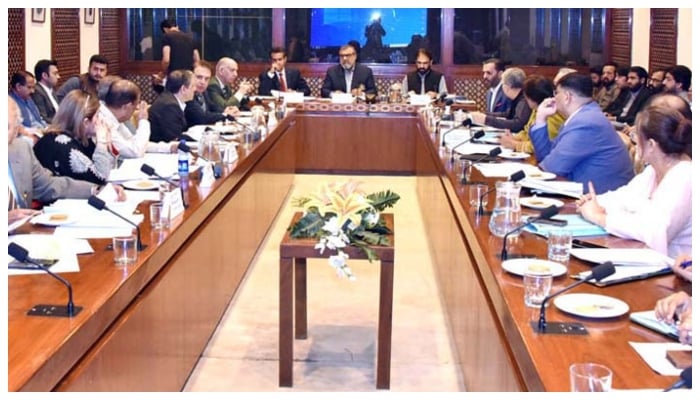
The recommendation came during a meeting of the committee chaired by Senator Amir Waliuddin Chishti, which took up the National Population and Reproductive Health Bill, 2026, alongside a range of broader health sector issues, including concerns over medical admissions, vacant seats in medical and dental colleges, population growth trends and the proposed Public Sector Development Programme (PSDP) of the Ministry of National Health Services, Regulations and Coordination for 2026–27.
Members warned that rapid population growth remains Pakistan’s most serious and neglected national challenge, noting that it continues to outpace job creation and public sector capacity. The chairman said that even the current generation of young Pakistanis was facing a shrinking job market, and that future cohorts would be under even greater pressure if population growth remained unchecked.
While discussing the National Population and Reproductive Health Bill, 2026, lawmakers stressed the need for a comprehensive and uniform national policy to address population growth. Officials of the health ministry raised technical objections to the bill, citing the existence of a Federal Task Force on Population.
However, the secretary of the ministry Hamed Yaqoob Sheikh told the committee that the federal task force, constituted in 2021, was currently non-functional, while provincial task forces continued to operate following devolution of the subject.
The committee unanimously decided to convene a joint meeting of the Senate Standing Committees on Health and Human Rights to allow a wider, open debate on the population bill. Representatives of all political parties, the Ministry of Religious Affairs, provincial governments and the Council of Islamic Ideology will be invited for consultations to address legal, social and religious concerns linked to population management and reproductive health.
Several members underlined that birth control remains a social taboo and that meaningful public discussion on family planning is often avoided despite its direct link with maternal and child health, malnutrition and stunting. The committee was informed that children are increasingly being born with physical and cognitive stunting due to poverty, poor nutrition and closely spaced pregnancies.
Lawmakers urged the government to invest in sustained public awareness campaigns on reproductive health, particularly targeting illiterate and marginalised women.
Members also expressed concern over the prolonged delay in conducting the Pakistan Demographic and Health Survey, last carried out in 2017. The Director General (Population) informed the committee that, under the federal government’s rightsizing policy, the survey would now be conducted by the Pakistan Bureau of Statistics, with preparatory work nearing completion. The chairman directed the ministry to ensure that the survey is conducted on an urgent basis, noting that policymaking on population and maternal and child health was being undermined by the absence of updated data.
The committee also took up issues relating to medical education and regulation. Members objected to the absence of public representatives on the Pakistan Medical and Dental Council board, stressing the need for meaningful public representation in the regulatory body.
While reviewing the recent MDCAT, they questioned the fairness of the current 50 percent weightage, arguing that it disadvantages students due to limited preparation time compared to intermediate examinations. Although officials said the weightage was prescribed under an Act of Parliament, the committee decided that the law governing admissions would be reviewed.
Officials of the PMDC informed the committee that hundreds of seats in private medical and dental colleges remained vacant, with around 426 seats in Punjab and 350 in Sindh yet to be filled, while no vacancies were reported in Khyber Pakhtunkhwa and Balochistan.
The committee also reviewed the PSDP proposals of the health ministry and decided that its next meeting would be held at Sheikh Zayed Hospital, Lahore, to take up issues related to the revival and improvement of hospital services.