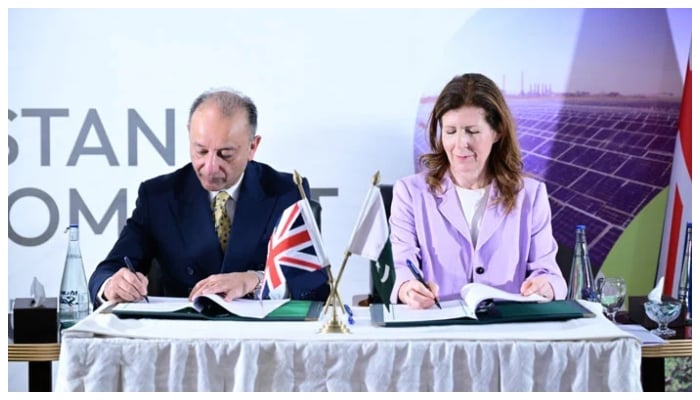
Pakistan and the UK government launched a UK-Pakistan Green Compact in December 2025, worth GBP35 million, to formalise a green partnership between the two countries. The framework aims to build climate resilience in Pakistan, support the transition to renewable energy and promote nature-based solutions.
The compact is structured around five pillars: climate finance and investment, clean energy transition, nature-based solutions, innovation and youth empowerment and adaptation and resilience.
Pakistan is among the top ten countries most affected by climate change. A significant portion of national resources allocated for climate action is often spent on rescue and rehabilitation efforts. In this context, the green compact can play an important role in accelerating both mitigation and adaptation efforts through targeted financial support across its five pillars.
The first pillar focuses on climate finance, with the objective of mobilising public and private financing at national and international levels. It also aims to strengthen regulatory bodies and enhance technical capacity for managing climate finance mechanisms. Limited access to climate finance remains a major obstacle for Pakistan in pursuing sustainable climate projects. Improved transparency and accountability under the Compact can help attract greater investment and build confidence among stakeholders.
The second pillar emphasises clean energy, which is essential for reducing dependence on fossil fuels and lowering carbon emissions. Support from the UK is expected to further strengthen clean energy markets and reinforce Pakistan’s transition toward a more sustainable energy future.
The third pillar focuses on nature-based solutions, particularly the preservation of mangrove forests, which are vital for coastal ecosystems. In Pakistan, mangrove forests in the Indus Delta serve as natural barriers that reduce wind speed, protect coastal communities from cyclones and tornadoes, prevent soil erosion and generate livelihoods for local populations. Financial support from the UK to protect and expand mangroves demonstrates a shared commitment by both countries to environmental sustainability and the fight against climate change.
The fourth pillar centres on innovation and youth empowerment. Pakistan requires technological support to implement modern, innovative solutions for climate change mitigation and adaptation. With nearly 60 per cent of its population consisting of youth, engaging and empowering young people is essential.
Under the green compact, Pakistani youth will be provided with knowledge, training and opportunities to become future climate experts. They will be encouraged to adopt innovative strategies to strengthen resilience against climate change, including the use of artificial intelligence tools to respond to climate-induced disasters. Youth will also be informed about sustainable businesses and encouraged to adopt environmentally responsible practices.
The fifth pillar addresses adaptation and resilience by empowering communities to manage climate-related disasters more effectively. Communities must learn and adopt modern methods to adjust to changing weather patterns. Training and guidance on adaptive strategies will enhance resilience at the grassroots level. The use of technologies such as early warning systems can help communities prepare for disasters in advance.
Overall, the UK-Pakistan Green Compact represents a significant milestone, strengthening bilateral relations while demonstrating a shared commitment to sustainability.
The writer is a graduate of the University of Oxford in Public Policy. She tweets/posts @zilehumma_1 and can be reached at: [email protected]