The Swat Valley has now been officially divided into two districts: District Swat and District Bar Swat (Upper Swat). District Upper Swat comprises three tehsils: Matta, Khwazakhela and Bahrain.
In Pakistan, new administrative units, whether districts or provinces, are generally created on the basis of population. Other pressing factors such as underdevelopment, marginalisation, area, culture and resources are usually ignored. Population-based division mainly serves to strengthen the centre at the cost of the periphery. Wherever and whatever that centre may be, it is nourished by the resources of the margins.
At the national level, Islamabad and other major cities are enriched by the human and natural resources of their peripheries. This is why, despite being the largest and richest province in terms of area and minerals, Balochistan is still denied its due share, while its natural resources are exploited by the elite, causing unending unrest in the province, which has repeatedly been subjected to kinetic action and the installation of puppet governments.
This same strategy is applied within provinces. Ignoring area, culture, resources and underdevelopment, administrative divisions are made arbitrarily. Not just that: in Pakistan, only four or five ethnic groups – Punjabis, Pashtuns, Sindhis and Urdu speakers – are given serious consideration. The languages and cultures of other peoples are ignored and treated as subcultures or dialects of dominant groups, even though most of these peoples are Indigenous to this land and bearers of ancient civilisations.
The total area of Swat, with both districts combined, is 5,337 square kilometres. About 60 per cent of this total area falls within Tehsil Bahrain. With the creation of the new district of Upper Swat, the areas of its tehsils are as follows: Tehsil Matta 684 sq km, Tehsil Khwazakhela 392 sq km and Tehsil Bahrain 3,185 sq km, making a total of 4,261 sq km. Of this total, Tehsil Bahrain alone constitutes about 75 per cent. Tehsil Bahrain includes major towns such as Kalam, Madyan and Bahrain, along with their adjoining valleys.
By this calculation, the headquarters of District Upper Swat should have been located in Tehsil Bahrain and the district should have been named Kalam Swat or Bahrain Swat. But that was not done. The residents of Tehsil Bahrain feel aggrieved and excluded. They feel that their demand for locating the headquarters of the Upper Swat district in their tehsil was not taken into consideration. They now believe that they should demand the creation of a third district, named after one of these places such as Kalam Swat or Bahrain Swat. There are several justifications for this demand.
In terms of area, Tehsil Bahrain is the largest. A larger area means greater resources and, likewise, greater problems. Due to its remoteness and mountainous terrain, underdevelopment is more severe and widespread here.
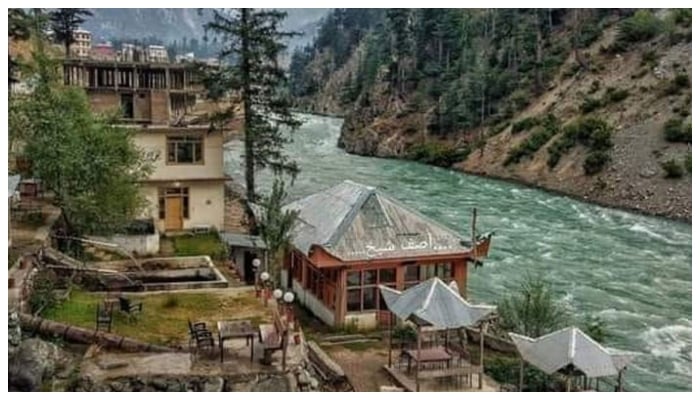
Tourism is extensive yet is mostly exploited by outsiders. The region contains the largest share of forests, water resources, wildlife and alpine lakes and it has remarkable biodiversity. Because of its mountainous terrain and glaciers, this tehsil has also been severely affected by climate change, as evidenced by the devastating floods of 2010 and 2022.
Culturally, this tehsil is unique and diverse. The languages spoken here include Torwali, Pashto, Gawri, Gujari, Ushojo, Badeshi and Khowar. Torwali speakers constitute the majority, while Pashto and Gawri speakers are present in almost equal numbers. Considering this diversity and the need to protect it, the area fully qualifies for the creation of a third district.
Historically, present-day Tehsil Bahrain was never part of Yousafzai Swat since the sixteenth century. The rule of Ahmad Khan and Khan Gaju did not extend beyond Piya or Tirat. At that time, the entire area above Piya was known as Torwal. According to Tawarikh-e-Hafiz Rahmat Khani, written around 1621, Khan Gaju’s rule ended at Piya or Tirat and the area beyond remained independent Torwal. The boundaries of historical Torwal correspond closely to the current boundaries of Tehsil Bahrain. Later, the region came to be known as Swat Kohistan, a name that became more firmly established after the formation of the state of Swat.
The state of Swat extended into Madyan in 1921 and into the areas of Bahrain in 1922, but Kalam was never part of the state of Swat. From 1947 to 1954, the Wali of Swat occupied Kalam, but in 1954, Kalam’s separate, Fata-like status was restored. For this reason as well, it seems appropriate that Tehsil Bahrain should be granted the status of a separate district. Possible names include Swat Kohistan, Kalam Swat or Bahrain Swat. In any case, the suffix ‘Swat’ is essential, because historically the Torwali and Gawri peoples of this region have had a close connection with central Swat and Gandhara.
Since the residents of this tehsil feel that their views, especially regarding the location of the headquarters of District Upper Swat, were ignored, and since their demand that the headquarters be located in Bahrain or Madyan or, more likely, Baghdheri was not accepted, they now believe that they should take a step further and formally demand the creation of a third district.
The writer heads an independent organisation dealing with education and development in Swat. He can be reached at: [email protected]