ISLAMABAD: Prime Minister Shehbaz Sharif on Friday invited Uzbek business firms to explore investment opportunities in Pakistan’s textile, pharmaceutical, mining, agriculture and tourism sectors, as private sector entities from both countries signed memoranda of understanding (MoUs) worth $3.4 billion for business-to-business (B2B) cooperation.
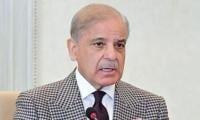
Addressing the Pakistan-Uzbekistan Business Forum, held in Islamabad alongside Uzbek President Shavkat Mirziyoyev, who is on a two-day state visit to Pakistan, the prime minister said both countries had signed a protocol to raise bilateral trade to $2 billion within five years, describing the target as “ambitious yet easily achievable”.
The forum, attended by ministers and business leaders from both sides, saw the two leaders assure investors of a conducive business environment, pledging that systemic hurdles, bureaucracy and red tape would not impede investment.
“I am here, of course, as the prime minister of Pakistan, but for this forum, as the CEO of Pakistan,” PM Shehbaz said. “I am just a telephone call away. My colleagues are just a telephone call away. We will remove any bottleneck or impediment in your way.”
Welcoming the B2B agreements, the prime minister said the trade targets were realistic as both sides already had a well-defined and structured cooperation framework in place.
He announced the formation of a joint working group to develop a five-year roadmap focusing on trade promotion, investment portfolios and collaboration in research and development, information technology and agriculture.
He said that 30 redundant textile plants in Uzbekistan presented a win-win investment opportunity for firms from both countries and expressed hope that the resumption of PIA flights to Uzbekistan would strengthen people-to-people contacts.
Highlighting opportunities in the pharmaceutical sector, he said Uzbekistan required Pakistan’s expertise and high-quality, affordable medicines, and offered 10-year tax exemptions, institutional support and a fully conducive investment environment.
He told the gathering that Uzbekistan had around 30 high-tech textile enterprises awaiting Pakistani management and expertise to help access global markets, while also expressing strong interest in cooperation in leather goods manufacturing.
On mining cooperation, the Uzbek president said the relevant ministry was ready to finalize concrete action plans. He added that Uzbekistan had a growing demand for rice, potatoes and processed meat, and was open to joint ventures, land allocation and collaboration in seed production.
President Mirziyoyev said four weekly flights were currently operating between Uzbekistan and Pakistan, adding that additional routes would further strengthen people-to-people contacts and business linkages.
Inviting Pakistani business leaders to visit Uzbekistan, he encouraged them to study investment opportunities, develop business plans and commence operations, assuring them of full government support.
Later, the two leaders also witnessed the exchange of documents of pre-signed MoUs between business entities from both countries.
Separately, Pakistan’s National Accountability Bureau (NAB) and the Anti-Corruption Agency of the Republic of Uzbekistan (ACAU) Friday signed a memorandum of understanding (MoU) to enhance bilateral cooperation in the fight against corruption.
The MoU was signed, reaffirming both countries’ commitment to the United Nations Convention against Corruption (UNCAC). The agreement was inked by Deputy Chairman NAB Sohail Nasir and Abdulaziz Kamilov, Advisor to the Uzbek President on Foreign Policy. It establishes a comprehensive framework for institutional coordination, information sharing and capacity building between the two anti-graft bodies.
Under the MoU, both sides will cooperate in sharing information on emerging corruption trends and methods, provide technical and methodological assistance, and exchange expertise and personnel in areas including forensic accounting, asset investigation, forensic engineering and anti-money laundering. Joint capacity-building initiatives and public awareness campaigns are also included. The heads of both agencies expressed confidence that the agreement would strengthen accountability mechanisms and institutional linkages in Pakistan and Uzbekistan.
Speaking to the media, Sohail Nasir said corruption remained a major obstacle to economic development and public trust, stressing that the transnational nature of financial crimes required strong bilateral cooperation among UNCAC member states.
Meanwhile, President Asif Ali Zardari Friday said Pakistan attached great importance to its close and brotherly relations with Uzbekistan, describing the partnership as ‘natural, enduring and rooted in shared history, culture and faith’.
He made the remarks during a meeting with Uzbek President Shavkat Mirziyoyev, who called on him at Aiwan-e-Sadr as part of his state visit to Pakistan.
Welcoming the visiting leader, President Zardari expressed confidence that the visit would further strengthen bilateral relations and prove productive and forward-looking.
The two leaders also exchanged views on regional and international developments affecting peace, stability and security. They first held a tête-à-tête meeting, followed by delegation-level talks attended by senior ministers and officials from both sides. Later, during a ceremony, President Zardari conferred the Nishan-e-Pakistan on President Shavkat Mirziyoyev in recognition of his contributions to strengthening Pakistan-Uzbekistan relations.
Meanwhile, Prime Minister Shehbaz Sharif and President Shavkat Mirziyoyev have signed a joint declaration, underscoring that peace and stability in Afghanistan are vital for enduring regional peace.
The two leaders called on the Afghan authorities to address terrorism threats by taking immediate and concrete action to dismantle and eliminate all terrorist organisations operating from Afghan soil, and to prevent the use of Afghan territory for attacks against any country.
The leaders reaffirmed their commitment to peaceful resolution of longstanding issues in South and Central Asia, stressing dialogue in accordance with the UN Charter and relevant resolutions. While Kashmir and the Indus Waters Treaty were not explicitly named, references were made to both, along with the principles governing trans-boundary river use.
Both sides discussed the situation in Palestine, expressing support for the establishment of an independent Palestinian state based on pre-1967 borders, and reaffirmed their commitment to promoting peace, stability, and just conflict resolution worldwide. They also agreed to enhance security and defence cooperation, including joint military exercises, professional development, exchange of best practices, and institutional collaboration between armed forces. Both sides expressed readiness to tackle common security challenges, including terrorism, separatism, extremism, and drug trafficking.
Celebrating 34 years of diplomatic relations, the leaders highlighted deep historical, cultural, and spiritual ties. They reaffirmed a shared resolve to elevate bilateral relations to a new level of strategic cooperation, supporting each other’s sovereignty, independence, and territorial integrity, while advancing sustainable development for both nations.