STOCKHOLM: The world is witnessing a dangerous reversal of decades of nuclear disarmament efforts, with nuclear-armed states increasingly relying on atomic weapons as instruments of national power even as the risks of miscalculation and escalation rise sharply, according to the annual report released today by the Stockholm International Peace Research Institute (Sipri).
The Sipri Yearbook 2026 paints a grim picture of a global security landscape defined by expanding nuclear arsenals, crumbling arms control frameworks, and a weakening non-proliferation regime — all unfolding against the backdrop of heightened geopolitical tensions and actual conflict between nuclear-armed rivals.
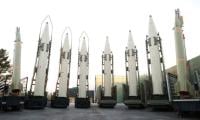
The nine nuclear-armed states (US, Russia, UK, France, China, India, Pakistan, North Korea and Israel) continued modernizing their arsenals in 2025, with growing uncertainty about the role of AI/ML in nuclear command systems. AI is currently believed to be limited to support functions such as maintenance and monitoring rather than launch or targeting decisions.
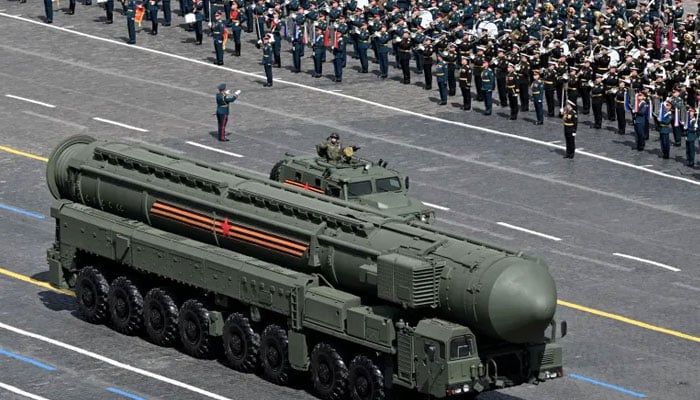
As of January 2026, global nuclear stockpiles totalled about 12,187 warheads, including 9,745 in military stockpiles and 4,012 deployed. Roughly 2,100–2,200 deployed warheads remain on high alert, mostly in the US and Russia. According to SIPRI (2026), US and Russian arsenals remain the largest, each with around 3,700–4,400 warheads in stockpiles and over 1,700 deployed. The UK and France maintain smaller but stable arsenals, while China is expanding rapidly. India, Pakistan, North Korea, and Israel maintain smaller inventories, with gradual increases in China, India, and North Korea.
Globally, deployed warheads and stockpiles rose slightly, while retired warheads declined. SIPRI warns that modernization, weakening arms control, rising geopolitical tensions, and potential integration of AI into nuclear systems are increasing nuclear risks.
At the same time, world events — not least the outbreak of conflict between nuclear-armed India and Pakistan — are challenging nuclear deterrence logic.” India is believed to have once again slightly expanded its nuclear arsenal in 2025, with its modernisation programme increasingly focused on developing long-range weapons capable of reaching targets throughout China, while still maintaining focus on its long-standing rivalry with Pakistan.
The report said that India’s nuclear stockpile risen to 190 while Pakistan’s steady at 170. Both continued to develop new types of nuclear weapon delivery systems in 2025, and both are pursuing the capability to deploy multiple warheads on ballistic missiles.
Indian nuclear weapons were assigned to a maturing nuclear triad of aircraft, land-based missiles and nuclear submarines. More warheads are thought to be in production for additional missiles. It has long been assumed that India stores its nuclear warheads separate from its deployed launchers during peacetime. However, the country’s recent moves towards placing missiles in canisters and conducting sea-based deterrence patrols suggest that India could be shifting in the direction of mating some of its warheads with their launchers in peacetime. Based on this assessment, Sipri estimated that, as of January 2026, India may have started to deploy a small number of nuclear warheads on a single nuclear submarine conducting occasional deterrence patrols.
Pakistan continued to develop its nascent nuclear triad during 2025. While Pakistan’s land and air capabilities are well established, its sea-based capabilities are still in the development and testing phase. Pakistan’s development of several new delivery systems and accumulation of fissile material suggest that its nuclear weapon arsenal and fissile material stockpile are likely to continue to expand over the next decade, although forecasts vary considerably due to limited official publicly available data.
Over the past decade, India’s nuclear planning has placed a greater emphasis on investing more resources in longer-range weapon systems that appear to be focused on China, but its planning still remains heavily influenced by its long-standing rivalry with Pakistan. In May 2025 India and Pakistan engaged in their most significant armed conflict in decades. The clash marked a shift in the region’s dynamics, making the risk of rapid, unexpected escalation to a nuclear level a lingering and serious concern. Israel — which does not publicly acknowledge possessing nuclear weapons — is also believed to be modernising its arsenal. In 2025, Israel intensified construction at a new site at the Negev Nuclear Research Center near Dimona, which could be related to its nuclear capabilities.
These developments are unfolding at a time when the global nuclear non-proliferation regime is weakening. The 2026 Review Conference of the states parties to the 1968 Nuclear Non-Proliferation Treaty (NPT), which ended on 22 May, was the third Review Conference in a row to close without issuing a final outcome document.