PESHAWAR: Alleged irregularities, illegal award of contracts, inflated rates, and the use of fake documents in the Khyber Pakhtunkhwa Rural Accessibility Project (KP RAP) have reportedly caused a loss of Rs10 billion to the national exchequer.
According to sources, the project’s original PC-I was approved at Rs69 billion, but its cost was subsequently increased to Rs112 billion. Sources in the Khyber Pakhtunkhwa chapter of the National Accountability Bureau (NAB) confirmed that a preliminary scrutiny of the project has been completed, during which evidence of irregularities and procedural violations was found.
The Khyber Pakhtunkhwa Rural Accessibility Project is a major infrastructure initiative of the provincial government, being implemented through the Communication and Works Department with financial support from the World Bank.
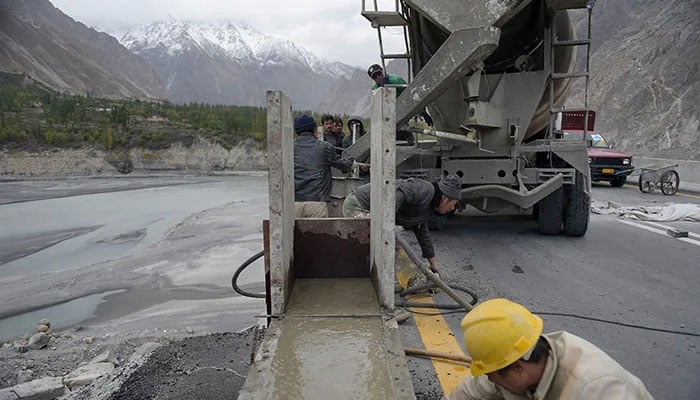
NAB sources told this correspondent that the bureau is currently reviewing contracts awarded under NIT-1 and NIT-2, with a combined value of approximately Rs50 billion. Construction work on these schemes is going on, and several projects are nearing completion. The NIT-3 was also recently awarded, while investigations into previously awarded contracts are going on. NAB is also examining allegations that certain contracts were awarded to contractors who did not meet the required eligibility criteria.
The bids were approved at rates significantly higher than those provided under MRS-2022, raising concerns that the national exchequer may have suffered losses exceeding Rs 10 billion. The inquiry further states that the contract award process undermined transparent competition, and some awards have been described as mala fide and unlawful. Investigators have also reportedly detected fake documents and tampered bids. Sources said that additional project records have been obtained and that the inquiry has been accelerated. Allegations of substandard construction and the use of inferior materials have also surfaced during the investigation.
KP-RAP Project Director Shahzad Naseer said the revision in project cost was necessitated by changes in project scope, increases in market rates, and the inclusion of additional works in line with ground realities. He stated that revised estimates were prepared in accordance with prevailing economic conditions, updated schedules, and technical requirements to ensure realistic costing, proper budget allocation, and effective project implementation.
The PD said contracts under NIT-1 and NIT-2, worth approximately Rs50 billion, had been awarded and nearly 50 percent of the schemes were completed ahead of schedule, resulting in financial savings for the government, while the remaining projects were close to completion. He clarified that the approved cost of the two ongoing phases under NIT-1 and NIT-2 stood at Rs64.8 billion, while the total value of awarded contracts was Rs51.45 billion.
According to the PD, contracts were awarded to companies that submitted the lowest evaluated bids and met all technical qualification requirements. He said all procurement packages were reviewed and approved by the World Bank before contract award. A World Bank no objection certificate (NOC), he added, is issued only when the entire procurement process has been completed in accordance with applicable rules, transparency standards, and merit-based criteria. He rejected allegations that awarding contracts at rates higher than MRS-2022 had caused a loss of more than Rs10 billion. According to him, the claim ignores the extraordinary inflation, sharp depreciation of the Pakistani rupee, and substantial increases in the costs of construction materials, fuel, steel, cement, machinery, and transportation between August 2022 and March 2024.
He further explained that MRS-2022 was based on market conditions prevailing in early 2022, whereas market prices had increased considerably by the time tenders were evaluated in 2024. Therefore, comparing current contract rates directly with MRS-2022 is technically inaccurate and leads to misleading conclusions.
Shahzad Naseer maintained that increases in contract values reflected inflationary pressures and changing economic conditions rather than any financial loss. He added that the procurement process was conducted strictly in accordance with all applicable rules and on a fully competitive basis. All schemes were awarded to the lowest responsive and technically qualified bidders, while the World Bank reviewed and endorsed every stage of procurement.
According to the project director, the procurement committee carried out a detailed examination of all bidders’ documents, technical and financial proposals, certifications, and eligibility requirements. The scrutiny did not reveal any irregularity, fake document, tampered bid, or any other material deficiency.