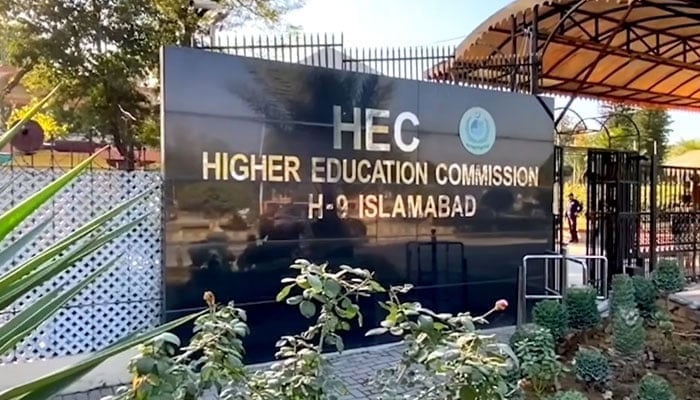
The Higher Education Commission (HEC) has constituted a National Strategic Task Force on Doctoral Education Reforms to review and overhaul Pakistan’s PhD education system in a bid to enhance its quality, relevance and global credibility, according to an official notification issued on January 26.
HEC member Dr Sohail H Naqvi, has been appointed as convener of the task force. Its members include Sindh HEC Chairman Dr SM Tariq Rafi, Punjab HEC Chairman Dr Iqrar Ahmad Khan, Prof Kamran Siddiqi of the United Kingdom’s University of York, and Pakistan Academy of Sciences Secretary Prof Dr M Aslam Baig.
They also include University of Azad Jammu & Kashmir (Muzaffarabad) Vice Chancellor Prof Dr Nasir Jamal Khattak, Shah Abdul Latif University (Khairpur) VC Prof Dr Yousuf Khushk, Lahore University of Management Sciences Associate Professor of Economics Dr Ali Hasnain, and Sir Syed CASE Institute of Technology (Islamabad) Chancellor Prof Dr Shoab Ahmed Khan.
HEC R&D Adviser Prof Dr Muhammad Ali Nasir, an industry representative, Pakistan Network of Quality Assurance in Higher Education President Dr Asiya Bukhari, a representative of the International Network for Quality Assurance Agencies in Higher Education, and a PhD student representative are also part of the task force. HEC Quality Assurance Deputy Director Dr Abidullah Anwar will serve as secretary.
According to the terms of reference, the task force will conduct a comprehensive, system-wide review of doctoral education in Pakistan, focusing on governance, supervision models, dissertation standards, publication practices, funding mechanisms, time to degree, research infrastructure and graduate outcomes.
The panel has been tasked with diagnosing systemic weaknesses, assessing fitness for the purpose of existing doctoral models and regulations, identifying root causes of quality deficits, and proposing differentiated and sustainable PhD pathways aligned with institutional capacity and national development needs.
The task force will also benchmark Pakistan’s doctoral system against international models, assess labour market alignment, examine supervisor capacity and accountability, and explore the use of artificial intelligence and advanced analytics as decision-support tools for evidence-based reform.
The task force is required to submit its final reform blueprint and implementation roadmap within six months, extendable with the approval of the competent authority. The HEC’s Quality Assurance Division will provide secretarial, technical and logistical support.