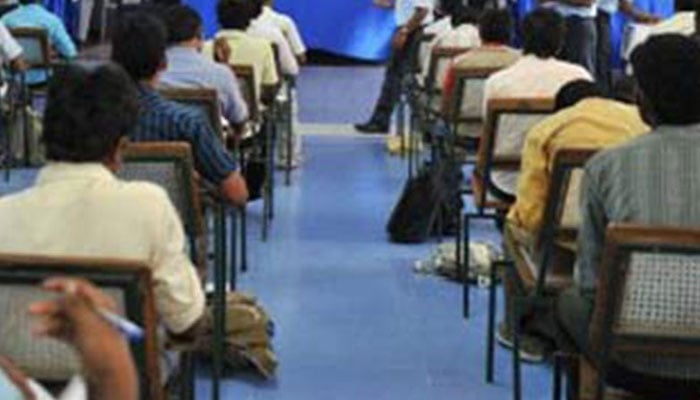
Pakistan’s higher education classrooms today reflect a quiet but serious generational disconnect. While most students now belong to Generation Z, the teaching and leadership structures of universities are still largely shaped by Baby Boomers, Gen X and Gen Y or Millennials.
Many senior faculty members and most decision-makers in leadership positions were trained in an academic era characterised by limited access to information, a strong reliance on books and libraries, and teacher-centric, unidirectional instruction.
These generations in Pakistan were raised to value stability, obedience and examination success. Long lectures, strict hierarchy and delayed feedback worked reasonably well for them. But when they moved into teaching and leadership roles, they understandably attempted to replicate the same learning patterns for their students. The result is visible everywhere: declining engagement, rising stress, rote learning and emotional burnout among students.
However, the students enrolled in Pakistani universities today represent a fundamentally different generation of learners.
Gen Z students are growing up in an environment marked by constant connectivity, rapid information flow, multiple digital platforms and a wide range of academic and social engagements. Compared to earlier generations, their exposure to information, activities and opportunities is massive. Learning is no longer constrained by access; instead, students are required to continuously filter, process and prioritise information. This shift has significantly altered how attention, motivation, and understanding function.
This reality has created a clear conflict in learning patterns, in fact, a silent crisis, within Pakistan’s higher education sector. Faculty members often expect students to learn as they themselves once did, through long lectures, extensive readings, rigid academic hierarchies and delayed evaluation, while students struggle to remain engaged in systems that do not align with their cognitive and emotional environments. This mismatch is frequently misread as a lack of seriousness or discipline, when in fact it reflects a structural gap between teaching methods and learner realities.
It is important to emphasise that a modern, dynamic and student-friendly learning environment does not imply the absence of discipline, respect, or professionalism. On the contrary, these values are essential for professional grooming and societal growth. Respect for seniors and juniors alike, across gender and roles, discipline in conduct and commitment, and professional behaviour remain non-negotiable expectations in higher education. While Gen Z is often labelled as the most undisciplined generation, the issue is not a rejection of discipline, but resistance to environments in which discipline is enforced without clarity, fairness or purpose.
This challenge is not a failure of teachers. Rather, it highlights a critical truth: learning is no longer meant for students alone. In a digitally driven academic landscape, the teaching community must also continuously upgrade itself, without embarrassment, defensiveness or a sense of shame. Professional development is not an admission of inadequacy; it is a condition for relevance in a rapidly changing generational ecosystem.
First, higher education must shift from content-heavy delivery towards meaning- and skills-oriented learning. Gen Z students are motivated when they understand why a concept matters, how it applies to real-world problems, and how it contributes to their personal and professional futures. Knowledge without context quickly loses impact.
Second, teaching approaches must recognise that attention patterns have changed. Long, uninterrupted lectures often result in cognitive overload rather than learning. Structuring instruction into shorter, focused segments, supported by visuals, discussion and applied examples, enhances comprehension without compromising academic rigour.
Third, the traditional understanding of authority must evolve into guided engagement. Gen Z does not reject structure or accountability; they reject unexplained control. When expectations are clearly communicated and faculty act as mentors rather than enforcers, discipline becomes internalised rather than imposed.
Finally, higher education institutions must acknowledge the growing importance of psychological safety. Gen Z students are more aware of mental health than previous generations. Excessive pressure, public humiliation, unclear expectations and exam-only evaluation contribute to burnout and emotional withdrawal. Clear rules, timely feedback and respectful interaction strengthen, not weaken, academic standards.
Pakistan’s higher education system does not need to lower expectations for its students. It needs to modernise its expectations. If universities continue to teach 21st-century learners with 20th-century methods, they risk producing graduates who are credentialed but disengaged, knowledgeable but emotionally exhausted.
The future of higher education lies in recognising that adaptation is not a threat to academic tradition; it is its continuation. When institutions, faculty and leadership evolve alongside their students, education becomes effective, professional and socially transformative.
The writer is an assistant professor at Air University Aerospace & Aviation Campus Kamra and can be reached at: [email protected]