The year 2025 proved to be one of the most troubled chapters in the history of Afghanistan-Pakistan relations since the Afghan Taliban returned to power in 2021.
What once appeared to Islamabad as a strategic reset on the western border hardened into a complex mix of insecurity, mistrust and diplomatic strain. Militant violence surged and border tensions intensified in the past year.
With the beginning of 2026, the central question is whether the relationship between Afghanistan and Pakistan can stabilise, or the fault lines exposed in 2025 will further widen and what both neighbours can do to move forward.
In 2025, Pakistan’s relations with Afghanistan were primarily shaped by a marked deterioration in Pakistan’s internal security environment. Militant violence surged, particularly in the provinces of Khyber Pakhtunkhwa (KP) and Baluchistan. Most of those attacks were orchestrated by the TTP, which operates from sanctuaries located inside Afghanistan.
Despite repeated demands by Pakistan, the Afghan Taliban appeared either unable or unwilling to take decisive action against the TTP, resisting calls for concrete measures and resulting in intensified frustration within Islamabad’s policy circles.
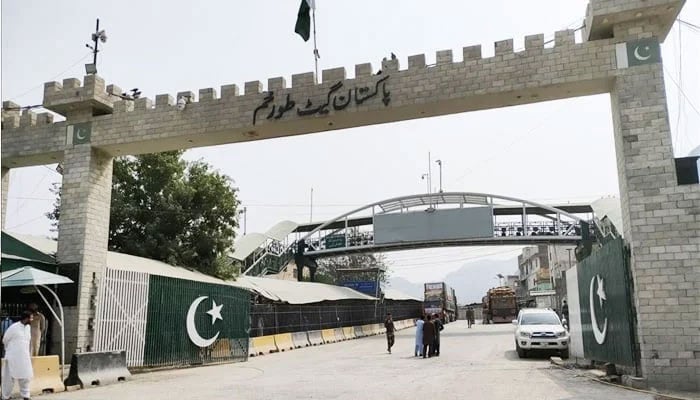
Bilateral tensions escalated sharply in October 2025 when armed skirmishes erupted along their approximately 2,600-kilometre-long shared border. These incidents further strained already fragile bilateral relations, disrupted cross-border trade through border closures and negatively affected local economies on both sides, drawing international concern and mediation efforts.
Pakistan’s unease was compounded by the Afghan Taliban’s expanding engagement with India, which Islamabad viewed as potentially drawing Afghanistan into South Asia’s enduring geopolitical rivalries and exacerbating regional instability.
The long-standing issue of Afghan refugees also remained a major point of contention. Facing economic strain and security challenges, Pakistan intensified the repatriation of undocumented Afghan nationals. The Afghan Taliban opposed these measures.
As 2026 unfolds, Pakistan confronts two broad strategic trajectories in its relations with Afghanistan, each accompanied by distinct risks and constraints.
One possible course involves further escalation. Should militant violence persist within Pakistan and the Afghan Taliban continue to deny or inadequately address concerns regarding militant sanctuaries, Islamabad may feel compelled to adopt strict security measures. These could include cross-border operations and the imposition of more stringent border management mechanisms. While such actions may yield tactical advantages, they carry significant risks, including the potential to exacerbate bilateral tensions.
The alternative path centres on sustained engagement, a course that Pakistan has consistently advocated. Despite heightened tensions, Islamabad has continued to emphasise dialogue and negotiated conflict resolution as the preferred means of managing bilateral disputes. However, the prospects for a durable and comprehensive settlement remain uncertain.
Stabilising Pakistan–Afghanistan relations requires a clearly defined and mutually understood framework of priorities. Pakistan has a clear set of objectives regarding Kabul, foremost among them being the establishment of an inclusive and broadly supported Afghan government that is responsive to Pakistan’s security concerns – particularly those related to militancy and border stability. These priorities have gained heightened significance given Pakistan’s persistent security challenges along its western frontier, compounded by enduring tensions with India on its eastern border.
In contrast, the Afghan Taliban’s approach remains ambiguous and underdeveloped. This ambiguity is reflected in both their external relations and internal governance. The Afghan Taliban have yet to demonstrate a credible strategy to address Pakistan’s core concern regarding the TTP. This absence of clarity erodes trust and limits cooperation. Therefore, a shared set of priorities focused on security cooperation, political inclusivity and socio-economic stability is essential to shift bilateral relations from uncertainty towards structured and sustained engagement.
A durable Pakistan-Afghanistan relationship necessitates inclusive engagement that extends beyond state-centric diplomacy. Adopting a participatory framework encompassing people-to-people, business-to-business and government-to-government interactions would ground bilateral ties in societal interests rather than narrow strategic considerations.
Given the deep historical, cultural, linguistic and religious connections between the two societies, enhanced cross-border trade, educational exchange, cultural cooperation and private-sector engagement can foster economic interdependence and social trust. Broad-based participation cultivates a sense of shared ownership among communities and institutions, thereby strengthening resilience to political fluctuations and serving as a cornerstone for long-term stability and confidence-building.
A major weakness in Pakistan-Afghanistan relations has been the absence of a bilateral partnership, with ties frequently influenced by the strategic interests of external actors. This has reinforced mistrust, despite deep historical, cultural, religious and geographic commonalities. Recasting the relationship around reciprocity, equality and shared interests, rather than third-party alignments, is essential. Achieving this requires sustained institutional dialogue, transparent communication and cooperative mechanisms to manage key challenges, especially security and border issues.
Persistence is essential to the reconstruction and sustainability of Pakistan–Afghanistan relations. Diplomatic engagement must be continuous rather than episodic and resilient to political and security disruptions, a goal achievable only when participation and partnership are firmly institutionalised. Sustained relations require patience, policy coherence and strong institutional memory, alongside incremental confidence-building measures that acknowledge the gradual nature of trust restoration. Ongoing dialogue, even amid tensions, is crucial to preventing escalation and enabling the relationship to evolve from a transactional interaction into a durable framework.
The writer is an associate professor at the Area Study Centre for Africa, North and South America, Quaid-i-Azam University, Islamabad.