“When women rise to lead, nations rise with them.” “A courageous daughter does not merely inherit a legacy — she reshapes it, safeguards it, and carries it forward with resolve.”
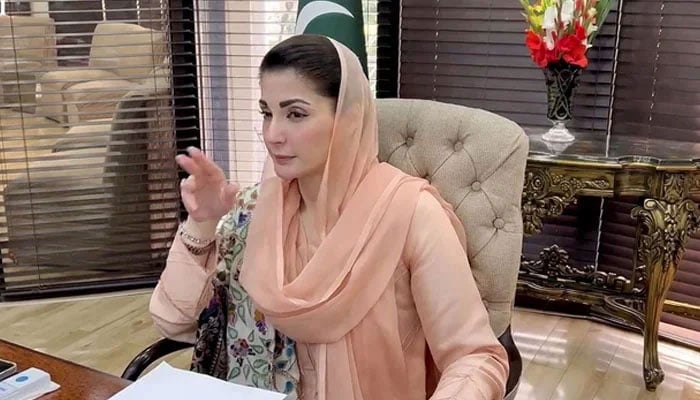
These words find tangible expression in the leadership of Maryam Nawaz Sharif, Pakistan’s first female Chief Minister of Punjab. Her ascent is not merely a historic first; it represents a substantive shift in governance culture, administrative discipline, and political vision. Combining authority with composure, resolve with restraint, she has emerged as a leader whose presence commands respect while her performance invites scrutiny—and increasingly, approval.
Maryam Nawaz has quickly positioned herself as a results-oriented administrator, blending compassion with control and ambition with accountability. In doing so, she has begun to redefine what effective leadership can look like in Pakistan.
In a political environment long dominated by men, Maryam’s leadership marks a decisive break from convention. Her rise demonstrates that authority is shaped not by gender but by capacity, commitment, and character. For many women across Pakistan, her presence at the helm of the country’s largest province is a source of inspiration. Yet her impact extends beyond symbolism.
She governs with transparency and purpose—engaging directly with citizens, monitoring institutions, and ensuring delivery. This is a leadership model that prioritizes outcomes over optics and performance over rhetoric, signaling the emergence of a more professional and accountable political culture.
Maryam Nawaz’s political journey has been forged under pressure. While she entered public life as the daughter of Nawaz Sharif, she has earned her standing through persistence and resilience. During periods of political upheaval, she remained active on the ground—addressing rallies, mobilising party workers, and defending democratic norms.
Her role during challenging phases of Pakistan Muslim League–Nawaz was instrumental in sustaining party morale and reconnecting leadership with grassroots supporters. Today, she is often described as the party’s “Iron Lady,” not because of lineage, but due to her discipline, political maturity, and refusal to retreat in adversity.
Since assuming office, Maryam Nawaz has launched a wide-ranging development agenda spanning infrastructure, sanitation, employment, agriculture, healthcare, education, and governance reform. Across Punjab, road rehabilitation, drainage upgrades, and urban renewal projects are visibly underway, extending beyond major cities into smaller districts.
As someone with roots in District Khushab, I can attest that the change on the ground is unmistakable. Cleaner markets, improved traffic discipline, maintained streets, and a visible state presence reflect a level of administrative engagement previously unseen. Governance is no longer abstract; it is increasingly experienced at the local level.
One of the most consequential initiatives of her administration is Suthra Punjab, a province-wide sanitation and waste management campaign. Drawing on both civic responsibility and institutional coordination, the Programme has improved waste collection, street cleaning, and disposal mechanisms across urban and rural areas.
Public spaces appear healthier, neighborhoods more organized, and citizens more invested in their surroundings. For districts long neglected in municipal planning, Suthra Punjab represents a structural shift rather than a cosmetic exercise—embedding cleanliness into governance priorities.
Recognizing Punjab’s youth as its greatest asset, Maryam Nawaz has placed employment generation and skill development at the center of her policy framework. Digital job platforms, vocational training Programmes, and targeted empowerment initiatives aim to align young people with market needs and emerging industries.
Complementing this focus is an expansive framework of interest-free loans and financial inclusion schemes. Programmes such as the Asaan Karobar Finance Scheme, Asaan Karobar Card, Easy Business Finance, Easy Business Card, and the Parwaz Card provide capital access to youth, women, and small entrepreneurs. These initiatives are designed not as short-term relief, but as mechanisms to stimulate entrepreneurship and self-reliance.
Agriculture remains the backbone of Punjab’s economy, and Maryam Nawaz’s administration has placed farmers firmly at the center of policy. Through the Kisan Card (Phase II), Hi-Tech Farm Mechanisation Programme, and Livestock Card, farmers receive support for seeds, fertilizers, irrigation, machinery, and livestock care.
These measures strengthen rural economies, enhance productivity, and reinforce food security. More importantly, they reflect a governance philosophy that views farmers not as beneficiaries of charity, but as partners in national prosperity.
Healthcare and education reforms form another critical pillar of her governance. The expansion of free medicine Programmes, hospital upgrades, and specialized medical services has improved access across districts. Parallel investments in education—school rehabilitation, teacher training, and institutional modernization—underscore a long-term commitment to human capital development.
These reforms signal an understanding that sustainable progress depends on healthy, educated citizens rather than isolated infrastructure projects.
Maryam Nawaz’s leadership style is notably hands-on. Regular visits to hospitals, development sites, and government offices reinforce a culture of oversight and urgency. Delays are questioned, underperformance challenged, and accountability enforced.
Law and order have also received focused attention through strengthened enforcement, improved traffic regulation, and institutional reforms. Community policing initiatives and targeted action against criminal networks have contributed to safer and more orderly public spaces.
The effects of her governance are increasingly discussed beyond Punjab. Citizens from other provinces openly express admiration for her administrative approach and voice aspirations for similar leadership in their regions. This cross-provincial recognition suggests that her performance is setting a benchmark for governance standards nationwide.
Internationally, her initiatives—particularly in sanitation, social welfare, and environmental stewardship—have attracted attention. Global institutions have acknowledged her focus on sustainability and climate resilience, enhancing her profile as a reform-oriented leader with growing international stature.
Maryam Nawaz Sharif represents a transformative phase in Pakistan’s political evolution. As Punjab’s first female Chief Minister, she has moved decisively beyond symbolism to deliver measurable progress across sanitation, infrastructure, youth empowerment, agriculture, healthcare, education, and governance. As a resident of Islamabad with roots in Khushab, witnessing cleaner roads, improved connectivity, and renewed civic discipline offers living evidence of what focused leadership can achieve.
Punjab is changing—and in doing so, it offers a model for the rest of the country.
Punjab today can indeed become Pakistan tomorrow.
It is a future shaped by leaders who govern on the ground, empower youth, support farmers, protect women, and prioritize development over division. If sustained, this era may well mark the beginning of a more disciplined, accountable, and prosperous Pakistan.